
All posts by BradleyCobb

Answers to Some Questions About the Word “Apostles”

ApostlesLogo

Recently, a friend of mine asked for permission to use some of the material we have posted here on the apostles to teach in the congregation he works with.  I told him that was fine with me, and so he began.  But he ran into some objections from the get-go regarding my definition of the word “apostle.”

Here’s the email I received:

So, I started to teach on the apostles and the congregation had some surprisingly not so positive feed back……..before we ever really got started on Epaphroditus

They were surprised by your definition of apostle being so broad.  

  • ‘Didn’t an apostle have to see Jesus, like it says when Matthias was chosen?’  
  • ‘I thought being an apostle meant you could do miracles and give the ability to do the miraculous to others?’   
  • ‘Using his definition, is there even a difference between disciple and apostle?  Or is it Apostle and apostle?’ 
  • ‘Where do we draw the line?  Does the fact that we help support _________ on missionary trips to Honduras make him an apostle since the church sent him on a mission?’
  • ‘Aren’t we all apostles then because we all have a message to take from Jesus himself: the Gospel?’

I was quite surprised by this resistance to how you presented it in your material.  I really didn’t have anything to answer other than this is how you had chose to tackle the subject.

Pretty sure this is not what you expected … but I promised them I would pass their questions along and see what you said about it.

So, in order to clarify, and to eliminate anymore possible difficulties with his using the material there, I sent the following letter as an answer to their questions.  I am posting it here, because perhaps some of you may have had the same thoughts as you read through the original introduction to this series… WAY back in January.  🙂

My brethren,

__________ wrote me and conveyed some concern that many of you had regarding my initial definition of the word “apostle.”  I appreciate the opportunity to try to clarify and hopefully dispel any worries that you might have with me (though we’ve never met) and the material.  With that in mind, I offer the following three points, followed by answers to some of the specific questions that were asked:

(1) The word “apostle” comes from the Greek word “apostolos,” which means “one sent [with a specific mission].”  It is said in many Bible dictionaries that by the time the New Testament was written, this word had taken on the sense of an emissary, a delegate for someone else.

God inspired the writers of the New Testament to use this word, in its many forms (noun, verb, singular, plural, etc.) to describe the fourteen men we consider to be “Apostles” (i.e., the original twelve plus Matthias and Paul).  However, this exact same Greek word is used in other places in the New Testament to describe people who weren’t of that number.  Since God inspired men to use this word to describe more than just the official “Apostles,” then we shouldn’t be afraid to acknowledge that He used it in a broader sense than we’re used to.

*Webster’s 1828 Dictionary gave this as the definition of “Apostle”:
Apostle

APOS’TLE, n. [Gr. to send away, to sent.]

A person deputed to execute some important business; but appropriately, a disciple of Christ commissioned to preach the gospel. Twelve persons were selected by Christ for this purpose; and Judas, one of the number, proving an apostate, his place was supplied by Matthias. Acts 1.

The title of apostle is applied to Christ himself, Heb 3. In the primitive ages of the church, other ministers were called apostles, Rom 16; as were persons sent to carry alms from one church to another, Phil 2. This title was also given to persons who first planted the Christian faith. Thus Dionysius of Corinth is called the apostle of France; and the Jesuit Missionaries are called apostles.

Among the Jews, the title was given to officers who were sent into distant provinces, as visitors or commissioners, to see the laws observed.

*Smith’s Bible Dictionary start’s itsdefinition this way:

Apostle. (one sent forth). In the New Testament, originally the official name of those twelve of the disciples whom Jesus chose to send forth first to preach the gospel and to be with him during the course of his ministry on earth. The word also appears to have been used in a non-official sense to designate a much wider circle of Christian messengers and teachers.  See 2 Cor. 8:23; Phil. 2:25.

*Fausset’s Dictionary includes this sentence in its article on “Apostle”:

“Apostle” is used in a vaguer sense of “messengers of the churches” (2 Cor. 8:23; Phil. 2:25).

(2) There is a difference between an “apostle” [a “sent one”] and someone who wore the title or held the official office of an Apostle of Jesus Christ.  Epaphroditus was said to be an “apostle” of the church (the KJV says “messenger,” though it is the exact same word as what is translated “apostle” in the NT).  Jesus Christ was called an Apostle–because He was sent by God with a mission.  James, the brother of the Lord, is called an “apostle.” Barnabas is called an “apostle.”  But none of these men wore the title, or held the office of “Apostle.”  Only Paul and the “twelve” could lay claim to that.  These others were simply ones who were sent by someone with a specific mission–the actual meaning of the word “Apostle.”

A similar case exists with the word “elder.”  There is a difference between someone who holds the title/office of “elder” in the church, and someone who is just an “elder” — an older person (as in 1 Tim 5:1-2).

(3) If we wish to use Bible words in the way the Bible uses them, then we could say that a missionary sent out by the congregation is an “apostle” of that congregation–but given the way denominations have twisted and tortured the word in applying it to offices within their ranks, as well as the exclusive way we’ve traditionally used “apostle” to refer only to the twelve and Paul, it wouldn’t be very expedient to do that; in fact, it would be downright confusing.

Questions:
1. Didn’t an apostle have to see Jesus, like is says when Matthias was chosen?
  In order to hold the office of an apostle, to be one of the specific twelve men that Jesus chose to be his miracle-working and miracle-giving representatives to the world, then yes, absolutely he had to see Jesus.  But this was not a requirement for someone to be called an “apostle” in the general sense of the word.

2. I thought being an apostle meant you could do miracles and give the ability to do the miraculous to others? That is 100% true, so long as we are talking about the office or title of “apostle,” which was only held by fourteen men (the twelve, plus Matthias, plus Paul).  There are other men who were called “apostles” in a general sense (Barnabas was called an apostle in Acts 14:14), but who are distinguished from those who held the office of an “apostle” (Barnabas was not a member of “THE apostles,” Acts 4:36, 9:27).

3. Using his definition, is there even a difference between disciple and apostle?  Or is it Apostle and apostle? A disciple is a follower, and a learner from someone else.  An apostle (in the general sense of the word) is someone who is sent away with a mission from someone else.  Not all disciples of Jesus were mature enough or trusted enough to be sent by Him as His delegate.  Even when the Bible speaks of Epaphroditus, who Paul calls “your messenger” (the Greek word is apostolos), it shows that he was someone who was mature and trusted by the congregation to be sent on their behalf to help Paul.  So, there is a difference between disciple and apostle.  I think that the second half of the question really gets the emphasis: Apostle (as a proper name, a title, the name of an office in the first-century church) is something describing the “twelve” and Paul; apostle is the general sense of the word, meaning anyone who was sent away with a specific mission.

4. Where do we draw the line?  Does the fact that we help support ________ on missionary trips to Honduras make him an apostle since the church sent him on a mission? I’ll answer the second part first.  From a strict definition of the word “apostle,” then yes, one could call Tony an “apostle” of the church there where you meet.  In fact, the Bible uses it that way in 2 Cor 8:23.  Titus and his companions were called “messengers (Greek, apostolos) of the churches.  However, using it that way today would get confusing as all get-out to people–both in the church and out of it–because of how we’ve traditionally understood the word “apostle” (referring to the twelve and Paul), and because of how some denominations have perverted the word to refer to their leaders (i.e., the Mormons and others).  The line between an “apostle” in the general sense and an “apostle” in the sense of people like Peter, Andrew, James, and John is this: Jesus selected twelve men to be called (or given the title of) “apostles.”  Judas fell by transgression, and God chose Matthias to be his replacement so that there were again “twelve” on the Day of Pentecost.  Paul repeatedly lays claim to the title of “apostle” and says that he is not one whit behind the other apostles.  Peter calls Paul’s writings Scripture (2 Peter 3), so we know that Paul was also among this group.  There is where the line is drawn.  No one outside of those fourteen men were ever “called” (or given the title of) an “apostle.”

5. Aren’t we all apostles then, because we all have a message to take from Jesus himself: the gospel?  The idea of an “apostle” is that a person is sent away from somewhere.  The men called “apostles” in the Bible (in either the general sense or the specific sense of the twelve plus Paul) all left their homes and went somewhere else to carry out the mission in other cities or areas.  Jesus (called an apostle in Hebrews) left heaven and came to earth.  Paul left Tarsus and Jerusalem and traveled the whole Roman Empire.  Peter preached in many places within Jerusalem, Judea, and Samaria.  John did the same thing, as well as spreading God’s word from Patmos (an island west of Asia Minor).  We’re not given the travels of the other apostles in the Scriptures, but they all stayed in Jerusalem for a time, which was not their home–they were all from Galilee (see Acts 2).  So, in answer to the question, while we have been given a message to spread, the gospel, we haven’t been called to leave our home behind and personally go and take the gospel to other lands.  We are not apostles in either sense of the word.

In conclusion, there are THE apostles (the twelve plus Paul) and then there are “apostles” in the general sense of the word.  The purpose of the material I’ve written is to look at the Christians whom God saw fit to call “apostles” (apostolos) in the Bible.  We first look at the ones who are not part of THE apostles (though they all almost certainly were able to perform miracles after having hands laid on them by one of the twelve or Paul).  Then we look at the “Twelve” (including Matthias), and finally, Paul.

If you have any specific questions or desire clarification on a specific point, feel free to email me or send a question through __________ and he will get it to me.  I will answer it as promptly (and with biblical support) as I can.

-Bradley S. Cobb

Some Special Handouts for Kids (and Adults too)

This week is Vacation Bible School at the Gravel Hill church of Christ.  One thing that makes Gravel Hill unique is that they don’t ever purchase VBS materials–instead, they make their own.  Each teacher creates his/her own curriculum.  This year, Jesse is helping teach, and together, we created several worksheets/handouts for her class (Yes, I drew the pictures below).

These handouts/worksheets are suitable for anywhere from 3rd/4th grade up to adults.  Even if the adults aren’t really into the games or pictures aspect of it, it does help them to remember parts of the Bible lessons, and makes them think.

So, feel free to download them and print them off for your kids, your Bible classes, or yourself!  But please, don’t share them digitally.  If you think they’re worth sharing, please just point people here.  We really appreciate it.  🙂

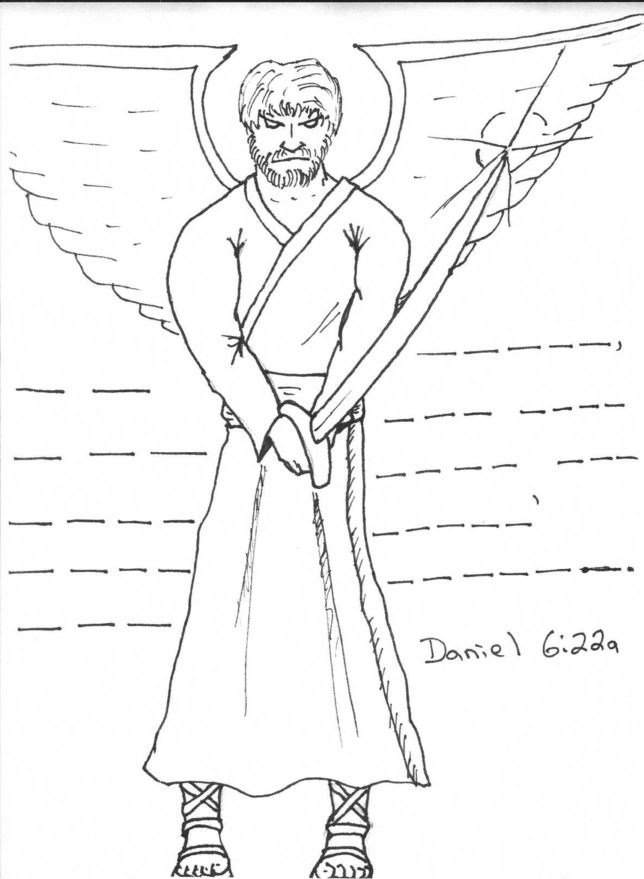
First, a coloring/memory verse sheet for Daniel 6:22a “My God hath sent his angel, and hath shut the lions’ mouth.”

Angel-Daniel_Memory

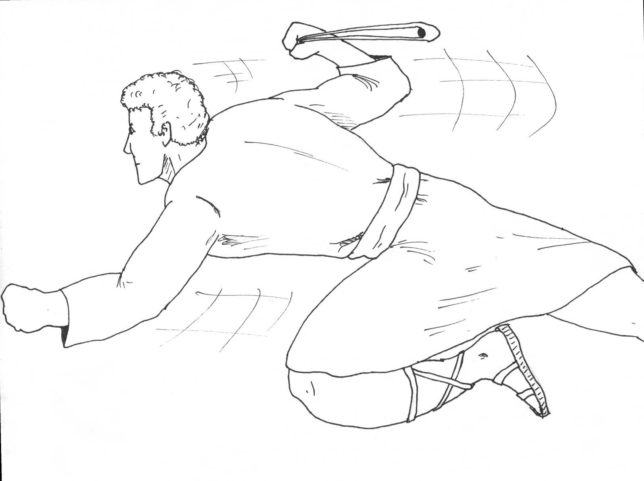
Second, a color sheet of David running with a stone in his sling.

David-Running

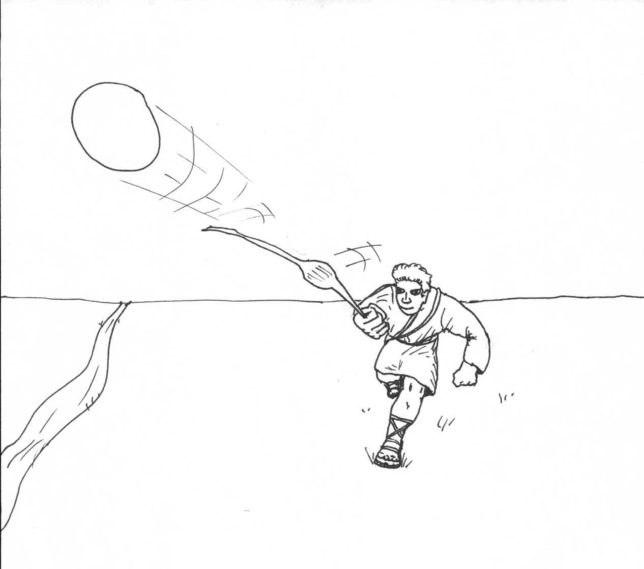
Third, a color sheet of David slinging the stone.

David-throwing

Fourth, a worksheet over the book of Esther, in the style of “Who Am I?” (for example, one of the questions is: “I built a really tall gallows to hang Mordecai from.  Unfortunately, they put me there instead, and now I’m dead.  Who am I?”)

Esther_Who-am-I

Fifth, a memory verse worksheet for the Parable of the Lost Sheep, done as opposites (look for yourself).

Lost_Sheep_Memory

Sixth, a memory verse worksheet for Esther 7:6

Esther_Memory

Seventh, a True/False worksheet on the Parable of the Lost Sheep (with Jesus the Good Shepherd as part of the topic).

Lost_Sheep_TF

That’s it for now, but if you would like to see more things like this made available, please let us know!

-Bradley S. Cobb

The Roller-Coaster of Faith – The Life of the Apostle Peter (Part Three)

ApostlesLogo

Simon Peter’s Faith

One day, Simon was called, along with Jesus’ other disciples, up to a mountain, where the Lord had been praying all night.  After the disciples arrived, Jesus selected twelve of them, and gave them the name “apostles.”1  Simon, whom Jesus called “Peter,”2 appears to be the first one chosen (his name appears first in every list of the apostles in the Bible).

It was some time after this that Jesus said to Peter and the rest of the apostles, “Let’s go over to the other side of the lake.”  So they all got into a ship and went across the Sea of Galilee.  Jesus went to the lower part of the ship and went to sleep, and then the storm came.  This storm was so fierce that the apostles—including experienced fishermen like Peter, Andrew, James, and John—thought they were going to die.  The boat was being tossed around by the waves, and water was filling the boat.  Some of the apostles ran down to where Jesus was, waking Him, and saying, “Master, don’t you care that we are perishing?”  Jesus gets up, probably goes up to the main deck, and says, “Peace.  Be still,” and the storm immediately stopped.  Peter had never seen anything like it in his life.  Then he hears Jesus’ words, “Why are you so afraid?  How is it that you have no faith?”3  Those words made quite an impression on him.

After they all came back to Capernaum,4 the ruler of the synagogue, named Jairus, came begging for Jesus to heal his only daughter.  Jesus began to follow him, but as He did, a woman desperately seeking to be healed touched the hem of His garment; and Jesus turned around and said, “Who touched me?”  Peter, somewhat incredulously, looked at Jesus and said, “Master, the multitude is crowding and pressing [against] you; and you say, ‘Who touched me’?”  Jesus reemphasized that He had felt power leave Him, and then Peter saw the woman come before Jesus, trembling, and falling down at His feet, and explaining what she touched Him.  Jesus almost certainly smiled as He looked at her and said, “Daughter, be of good comfort: your faith has made you whole.”5  Peter probably couldn’t help but notice how different Jesus’ words were to this woman, compared to what He had earlier said to Peter and the other apostles.

After the woman was healed, Peter followed Jesus to Jairus’ house, where they were met with the terrible news: Jairus’ daughter had died before they could get there.  But Jesus looked at Jairus and told him, “Don’t be afraid: Just believe [show faith],6 and she will be healed.”7  Then Jesus goes inside with Mr. and Mrs. Jairus, and only permits Peter, James, and John to accompany them.  Peter watched as Jesus took the dead girl by the hand and said, “Little girl, arise.”8  She immediately rose up, and Peter again saw the power of faith.

Soon after this miracle of restoring the little girl’s life, Jesus called the apostles to Him and gave them miracle-working abilities, and sent them out on a mission to the Jews.  Peter was sent with his brother Andrew, and “went through the towns, preaching the gospel, and healing everywhere.”9  Upon returning, Peter and the others told Jesus about the things they had done, and they got on a ship with Him and sailed to a deserted area where they could rest.10  However, the people who had been following Jesus saw what they were doing, and ran ahead to the area of Bethsaida, where the ship was headed.11

After landing, Jesus took compassion on the multitude, and told the apostles to feed them.  Peter and the rest were shocked.  Philip said, “Two hundred pennyworth of bread isn’t sufficient for each of them to even have a little!”12  Peter was most likely in agreement with this assessment, though he was probably also telling himself to “have faith.”  He was amazed when five loaves and two fishes fed the entire crowd of 5,000, and also left twelve baskets of leftovers.  The evidence was right in front of him to strengthen his faith.

This miracle was enough for many of the men among the 5,000 to declare that Jesus was truly “that prophet which should come into the world!”13  Then they sought to take Jesus by force and make Him the king.  When Jesus realized what their intentions were, He sent them away14 and went to a mountain by Himself.15

Jesus told Peter and the others to go get into the ship and sail to the other side.  Evening came, the ship was in the midst of the sea, and Jesus was still on the mountain.16  Jesus looked across the sea and saw them struggling to row because the wind was fighting against them, and the waves were tossing them around.17  Around 3 AM, Jesus came to them, walking on the water.18  They had been rowing all night for a journey that would normally have been rather short.  Peter would have been struggling along with the other apostles when all of a sudden there was screaming—there was a ghost on the waves!  Or, so they thought.  Jesus hadn’t intended to stop and join them,19 but when they saw Him, thinking He was a ghost, they were scared; so Jesus called out to them, “Have courage; it is I.  Don’t be afraid.”20

The impetuous and brave Peter, peering through the darkness and the mist kicked up by the wind and waves, called back to Jesus, “Lord, if it’s you, command me to come to you on the water.”  Jesus’ replied to Peter by commanding him, “Come.”  So Peter climbed out of the rocking ship and stepped out onto the boisterous waves, and he started to walk towards Jesus on top of the water.  He was doing fine until he started looking at the waves and thinking about the wind, and down into the water he went, sinking, screaming, “Lord, save me!”  Immediately, Jesus caught hold of him, kept him from drowning, and said to him, “O you of little faith.  What caused you to doubt?”21

Peter must have been heartbroken as Jesus brought him over the water and into the rocking ship.  But as soon as they both climbed aboard, the wind stopped.  The disciples were all amazed at the suddenness with which the wind stopped; and they started worshiping Jesus, saying “Truly you are the Son of God.”22  Peter must have felt awful, seeing Jesus completely eliminate the wind and waves which had caused him to doubt.  But he didn’t have much time to dwell on it while he was in the boat, because as soon as Jesus climbed in, they were instantly at their destination.23

The next day, when the crowds discovered where Jesus had gone, they came to Capernaum and found Him, and asked Him, “When did you come here?”  Instead of answering their question, Jesus replied with something that showed their lack of focus (the same lack of focus that the apostles were also guilty of to an extent): “You seek me, not because you saw the miracles, but because you ate the bread and were filled.  Don’t labor for the food that perishes, but for the food that endures into everlasting life, which the Son of man will give to you: for Him has God the father attested.”24

After speaking about the necessity to eat His flesh and drink His blood, which was a “hard saying,” difficult to understand, “many of His disciples went back, and walked no more with Him.”25  Jesus looked at the apostles, and asked them, “Do you wish to go away too?”  Peter, just a day removed from his embarrassing incident on the sea, spoke up, “Lord, to whom shall we go?  You have the words of eternal life.  And we believe and are certain that you are that Christ, the Son of the living God.”26

Though he strongly confessed Jesus as the Christ, the Son of God, and acknowledged that He had the words of eternal life, Peter had a hard time grasping the importance of some of Jesus’ teaching.  The scribes and Pharisees from Jerusalem had come, and criticized the disciples for not washing their hands when they eat bread.  Jesus condemned these accusers, calling them hypocrites who were “blind leaders of the blind” who would “fall into the ditch.”  He told them that it isn’t what goes into a person that defiles him, but what comes out of him.  After Jesus said this, they went into a house, away from the people,27 and Peter boldly commanded Him, “Explain this parable to us.”  Jesus then looks at the apostles, and asks, “Are you still without understanding?  Don’t you understand yet?”28  After those words, Peter might have felt like he should have kept his mouth shut; for though he loved the Lord, he was still not the “Rock” that he knew he needed to become.  His faith was still in a state of growth.

Traveling with Jesus to the area of Tyre and Sidon, Peter saw a Canaanite woman approaching the Lord, begging, “Have mercy on me, O Lord, Son of David.  My daughter is badly tormented by a demon.”  Though Jesus didn’t answer her, Peter and the other apostles were getting aggravated by her, and asked Jesus to “Send her away, because she’s crying after us.”  Jesus then told the woman that He was sent only to the Israelites; but still she persisted in humility.  Then Jesus said to her, “Great is your faith, O woman.  It is for you even as you desire,” and her daughter was healed.29  Once again, Peter must have thought back to the times when his faith was put to the test and found lacking—yet this Canaanite woman was lauded by Jesus as having “great … faith.”

After miraculously feeding 4,000 people, Peter and the apostles accompanied Jesus in a ship across the Sea of Galilee.30  Then the Lord spoke to them and said, “Take heed, and beware of the leaven of the Pharisees and of the Sadducees.”  But the apostles all assumed that He was saying this because they forgot to bring bread.  The scathing rebuke again came from Jesus, “O ye of little faith! … Do you still not understand, nor remember the five loaves [that fed] the five thousand, and how many baskets [of leftovers] you took up?  Neither the seven loaves [that fed] the four thousand, and how many baskets you took up?  How is it that you don’t understand that I didn’t speak to you about bread, [but] that you should beware of the leaven of the Pharisees and Sadducees?”31 They finally understood what Jesus was getting at, but Peter especially must have stung at the rebuke.

-Bradley S. Cobb

1 As discussed in the introductory chapter, the word “apostle” means “one sent with a mission.”  By the time of the first century, it had taken on the idea of someone acting as an official representative of the one who sent him.  So Peter and the other eleven were chosen to be Jesus’ representatives, His ambassadors, His delegates to the Jews, and later to the Gentiles as well.

2 As stated earlier, “Peter” and “Cephas” have the same meaning.  From the time of his selection as an apostle, Simon is primarily known by this new name, or else as “Simon Peter.”  There are some exceptions to this, and it is possible that the exceptions (usually where Jesus is speaking) are intentional to get Simon Peter to notice something about himself and his actions.

3 The calming of the storm is recorded in Matthew 8:23-27; Mark 4:34-41; and Luke 8:22-25.

4 Matthew and Mark both place these events in connection with the city of Capernaum.  See Matthew 9:1 (“His own city”), 9:9-17 (the call of Matthew, followed by the feast at Matthew’s house), after which Matthew says “While He spoke these things to them, behold, a certain ruler [Jairus] came to Him…”  Mark places these events in Capernaum (Mark 2:1-22).

5 Luke 9:41-48.

6 The word “believe” is the verb form of the word “faith” in the Greek.  In other words, “faith” and “believe” (pistis and pisteuo) are the same basic word in the original.  This statement of Jesus was made just as much for the benefit of Peter, James, and John as it was for Jairus.

7 The King James Version says “she shall be made whole.”  This is one word in Greek, and it is the same word that is translated “healed” or “saved” throughout the New Testament.

8 Luke 8:54, NKJV.  The Modern Literal Version has “Child, arise” (see also ESV).

9 Luke 9:1-6.  Jesus’ commands and instructions are given in more detail in Matthew 10.  Matthew also groups the apostles in pairs, which matches up with Mark’s account, that Jesus sent them out “two by two” (Mark 6:7).

10 Mark 6:30-32.

11 Luke 9:10; Mark 6:32-33

12 John 6:7.  Two hundred pennyworth is 200 days’ wages.

13 John 6:14.  This is a reference to Deuteronomy 18, when Jehovah said that He would raise up a prophet like unto Moses, that everyone must listen to or be held accountable by God.

14 Mark 6:46.  John’s account says that He “departed,” but Mark adds the detail of dispersing the crowd first.

15 John 6:15.  This passage is a deathblow to Premillennialism.  That false doctrine teaches that Jesus came to earth to set up an earthly kingdom, but was surprisingly rejected by the Jews.  This one verse shows that (1) He had the opportunity to be made king, and (2) He was anything but rejected by the Jews at this point. Additionally, Mark 6:46 states that Jesus sent away the crowds—that is, He rejected their overtures at making Him king.  The truth is, Jesus’ kingdom is “not of this world” (John 18:36), and it was established in the first century (see Colossians 1:13; Revelation 1:9).  The idea of an earthly reign of Jesus from a literal throne in Jerusalem is foreign to the Scriptures (compare also, Jeremiah 22:28-30 and Matthew 1:11-16).

16 Apparently, the Disciples assumed Jesus was going to walk to their location and that they’d just meet Him there.

17 Matthew 14:23-24; Mark 6:48.

18 Mark 6:48 calls it “about the fourth watch of the night.”  The night began at 6 PM, ended at 6 AM, and was divided into four “watches,” each lasting three hours.  The first would be 6 to 9 PM, the second was 9 PM to midnight, the third was midnight to 3 AM, and the fourth was 3 AM to 6 AM.  The International Standard Bible Encyclopedia (“Watch”) says, “The fourfold division was according to the Roman system, each of which was a fourth part of the night.”

19 See Mark 6:48, MLV, NET, ESV, Living Oracles.  The KJV and NKJV both say that Jesus “would have passed them by.”  But the Greek word translated “would,” means to wish, or to desire.  Jesus “intended” to pass them by.

20 The account of Jesus’ walking on the water is recorded by Matthew (14:22-33), Mark (6:445-51), and John (6:15-21).  All three mention the wind, the reaction of the disciples, and Jesus’ words.

21 Though Jesus’ walking on the water is recorded in three of the four gospel accounts (only Luke doesn’t mention it), it is only Matthew that mentions Peter’s adventure on the perilous sea.  Why the others omit this part is a matter of speculation.

22 Matthew 14:32-33.  Mark 6:51-52 adds a detail, saying that they were greatly astonished because they hadn’t considered the miracle of the loaves (the feeding of the 5,000), because their heart was hardened.  That is, they were still putting physical things first and not considering the power Jesus had already shown.

23 John 6:21.

24 John 6:22-27.  Verse 27, King James Version, says “sealed,” but the idea is of authorizing something by means of a seal.  Thus, God the Father was attesting to, showing His approval of, Jesus Christ.

25 John 6:51-66.

26 John 6:67-69.

27 Mark 7:17.

28 Matthew 15:16-17.  Though Peter is the one who spoke up, Jesus addresses His rebuke to the whole group.  The word “you” (“ye” in the King James Version) is plural in the original.

29 Matthew 15:21-28.  Though Jesus’ mission was primarily to the Israelites, He still showed compassion on the Gentiles and worked among them somewhat as well.  For example, soon after healing this woman’s daughter, Jesus went to Decapolis (Mark 7:31), which was a federation of ten free Greek cities, primarily made up of Gentiles.  He did many miracles among them, causing them to “glorif[y] the God of Israel” (Matthew 15:30-31).  And then Jesus had compassion on them, and fed them—all 4,000+ of them (Matthew 15:32-38).

30 Mark 8:13.

31 Matthew 16:5-11.  When Jesus says, “ye of little faith,” He is addressing the entire group of the apostles.  The word “ye” is plural.

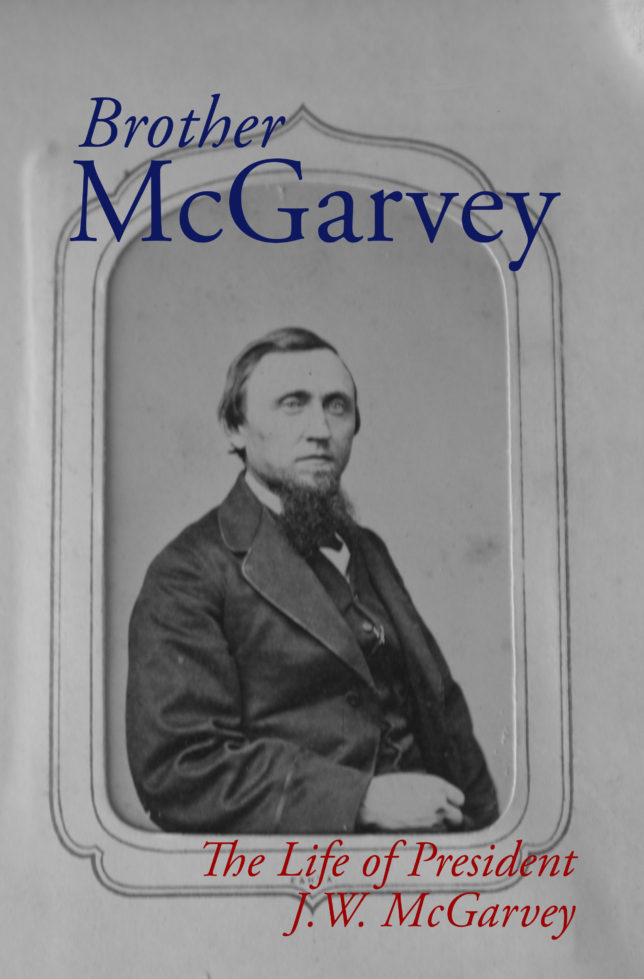
Pre-order Brother McGarvey now!

One of the most influential men in the Lord’s church in the last 200 years is, without a doubt, John William (J.W.) McGarvey.  He is well-known for his strong, conservative commentaries, his numerous articles on Biblical Criticism, and for being a prolific trainer of preachers in the late-1800s and early-1900s.

There is only one full-length biography written about this influential man of God, and it is about to be back in print for the first time in over fifty years!

BrotherMcGarvey(Front)

Brother McGarvey, written by W.C. Morro, will give you glimpses at “President McGarvey” from many different perspectives–from friends and “enemies” alike.  You will read excerpts from his own writings and journals, and see letters from those who knew him best.

PRE-ORDER INFORMATION:

Brother McGarvey will be officially released on August 12th.  This 244-page book will cost $13.99.  However, if you pre-order before August 1st, you will receive FREE SHIPPING, and receive the book on (or maybe even before) its official release date.  Pre-orders after August 1st will still receive free shipping, but there’s no guarantee that it will be there prior to the official release date.

*In order to receive the FREE SHIPPING, enter the coupon code: BroMcG at checkout!

The Roller-Coaster of Faith – The Life of the Apostle Peter (Part Two)

FAIR WARNING…. Today’s post is short.  I admit it.  But it must be done, because the next post in this series is one section, and it is LONG.  I hope that you’ll be okay with getting a short post–at least this once.  🙂

Simon Peter’s Call

Though Peter was first introduced to Jesus by his brother, Andrew, and spent several months following Jesus through Galilee, Jerusalem, and Judea before returning to Galilee (seeing several miracles, and baptizing many people while he was at it),1 Peter’s official call didn’t happen until perhaps a year or more after meeting the Lord.

It was on the shore of the Sea of Galilee, near his boat, that Simon was washing his nets,2 when Jesus climbs into the boat and asks him to “thrust out a little from the land.”  Simon complies, climbing into the ship with Jesus and moving the boat a little ways from the shore.  Simon looks at the shoreline and sees a huge mass of people, all in rapt attention to what Jesus has to say to them.  Having followed Jesus for some time, hearing Him teach, seeing Him work wonders, Simon knew exactly how the people felt.

After Jesus finishes speaking to the crowds, He spoke to Peter, telling him to “launch out into the deep,” and then he says to both Simon and Andrew, “let down your nets for a catch.”3  They obey, and the amount of fish that in the net is so incredibly massive that they can’t pull it into their boat.  In fact, they have to call another ship (belonging to Zebedee) over to help them take in the catch—and even then, both boats are so overloaded with fish that they begin to sink!

Peter, seeing what is happening, falls down at Jesus’ knees, proclaiming his unworthiness: “Depart from me, for I’m a sinful man, o Lord.”4  But Jesus tells him, “Don’t be afraid.  From now on, you will catch men [be fishers of men].”5  And from that point, Peter leaves everything and follows Jesus.6

-Bradley S. Cobb

1 All of these events can be found in the first four chapters of John.

2 Vincent says that this washing was of the “sand and pebbles accumulated during the night’s work.”  (see note on Luke 5:2).

3 Luke 5:4.  The command to “launch out” is singular, given to Peter.  The command to “let down your nets” is plural, thus Jesus speaks to the whole crew—primarily, this would be Simon and Andrew.

4 Luke 5:8.

5 Luke 5:10; Mark 1:17.

6 Luke 5:11; see also Luke 18:28.  Peter still apparently owned his fishing boat, for after the resurrection, he said, “I’m going fishing” and several disciples joined him in the boat (John 21:1-ff).  It’s probable, then, that Peter allowed his father (if his father was still alive) or perhaps Zebedee to use his boat to continue in the fishing business.

A Bad Habit in the Pulpit

I admit it.  I didn’t write this article.  How could I?  My great-great grandfather wasn’t even born yet when it was written back in 1885.  But it still has a good message, and a point worth remembering, especially for those preaching in a congregation that mostly uses the King James Version (and there are several that still do).  I hope you enjoy it.  The name of the author was not given, so I don’t know who to attribute it to.

A BAD HABIT IN THE PULPIT.

We mean the habit of criticizing and correcting the ordinary English version of the Scriptures. Occasionally it may be proper, and even necessary to do it, in order to bring out the true meaning of a text. But this very rarely occurs. And yet there are ministers, not a few, who constantly do this; do it when there is no reason to justify it, do it when the only effect of their criticism is to muddle the subject and confuse the minds of their hearers.

Doubtless the motive for this superservice differs in different preachers. Sometimes, no doubt, it is honestly done, with a view to a clearer understand­ing of the passage, or a more faithful rendering of the original. But even an honest motive does not always justify the act. There may more harm than benefit come of it, even when there is a slight infelicity in the translation, and the attempted criticism improves the rendering in the judgment of a critical and cultured hearer. But it must be borne in mind that the bulk of hearers in our congregations are not critics, nor capable of appreciating the nice points which an extreme critical spirit may raise, and are more or less disturbed in mind, or unfavorably impressed, every time the text of the received English version of their Bible, which is something sacred in their feelings, is discredited in the pulpit. But, unfortunately, this habit is often practiced when the convic­tion is unavoidable, that it is done to display scholarship, especially, familiarity with the Greek and Hebrew languages.

But, whatever the motive or the degree of skill evinced in the criticism and reconstruction of our authorized version, the habit is an evil and pernicious one, with very rare exceptions. As a matter of taste it is offensive. The assump­tion and presumption involved in such a course can not fail to give pain. For the preacher to array his individual learning and judgment against the learning and judgment of the distinguished Conclave that gave us the present version and the historical testimony of the ages, is a most audacious position to assume and can be tolerated only when and where strong reasons exist and can be made palpable to an ordinary congregation of worshipers. The writer of these lines has often been shocked and disgusted by the glib words and confident tone in which the grand old version of God’s word is assailed in the pulpit; not only by the ripe scholar and the profound critical student, but by the mere sciolist in philology, and the student fresh from the seminary, repeating by rote what he had heard in the classroom.

The tendency of this habit is to weaken, if not in time destroy, confidence in the Bible as we have always received it. It were easy to cite instances where preachers have assailed the common version so often that their habitual hearers have declared that their views were unsettled; they did not know what to receive as God’s Word, for they could not tell whether any particular passage was correctly translated or not. It should be made a matter of conscience with every preacher of the Gospel not to trifle in this presumptuous way with the historical and venerable form of words so dear to the Christian heart, and so associated with our memories and sacred experiences.

The comparatively few changes and emendations which the combined Christian scholarship of the world, after twelve years of laborious study and comparison, have introduced into the Revised Version of the Old and New Testaments, may well administer a sound rebuke to the numerous critics of the pulpit, who scarcely let a Sabbath pass without a weak and pitiable display of their superior wisdom (rather folly) in the way of criticism or emendation in the Bible which they are set simply to expound and enforce. The meaning of Scripture may be explained to the fullest extent, but the translation should ever be touched, if touched at all, with a sound judgment and a very delicate hand.

(Note: this article appeared in the periodical called The Disciple of Christ, October, 1885, pages 600-601).

Baptism, Our Lord’s Command

It’s been just a little bit, but we’re happy to announce that we are posting more new books on the Jimmie Beller Memorial eLibrary.  And today’s is one we think you’ll really like.

This book was originally published in Australia, 1913, by the Austral Publishing Company of Melbourne.  We have not changed any content from the original, but we have made some changes that we believe you will find worthwhile: (1) We have Americanized the spelling of words [for example, baptise is now baptize], (2) We have corrected incorrect Scripture references [usually, this was simply a reference to the wrong chapter in a book], (3) We have also corrected punctuation mistakes when we came across them.

Also, just like with every other book that we have published, we have completely reformatted it to give it a more pleasing look.  We have changed the font size, increased the size of the headings, and just overall tried to give it a facelift.

We are happy to present “Baptism: Our Lord’s Command (Containing a Reply to ‘The Question of Baptism’ by Mr. A. Madsen, a Methodist Minister)” by A.R. Main.

Contents

  1. PREFACE. 2
  2. Introduction to the 2016 Edition. 3
  3. Baptism: Our Lord’s Command. 5
    1. HOW MAY WE SETTLE THE QUESTION?. 7
  4. New Testament Example and Precept. 11
    1. SOME STRIKING ADMISSIONS. 14
    2. SCHOLARLY AUTHORITIES. 16
  5. The Commission. 20
  6. The Argument from Circumcision. 30
    1. THE PÆDOBAPTIST ARGUMENT STATED. 32
    2. REPLY. 33
    3. CHURCH CONTINUITY. 35
    4. DID CIRCUMCISION ADMIT INFANTS INTO THE CHURCH?. 37
    5. HAS BAPTISM TAKEN THE PLACE OF CIRCUMCISION?. 39
    6. COLOSSIANS 2:11-12. 42
  7. Jewish Baptism. 46
  8. Family Baptisms. 52
    1. CORNELIUS. 53
    2. CRISPUS. 54
    3. THE JAILER. 54
    4. STEPHANAS. 56
    5. LYDIA. 57
    6. OIKOS AND OIKIA. 58
    7. PÆDOBAPTIST ADMISSIONS. 63
    8. PLUMMER ON HOUSEHOLD BAPTISMS. 66
  9. Jesus and the Little Ones. 70
    1. “OF SUCH IS THE KINGDOM.”. 71
    2. “BABES AND SUCKLINGS.”. 74
    3. “FEED MY LAMBS.”. 75
    4. TO YOUR CHILDREN (ACTS 2:39). 76
    5. ACTS 21:4-5. 79
    6. PAUL’S LETTERS. 80
    7. 2 JOHN. 81
    8. CHILDREN OF CHRISTIAN PARENTS HOLY (1 COR. 7:14). 82
    9. BABES IN HEAVEN. 86
  10. A Pædobaptist Miscellany. 88
    1. JOHN’S BAPTISM. 88
    2. THE EUNUCH. 89
    3. SIMON MAGUS. 90
    4. THE BAPTISM OF SAUL. 91
    5. THE LORD’S DAY. 92
  11. Post-Apostolic Practice. 94
    1. THE DIDACHE. 95
    2. JUSTIN MARTYR. 96
    3. IRENÆUS. 97
    4. ORIGEN. 97
    5. TERTULLIAN. 98
    6. CYPRIAN. 101
    7. “A HISTORICAL FACT.”. 103
  12. The Action of Baptism. 109
    1. LEXICONS. 110
    2. DICTIONARIES AND ENCYCLOPÆDIAS. 112
    3. CHURCH HISTORIANS, ETC. 113
    4. SECONDARY MEANING OF “BAPTIZO.”. 115
    5. LUTHER AND CALVIN. 118
    6. NEW TESTAMENT TEACHING. 120
      1. The Baptism of John. 120
      2. The Eunuch. 122
      3. Baptism a Burial. 123
      4. John 2:23. 127
      5. Baptism of Suffering. 128
      6. Baptism in the Holy Spirit. 128
      7. 1 Corinthians 10:1-2. 130
      8. 1 Peter 3:20-21. 131
      9. Baptism of Three Thousand. 132
      10. Baptism of the Samaritans. 133
      11. Ezekiel 36:25. 135
  13. The Evil of Infant Sprinkling. 137

To download this well-researched book, or read it online, simply click the link below:

Baptism: Our Lord’s Command (A.R. Main)

The Roller-Coaster of Faith – The Life of the Apostle Peter (Part One)

WELCOME BACK!  We’re been working hard, getting things ready for you to read and enjoy and use.  I’ve received emails from several people who have told me that they are using the apostles lessons as sermons and/or class material.  Thanks for letting me know!  We are so happy that you are finding it useful!  Now, enough of the chit-chatting; on to the story of Peter!!!!!

The most prominent of all the apostles, Peter has been both exalted far beyond his rightful place, and cast down to near-Judas depths by religious people over the past two thousand years.  In their rush to deny Peter’s place as the first Pope, many Christians unfortunately negate Peter’s divinely-given prominence among the apostles, and by extension, the early church.  Neither extreme is correct.

Simon Peter’s Family

Jesus refers to him as the “son of John” or “son of Jonah.”1  We know nothing about this man except that he had two very religious sons: Simon (later called Peter) and Andrew.  From this, we can infer that he was probably a devout Jew as well.

It is thanks to his brother Andrew that Simon first gets to meet Jesus.  Andrew, a disciple of John the Immerser, was pointed to Jesus as “the Lamb of God,” and went to find Simon, telling him, “We have found the Messiah!”2  It is quite possible that Simon was also a disciple of John, which would explain how Andrew was able to find him and bring him to Jesus that same day.3

Possibly as much as a year later, Jesus comes into Simon’s house in Capernaum, and heals Simon’s mother-in-law. She immediately got up and began to serve them, which shows that she was most likely a kind, hospitable woman.  Simon Peter was married,4 though we know very little about his wife except that she (1) was still living some 25 years after Pentecost, (2) apparently accompanied her husband on some of his ministry trips, and (3) was a Christian.5  As a side note, this is evidence against Peter being the “first Pope,” as Popes aren’t allowed to be married.6

Simon Peter’s Names

When he was born, this man who would later become one of the greatest Christians to ever live was given the name Simon, or Simeon.7  This was an ancient name, common among the Israelites8 because it was the name of the second-born of the twelve sons of Jacob.9

When Simon met Jesus for the first time, the Lord said to him, “You are Simon, the son of John: you shall be called Cephas.”10  The name Cephas means “stone” in Hebrew.11  After this, however, Paul is the only one who uses this Hebrew form of the name.12

The name “Peter” is simply the Greek form of the Hebrew “Cephas.”  So when Jesus told him that he would be called “Cephas,” He could just as accurately said, “You will be called Peter,” because they mean the same thing.  After this, Simon is almost always referred to as either “Peter” or “Simon Peter.”13

The name “Peter” was divinely-given,14 perhaps to emphasize the kind of person Jesus needed Simon to become—a steady source of strength.15  It is also possible that Jesus gave Him this name, in part, because of the illustration He would use in Matthew 16:16-18:

Simon Peter answered and said to Him, “You are the Christ, the Son of the living God.”  And Jesus answered and said to him, “You are blessed, Simon, son of John: because flesh and blood hasn’t revealed this to you, but My Father who is in heaven.  And I say to you, that you are Peter [Greek, Petros], and upon this rock [Greek, Petra] I will build my church; and the gates of Hades shall not prevail against it.”

The difference in the two words, Petros and Petra, are striking.  Petros [Peter] is masculine in Greek, and means a small rock; Petra is feminine in Greek, and means a large slab of rock, bedrock, or a solid mountain of rock.  It was the inspired statement that Peter made (that Jesus is the Christ, the Son of God) that was the rock upon which the church would be built—not Peter himself.16

-Bradley S. Cobb

1 John 1:42; 21:15-17.  The King James’ Version of Matthew 16:17 gives a transliteration of the Greek (which was a transliteration of the Aramaic), “Barjona.”  But this simply means “son of Jonah,” or “son of John.”  The two names are very similar in the original language.  See David Smith’s article, “Peter,” in James Hasting’s Dictionary of the Bible.

2 John 1:40-41.

3 John the Immerser was baptizing in Bethabara (John 1:28), which was near Jericho, around 60 miles from Capernaum, where Peter and Andrew lived (Mark 1:19-21).  Thus, Peter must have been nearby.  This has led many to the natural conclusion that Peter was a disciple of John, which is a very reasonable guess (see W. Patrick’s article, “Peter,” in Hasting’s Dictionary of Christ in the Gospels).

4 In addition to the fact that Peter had a mother-in-law (an impossibility for an unmarried man), he also identifies himself as “an elder” (1 Peter 5:1), thus he was a “husband of one wife,” or more literally, a “one-woman man” (1 Timothy 3:2).  If he was not married, then he would have no right to hold the office of an elder.  In addition, 1 Corinthians 9:5 appeals to Peter as an example of a married apostle (see next footnote).

5 1 Corinthians 9:5, written approximately AD 56, states “Have we not power to lead about a sister, a wife, as well as other apostles and the brethren of our Lord, and Cephas [Peter]?”  From this passage, (1) it seems that it was common knowledge that the other apostles were married at that time; (2) the phrase “lead about” means to take someone around with them, showing the apostles’ wives accompanied them; and (3) Paul specifically states that each wife was “a sister,” that is, a sister in Christ (see this verse in ASV, MLV, ESV, NKJV, etc.)

6 The Catholic Church claims Peter was the first Pope, the first bishop of Rome.  There are several lines of biblical evidence which refute this false doctrine, such as: (1) Peter was married, though the Catholic Church teaches that priests (from which the Bishops, Archbishops, Cardinals, and Popes come) cannot be married; (2) Paul desired to come to Rome to work with the church (Romans 1:10-11); but also said that he would not build on another man’s foundation (Romans 15:20); and Peter’s name is conspicuously absent from the list of greetings that Paul gives to the Christians in Rome (Romans 16); there is no biblical evidence that Peter was ever in Rome; Peter’s mission was to the Jews (Galatians 2:9), and all the Jews had been expelled from Rome (Acts 18:2), giving Peter no reason to go there.  There is much more that could be added, but as it is outside the scope of this work, this will suffice.

7 He is called “Simon” in the gospel accounts, but in Acts 15:14, James (the brother of the Lord) refers to him as “Simeon.” Though it is not translated as such in most English Bibles, in 2 Peter 1:1, he identifies himself as “Simeon Peter” (the ESV, NRSV, NET, NAB, Disciples Literal New Testament, and the Living Oracles all translate this properly).

8 There is a Simeon in Luke 2:25-35; another one mentioned in Luke 3:30; a prophet with that name in Acts 13:1.  Jesus had a brother named Simon (Matthew 13:55); two apostles had that name (Matthew 10:1-4); Jesus ate at the house of a Pharisee named Simon (Luke 7:36-44); Jesus stayed in the house of Simon the leper near the end of His ministry (Matthew 26:6); a man named Simon carried Jesus’ cross (Matthew 27:32); Judas Iscariot’s father was named Simon (John 12:4); the infamous magician-turned-Christian (and according to tradition, turned enemy of Christianity) was named Simon (Acts 8:9, 13); Peter stayed in the house of Simon the tanner while in Joppa (Acts 9:43, 10:5-6).

9 Genesis 35:23.

10 John 1:42.

11 The Hebrew root, Keph (כּף) is used in Job 30:6 and Jeremiah 4:29.

12 1 Corinthians 1:12, 3:22, 9:5, 15:5; and Galatians 2:9.

13 Twice in Matthew, Jesus refers to Peter simply as “Simon” (Matthew 16:17; 17:25); In Mark, after noting that Jesus gave Simon the name “Peter,” the apostle is only identified called “Simon” one time (though in the same verse (14:37), Mark also calls him as Peter); Luke’s gospel account uses “Simon” multiple times after noting that he was also called Peter (7:40-44; 22:31; 24:34); John records Jesus calling him “Simon” on only one occasion (21:15-17).  After Pentecost, the only time the name “Peter” or “Cephas” is absent in identifying him is Acts 15:14, where he is called “Simeon.”

14 Mark 3:16; Luke 6:14.

15 Simon would eventually be the one who used the “keys of the kingdom” to welcome both Jew and Gentile into the Kingdom of God (see Matthew 16:16-18; Acts 2; Acts 10-11).  He was also one who was given a specific commission to strengthen the rest of the apostles (Luke 22:31-32); and was entrusted with the shepherding care of Jesus’ sheep (John 21:15-17).

16 The Catholic Church ignores the differences in the original words to make the claim that Jesus was going to build the church on Peter himself (yet again, their argument to elevate Peter to Popehood fails based on biblical evidence).  The only way that petra could be a reference to Peter is if he somehow got a sex change halfway through Jesus’ sentence—an absolute absurdity.

A Brief Review of the Hester-Preston Debate (Part Two)

Yesterday, we gave a very brief review of our impressions from the first night of the Hester-Preston debate, when Don Preston affirmed that the final coming of Christ and the resurrection of the just and the unjust took place in AD 70.  Today, we will review the second night, when the roles were reversed.

(note: as stated yesterday, a much fuller review, complete with quotations and specific arguments will appear in the first issue of the Quarterly).

Proposition 2: The Bible teaches that the Second (final) coming of Christ and the attendant resurrection of the just and the unjust, is yet future, and will occur at the end of time.

David Hester opened the evening’s discussion by clearly defining his proposition and then giving 23 numbered arguments for why the resurrection could not have taken place in AD 70.  I thought some of them were powerful and worth consideration, and a couple of them I would have suggested he leave out.  He spent a decent amount of time speaking about the Lord’s Supper, which was to show the death of Christ “until He comes,” pointing out that if Jesus came in AD 70, then the Lord’s Supper really doesn’t show anything at all anymore.

Preston’s response focused mainly on reiterating his arguments from the night before, and he only specifically mentioned four of David’s twenty-three arguments.  He pointed out that David didn’t answer all of his arguments from the night before, restating several of them.  He also brought up a couple arguments against David’s proposition by appealing to specific Greek constructions in certain passages.

In his second speech, Hester requested that Preston answer the arguments given instead of “rehashing” things from the night before, since this was a new proposition.    He also showed some examples from the Bible that disproved one of the Greek arguments that was made, while also spending much time affirming that while the time of the destruction of Jerusalem was known by Jesus and the apostles, the time of the final judgment and resurrection was not.

Preston, in reply, argued his points again (except for that Greek argument), emphasizing that his arguments from the night before, while not specifically answering each detail of Hester’s 23 arguments,  were sufficient to disprove them.  He also spent a good deal of time giving arguments against the idea that the apostles didn’t know when the second coming of Jesus would be (specifically John 16, “He will guide you into all truth).

David Hester spent around half of his final speech quoting translations and recognized Greek scholars in regards to the Greek word “mello,” which Preston says means “about to” and stresses imminence.  He also reiterated some of his previous arguments and gave Acts 1:7 as proof that the apostles weren’t privy to the time of the final coming of Christ.

The final speech by Don Preston covered a lot of the territory from earlier speeches, and he re-emphasized some of the points from the previous night which Hester didn’t really address.  Some of these points demand examination and study, and I wish Hester would have gotten to them.  But like we said in yesterday’s post, there was so much information put out there that it was pretty much impossible to deal with all the lines of argumentation that were given.  This is the same situation that Don found himself in on the second night.

Though I think he could have done more to answer the specific 23 arguments given by David Hester, there really wasn’t enough time in the debate to devote to answering each one specifically.  He did make a strong point that David didn’t show a passage that referred to “the end of time.”

Day 2 Conclusion:

Because of Hester’s understandable, structured presentation of the material, and Preston’s lack of specific answers to 80% of the arguments put forth, our impression is that the proposition affirmed by David Hester was successfully defended.

Again, as we said before, there wasn’t time to sufficiently cover each argument, but there was opportunity to deal with more than four of them, which we believe would have been a better use of Preston’s speeches.

Having said that, Preston did offer some evidence in his rebuttal speeches that deserves further study.  But these were not sufficient in and of themselves to successfully negate the proposition being argued.

Final Conclusion:

Both men were very passionate about their position, and would occasionally get loud and point fingers.  But it was conducted in a very dignified manner, and both men were engaged in a friendly conversation afterwards.

The two men are considering debating again in Alabama at some point in the future, if proper arrangements can be worked out.

-Bradley S. Cobb

A Brief Review of the Hester-Preston Debate

If you hadn’t heard, there was a debate this past Thursday and Friday in Ardmore, OK.  The Cobb Six made the two-hour trip to be in attendance, so what you’re about to read is a review from an eyewitness.  We had some other friends who made the trip (and came from a lot further than we did), and after talking with them, our impressions were, for the most part, the same as theirs.

As is normally the case after a debate, both sides are claiming victory, saying that the other side couldn’t handle their arguments.

Note: this is a brief review.  A much fuller, detailed treatment of the topic (with specific arguments and quotations) will be appearing in the first issue of the Quarterly.

Proposition 1: “Resolved: The Bible teaches that the Second (final) coming of Christ and the attendant resurrection of the just and the unjust, occurred at the time of the fall of Jerusalem in AD 70.”

This topic was supposed to be the subject of debate the first evening.  Don Preston opened the debate with a 30-minute talk that covered a LOT of ground (he spoke faster than most anyone I’ve heard during his first speech).  He made several points that I thought were interesting and worthy of further study, but unfortunately, there was no real structure, and he neglected to define his proposition, which made his opening argument confusing.  He also made several connections between passages, but didn’t stop to show us why they should be connected–and at the speed he was talking, it was impossible to write all the passages down.

I spoke with a friend of mine who agrees with much of what Don teaches (having watched and listened to many of Don’s lessons), and he said that he gave it a 7 out of 10.  But then he said, “unfortunately” it was “probably a 2 out of 10 for someone who never heard [of] Realized Eschatology before.” (note: Realized Eschatology is another name for preterism).  In short, it was as though Don was talking only to those who already agreed with him, and not to try to show others why preterism should be preferred.

David Hester had a difficult time following Don’s first speech, because without Don defining the proposition, there was no real basis to start from.  So, David spent most of his time showing that the Law of Moses ceased being valid when the kingdom came into existence at Pentecost (Don takes the position, if I understand correctly, that the Law of Moses was still valid and in force until Jerusalem was destroyed).  While he made some excellent points that deserve consideration, this issue isn’t directly connected to the proposition.

The second set of speeches by both men followed pretty much the same pattern, except that Don slowed down tremendously in his speaking.  Each side said that the other was avoiding or misrepresenting their arguments.

Prior to the debate, Don had sent David several questions, and then used David’s answers as part of his speech, with a “David vs. Paul” theme.  While this was interesting (and David did some clarifying of his answers in his response), Don was trying to “negate” what David had answered instead of “affirming” the proposition at hand.

The final speeches of the night were very similar to the second ones in their emphasis.

All in all, we were disappointed with both sides of the debate the first night.  Don never defined his proposition (he would say the next evening that it was a waste of time to define it), and didn’t really deal much with the “resurrection of the just and the unjust”; and David’s responses also didn’t really touch the proposition either, and instead of answering many of the arguments Don put forth on various passages, David spent his time in a thorough attack on just a couple.

Day 1 Conclusion:

Neither side could claim a definitive victory, because the specific proposition itself wasn’t the focus of either side’s speeches.

(note: Many of Don’s arguments might have been supplementary to his position, but it was never brought together to show “this is how it all fits together to prove my proposition”).

The debate itself can be viewed online here.

Tomorrow we will give a brief review of the second night of the debate.

-Bradley S. Cobb