Category Archives: Articles

What Must I Do? – A Closer Look

Many times throughout the Bible that the question is asked “What must I do?” or “What shall I do?” In fact, throughout the New Testament this is a recurring theme. And obviously, it is very important to do what is necessary to be saved. What are the things one must do?

We’ve all heard the plan of salvation: Hear, believe, repent, confess, and be baptized. But what do they mean? Hear what? Believe what? Let’s look a bit closer at each one of those things.

WHAT MUST I HEAR?

We take for granted sometimes that people automatically know what we are talking about when we say they must hear. But suppose someone does not know, what then? Romans 10:14 says “how shall they believe in him of whom they have not heard?” This verse says that no one can believe in Christ if they have not heard of Him! Just a few verses later, Paul says So then faith cometh by hearing, and hearing by the word of God.

So, what the person must hear is the Word of God. Throughout the Bible, people are told to obey the word of God. The Israelites in many, many instances were told to hear the Word of God and return to him. (See the entire book of Judges, and about every one of the Major and Minor Prophets). If they heard the Word of God, they had the chance to make things right.

Now, just hearing obviously is not enough, because you can see in reading those books that not every one that heard actually obeyed.

Romans 10:16 But they have not all obeyed the gospel. For Isaiah saith, Lord, who hath believed our report?

On the Day of Pentecost, the Apostles preached the first gospel sermon, starting with the following words: Act 2:22 “Ye men of Israel, hear these words;“ Later on, Peter told them Act 3:23 And it shall come to pass, that every soul, which will not hear that prophet, shall be destroyed from among the people.”

So, there is a consequence for not hearing the Word of God! Have you ever had anyone say, “I don’t want to hear about Jesus” or “Don’t talk to me about religion.” They don’t realize that they shall be destroyed for not hearing!

We can see what we must hear to be saved: the Word of God.

WHAT MUST I BELIEVE?

In the example of those first converts on the Day of Pentecost, we can see they believed the Word of God. But what exactly must one believe before they can be saved (remember, belief alone does NOT save you, but you must at least believe a certain amount in order to be saved). Obviously they must believe that God exists, but that is not enough.

James 2:19 Thou believest that there is one God; thou doest well: the devils also believe, and tremble.

The people on the day of Pentecost were already religious people. So, they already had some background in the existence of God and his mighty power to save. But something was missing. What was it that they still needed to believe? The answer can be found in Peter’s sermon to them in Acts 2, but let’s look a bit later in the book of Acts at a different example.

Acts chapter 8 tells of a man of Ethiopia, a Jew who had come to Jerusalem to worship God. On his way back home, he was reading the scriptures (OT), thinking he was in a saved condition. Then Phillip showed up to preach to him.

Acts 8:35 Then Philip opened his mouth, and began at the same Scripture, and preached unto him Jesus.

What was it that these Jews did not know yet? JESUS! Jesus came and fulfilled the prophecies of the Old Testament. He was the messiah that they had been waiting for!

When the eunuch asked to be baptized, Phillip told him that he must believe with all his heart first. The eunuch answered and said, “I believe that Jesus is the Son of God.” Phillip thought that was enough to baptize him and make him a Christian.

Romans 10:9 That if thou shalt confess with thy mouth the Lord Jesus, and shalt believe in thine heart that God hath raised him from the dead, thou shalt be saved.

So, what must we believe? That Jesus is the Son of God and that he was raised from the dead. Some try to make too many rules and restrictions on who can be baptized. They may say something like “They don’t know enough yet.” or “I don’t think they’re ready.” If you’ll notice, EVERY specific example of conversion in the book of Acts was the result of a single sermon. ONE sermon. It was not the result of weeks or months of study on many different topics. These people were at a point where they could be baptized based upon the first time they heard the truth about Jesus being the Son of God.

Paul refers to the new converts as “babes in Christ” (I Cor 3:1) I Peter 2:2, Peter tells them that “as newborn babes” they were to “desire the sincere milk of the Word.” so that they may grow. The milk of the word is the basic teachings of the gospel. Paul calls it the first principles of the oracles of God. Babies do not know much of anything, but they do grow. Slowly, but surely they do grow. We don’t expect them to be able to walk and talk and eat solid food before we allow them to be born, so why do we expect the same of people who wish to born spiritually in baptism?

Jesus even illustrated this in his last words in the books of Matthew.

Matthew 28:19-20 Go ye therefore, and teach all nations, baptizing them in the name of the Father, and of the Son, and of the Holy Ghost: Teaching them to observe all things whatsoever I have commanded you: and, lo, I am with you always, even unto the end of the world. Amen.

Notice that the teaching of all that they were to observe came after they had been baptized. You don’t have to know the whole Bible before you can become a Christian!

What must one believe? That Jesus Christ is the Son of God.

OF WHAT MUST I REPENT?

John the Baptist preached in the wilderness “Repent ye, for the Kingdom of Heaven is at hand.” (Matt 3:2)

Jesus Christ preached “Repent, for the Kingdom of Heaven is at hand.” (Matt 4:17)

Jesus also said “Unless ye repent, ye shall all likewise perish” (Luke 13:3,5)

Jesus sent the apostles on the limited commission, and they “preached that men should repent.” (Mark 6:12)

Peter told the Jews on the day of Pentecost “Repent” (Acts 2:38)

But the question arises: repent of what?

Acts 3:19 Repent ye therefore, and be converted, that your sins may be blotted out, when the times of refreshing shall come from the presence of the Lord;

We must repent in order to have our sins blotted out.

Act 8:22 Repent therefore of this thy wickedness,

Peter told Simon the sorcerer to repent of his wickedness.

Act 26:20 … that they should repent and turn to God, and do works meet for repentance.

These were told to repent and turn TO God. This means they were not following God.

So, what we can see from these passages is that we must repent of our wickedness, and from being turned away from God. All of which can be boiled down to one word: SIN. But what does it mean to repent?

Repent means “to turn away” or “turn again” Vine’s dictionary says that repent always signifies a change for the better, and overwhelmingly is used in reference to changing from sin. Easton’s Bible Dictionary says “to change one’s mind and purpose, as a result of knowledge.”

So, repenting is a change for the better (leaving sin) after knowledge. And what is that knowledge?

Mark 1:15 And saying, The time is fulfilled, and the kingdom of God is at hand: repent ye, and believe the gospel.

Jesus here is speaking, and tells them to repent and believe THE GOSPEL! Change their minds and purpose as a result of hearing and believing that Jesus is the Son of God!

So, we know what we must hear (the Gospel), what we must believe (that Jesus is the Son of God – aka the Gospel),

Of what must we repent? Our own sin.

WHAT MUST I CONFESS?

To Confess is to tell someone something; to spread the word about something that deals directly with YOU. You cannot confess for someone else. To tell someone else’s sins is to gossip and be a talebearer in most cases. But you cannot confess for anyone else anymore than you can believe or repent for someone else. So, confessing is something personal. Whether it be something that you have done, or something that you believe, it is personal to you. Let us keep that in mind as we look at what we must confess.

Matthew 10:32 Whosoever therefore shall confess me before men, him will I confess also before my Father which is in heaven. (see also Luke 12:8)

So, Jesus is saying that if we confess HIM before others, He will confess us before God above. Remember, confession is something personal, so we would be professing our belief in Him as the savior and the Son of God. In turn, Christ will give his profession of His acceptance of us before God.

What must we confess? Our belief -before others-that Jesus Christ is the Son of God.

BAPTISM?

I wondered about exactly how to tackle this topic. Should I do, “Why should I be baptized?” Or perhaps “How should I be baptized” or maybe even “Who must baptize me?” Or “In what must I be baptized?” So, let’s just look at all of them.

Why should I be baptized? Because over and over in the Bible it is shown as the way to get into Christ and be saved. Mark 16:16:, I Peter 3:21, Romans 6:3, Acts 2:38, Acts 22:16.….

How, and in what, should I be baptized? Any example in the Bible of baptism where any description is used talks about either going into or coming up out of water. So, you must be baptized IN water. The word “IN” means “surrounded by.” So you need to be baptized, surrounded by water. That is why baptism is seen as a burial.

Romans 6:4 Therefore we are buried with him by baptism into death: that like as Christ was raised up from the dead by the glory of the Father, even so we also should walk in newness of life.

Colossians 2:12 Buried with him in baptism, wherein also ye are risen with him through the faith of the operation of God, who hath raised him from the dead.

Who should baptize me? While all specific examples given in the Bible are preachers, the apostle Paul points out that the specific person who does the baptizing is not as important as the fact that they were baptized. He, in fact, thanks God that he was not the one who baptized some of the people there, because they might try to follow Paul instead of Christ. Obviously Paul wanted them baptized, but he left it to some other Christian to do it.

Why? Because we want to be saved.

How? By being buried, surrounded by water and being raised up from it.

What is the central theme of all of these? The GOSPEL, my friends! The GOSPEL!

We must hear that wonderful good news that Jesus, the Son of God, came to earth, died, was buried and arose on the third day so that we an have forgiveness of our sins! We must believe the Gospel with all of our heart! We must repent from sin, and change our mind and purpose to following Christ upon hearing the Gospel. We must confess our belief in the Gospel. And we must be baptized, following the form and command of the death, burial and resurrection (aka GOSPEL) of Jesus.

After obeying the Gospel, we must then tell others about it! If we do not continually confess Christ before others, we will not be confessed by Him before God! Spread the Word! Jesus Christ is the Son of God! He came to earth, died, was buried, and arose!

Have you followed the Gospel?

-Bradley Cobb

For God’s Sake, for Christ’s Sake, and for Pete’s Sake…

James says that “faith without works is dead, being alone.”  That is, the only real faith, the only living faith, is one that is working, that is doing, that is active.  Are you an active Christian?

I once heard a man say about his home congregation, “I like our church just the size it is.”  That’s one of the saddest things I’ve ever heard, because what that says is “None of these lost souls in my town matter to me,” or “I don’t feel like saving any souls,” or “I’m perfectly content to let them all go to hell.”

No matter how you want to phrase it, that attitude is wrong.  No matter how many people you have in the building on a Lord’s Day morning, it isn’t enough!  There are literally hundreds or thousands of people in your hometown who are alone, living without Jesus, without salvation, without hope.  And as Christians–active Christians, we need to start doing a better job of bringing them to Christ.

This week you have a certain amount of people in attendance.  Next week, top that number.  Be realistic, but do your part to plant the seed and trust in God to do His part.  “I planted, Apollos watered, but God gives the increase”!  When you do your part, God will do His and you’ll be amazed at the results.

An active Christian is one who is out doing the will of the Lord.  But why be an active Christian?

For God’s sake, be an active Christian.

Read John 3:16.  He sent Jesus Christ for your sake.  Read that verse again, but this time, instead of the phrase “the world,” put your own name there.  Read it out loud.  “For God so loved [your name] that He gave His only begotten Son…”  God did that for your sake.  And all He asks in return is that you serve Him and tell other people about Him and what He’s done for them.

Remember, you can put your name in that verse, but you also need to put other people’s name in that verse.  For God so loved Bob, my next-door neighbor, that he gave His only begotten Son.  For God so loved my teacher, or my cousin, or the cashier at the grocery store, that He gave His only begotten Son.

For God’s sake, be an active Christian.

For Christ’s sake, be an active Christian.

Jesus had you in mind when He was dying, hanging on the cross, blood dripping down, being mocked by the people around Him.  He was thinking about you.  “While we were yet sinners, Christ died for us” (Romans 5:8).

“Greater love has no man than this: that he should die for his friends.”  Jesus spoke those words the night before He died–the night before He died for you. John 15:13.

Since Jesus did that for your sake, is it really asking all that much for you to tell others about Him?

For Christ’s sake, be an active Christian.

For the church’s sake, be an active Christian.

Look, let’s be honest.  We need you.  Each and every person in the pews is needed.  Jesus said that the fields are ripe, ready to be harvested, but there’s a lack of workers.  Pray to the Father to send out workers! (Luke 10:2).  There are people out there, wanting to know the truth, ready to follow Jesus, but they need someone to tell them about Him.

I’ve been reading a book, written by a brother in Christ back in the 1960s.  In that book was a very thought-provoking line that … well, let’s just say it hit me pretty hard.

What would Jesus do if he were a member of the congregation where I worship?

Would Jesus leave any person of your acquaintance out of His efforts to save if He physically lived here on earth today?  If so, which person would He omit? (Ideas for Bible School Growth by Alan M. Bryan, page 10)

Of all the people you know, that you work with, that you live near, that you go to school with, that you’re related to, whatever the case may be–which ones do you think Jesus would ignore?  Which ones do you think Jesus would walk by without a word?  Which ones do you think Jesus would say, “He’s not worth my time”?

You know the answer to that question.  So, “Go ye and do likewise” (Luke 10:37).

For the church’s sake, be an active Christian.

For Pete’s sake, be an active Christian.

Every time I hear people say “for Pete’s sake,” I want to say, “I only know one person who goes by the name of Pete, and he lives in England.  So what exactly does he have to do with this?”

Thousands of lost souls are in this town, and we need to reach them all.  Let’s call them all Pete.  Not to their face, mind you, but let’s just think of each of the lost souls in this town as people in need of the gospel.  They are people who are in desperate need of an active Christian to touch their lives and help them come to Christ.

This helps bring people to Christ, but it also has the glorious side benefit of encouraging yourself and the whole congregation.  You make yourself happier, you bring joy to other Christians, you bring Pete to the Lord.  Really, the only one who loses in this whole scenario is Satan.

There are a lot of Pete’s in the world who are going to die without Christ, without hope unless someone teaches them about Jesus.  Be an active Christian for their sake.

For Pete’s sake, be an active Christian.

For your own sake, be an active Christian.

Faith without works is dead.  And a dead faith won’t get you very far when Jesus returns.

Who needs to come to Jesus?  It’s your friends.  It’s your neighbors.  It’s your co-workers.

Maybe it’s you.

“No,” you say.  “I’m good with Jesus.”  Are you really?  Are you certain?  Would Jesus agree with your assessment?

“Not all who say to me ‘Lord, Lord’ will enter the kingdom of heaven, but he who does the will of my Father in heaven” (Matthew 7:21).

Jesus said it requires doing God’s will.  It means being active and obeying God’s commands.  Jesus describes a judgment scene in Matthew 25, and if you’ll notice the judgment was based on who was active and who was not.

It’s a wonderful thing to serve the kind, merciful, loving God of heaven.  Don’t you think it’s time you get right with Him?

For your own sake, be an active Christian.

A growing church starts with you.

-Bradley S. Cobb

Demonology

Due to having a very full schedule, our posts have been less than regular, and for that I apologize.  But because of your patience, we’re going to give you a freebie.  And feel free to tell others about it too.

The issue of demons and evil spirits is prevalent once again in our culture, and people are asking questions like: what does the Bible say about demons?  Where did they come from?  Do they still work among men today like they did during the Bible times?  What are demons anyway?

Alexander Campbell took the time to give a lecture on this very topic, and it is quite interesting and informative.  I won’t give away his conclusion – then why would you read the lecture?

His lecture on Demonology is featured in the book Alexander Campbell: A Collection, (which is well worth getting, believe me), but since you’ve all been so patient with us, we’ve giving it to you for free today.

Click the link below to download it:

Campbell, Alexander – Demonology

CampbellCover

The Dangers of Growing Up in the Church

Yes, you read the title right.

Being brought up by godly parents, and being raised to respect Jesus Christ are wonderful things.  Without them, I don’t know if I would be a Christian–let alone a preacher–today.

But being raised in the church also presents several dangers.  These are dangers that you must take seriously, otherwise your child will most likely be one of the thousands who “leave the church” once they move out of the house.

Hypocrisy Shines Through

A child is taken to church each time the doors are opened, and is in Bible class from a young age.  But what happens when that child is at home? Let me share with you what happens in the lives of many (perhaps even most) of these children’s lives.

That child comes home and never hears the Bible mentioned.  He rarely, if ever, sees other Christians come to his house (except perhaps some of his relatives).  In short, he sees his parents as hypocritical.  They go to church and are “part of the group” on the Lord’s Day, but the rest of the time, they are no different than anyone else.

Now, perhaps you might think “hypocrite” is a strong word to use.  Let me say it some other way that maybe will make sense:

If your children don’t see you as a Christian throughout the week, what you do on Sunday isn’t going to convince them.

And they will subconsciously decide that being a Christian isn’t really all that important.  And they will either leave or become someone who simply takes up space in the auditorium.

Repentance is Difficult

Being someone who was raised “in the church,” I say this from my own experience.  When I was baptized in my younger years, I didn’t view myself as a bad person.  I was already praising God during the worship times.  I was memorizing my memory verses for Bible class.  I listened to the sermons most of the time.  I could tell you the plan of salvation.

In short, there was not really any change in my life from what I did before to what I did afterwards.  I knew I needed to be baptized, but there really wasn’t anything for me to change in my life.  I’ve discussed this with others who were raised in the church, and most of them have described a similar situation.

I think this, more than any other reason, is why so many people are “rebaptized” later in life.  They can’t remember agonizing over how utterly sinful their lives had been before being baptized because they were acting just like all the Christians, just without being one.

A Lack of a Personal Faith

When children are raised in the church, they often take on their parents’ faith by default.  As in, they are told what is what by their parents, or by the Bible school teachers and the preacher.  They simply accept that this is the way things are, and instead of coming to a knowledge of the truth themselves, they start living on an inherited faith.

If you want to know what the difference is, look at the Israelites.  Those who crossed into the Promised Land who had seen God’s miracles were faithful for the most part.  While Joshua lived, the people were faithful.  While the elders that outlived Joshua were in charge, the people were faithful.

But as soon as people who didn’t have to work for the Promised Land came into power, things went downhill and quickly.  They didn’t have to fight for the Promised Land, they inherited it.  They took it for granted.  And they fell away.

When someone grows up in the church, they often live on an inherited faith.  And later in life, if their faith is challenged, it can fall apart because it wasn’t really their faith.

I had a disagreement with one of my instructors in school about this very topic.  I told him that I envied the ones who were converted fresh, brought to Christ out of the world or from denominations, because for them it was a true life-changing decision.  They knew where they were and they knew what they were leaving behind.  Their faith was absolutely a personal faith.

A Lack of Zeal for the Lord

Tying in with the idea of an inherited faith, children who grow up “in the church” often have a lack of zeal for the Lord once they grow up.

Why is this? Part of it has to do with having an inherited faith.  You’re not likely to be zealous about defending someone else’s beliefs.  You might say, “But those are my beliefs too!”  Then if that is truly the case, you’ll be defending your beliefs.  But unless you’ve decided for yourself (making it a personal faith)  that your parents got it right, you’re not likely to be a zealous defender of what they believe.

Part of this lack of zeal can also be attributed to the lack of seeing Christianity lived out in their parents’ daily lives.  If it’s not important to the parents, the child isn’t going to think it’s very important either.

A Misguided Zeal for the Lord

Some folks who are raised in the church have an ego complex because they are raised with the “we are right and everyone is wrong” teachings.  Then they get to thinking that they are so much smarter in the Bible than anyone else.  Or worse yet, they think everyone outside the church is dishonest with the Bible.

The importance of baptism is so obvious!  They just ignore the parts of the Bible that they don’t like.

And I can speak from experience (and others’ testimony backs it up) that when you’re raised in the church, there is a danger of being overly critical of even our own brethren.  It was ingrained in my head long ago that people who use one cup during communion are lost because they are “binding where God doesn’t bind.”  I fully believed at one point in time that we must actively fight anything that went against “what we’ve always done.”  Why?  Because that’s what I heard talked about.

In short, being raised in the church presents the very serious danger of being a heretic hunter and and a spiritual egomaniac who thinks he’s better than “all those lost people.”

What is the Solution?

The answer to this question is not easy, but it is worth it if you care about your children and their eternal soul.

BE TRUE CHRISTIANS

If you want your children to grow up to be active, faithful Christians, then the best way to do that is to be an active, faithful Christian yourself.  Show them that Christianity is a life worth living outside of the walls of the church building.  They need to see that the church family is important to you.

All the church programs, youth activities, and Bible classes in the world won’t have the same impact on your kids as seeing Christ lived out in you.

If you want your children to have a true zeal for the Lord and a love for the lost, then they need to see that in you.  They don’t need to see condescending attitudes towards lost people whom God made in His own image.  They need to see compassion and patience towards people who were raised in denominations who struggle with changing from what they were raised with.  Most denominational people aren’t intentionally ignoring certain Bible passages–they are simply going by what they’ve always heard and been taught.

We also need to instill in our children a healthy dose of what it means to be faithful to God.  Not just saying it, but living it.  They need to see what it means to be “walking in the light.”

But finally, we need to teach our children not just what to believe and do, but why.  The overwhelming majority of kids raised “in the church” can probably tell you that instrumental music is wrong, but they couldn’t explain why they believe that.  Without that crucial why component, their faith will fall apart.  They won’t be able to prove it to others, and that will cause them to realize they can’t really prove it to themselves.

Are your children’s lives worth the work to you?

-Bradley Cobb

Is the Lord’s Supper the most important part of worship?


Question: Is the Lord’s Supper more important than the other actions in the worship service? –B.C., Indiana.

Thanks for the question. There are many sincere brethren who believe that the Lord’s Supper is the central element of our worship, and there are many other sincere brethren who believe it is exactly of equal importance with the other areas of worship and dedication to God that take place in the assembly. But the question is this: What does the Bible say?

First, notice Acts 20:7. The apostle Paul had spent a full week in Troas just so he could assemble with the saints on the Lord’s Day. But Luke describes the assembly this way: “The disciples came together on the first day of the week to break bread.” This isn’t talking about a common meal. Paul could have had a common meal with the saints any day of the week. Especially consider that during Paul’s time, Sundays were work days. This verse is a reference, not to a regular meal, but to the Lord’s Supper.

According to Luke, the inspired historian and writer of Acts, the main reason the disciples came together was to take the Lord’s Supper. Was it the only reason? Of course not. Paul preached to them all night long, and though the text doesn’t say it, we can safely surmise that they also sang and prayed as well.

Second, Christians in the Bible were criticized because they weren’t focusing on the Lord’s Supper when they came together. Look at 1 Corinthians 11: “…I am not praising you, because you are not coming together for the better, but for the worse. … When you come together, it is not to eat the Lord’s Supper.”

The inspired apostle Paul told the Christians in Corinth that they were sinning, coming together for the worse, because their coming together wasn’t to eat the Lord’s Supper. Sure, they literally ate the unleavened bread and drank the fruit of the vine, but they didn’t treat it as the sacred, Jesus-instituted meal that it was meant to be.

Other passages in the same book show us that they also prayed and sang when they came together, as well as exhorted and instructed one another with preaching (see chapter 14). The Lord’s Supper was not the only reason they were to come together, to be certain. But Paul uses soul-condemning language in regards to their lack of focus on the Lord’s Supper (see 11:29), but doesn’t use that language when talking about their improper singing and speaking in the assembly.

Third, the Lord’s Supper is the only part of the assembly that was actually ordained specifically by Jesus Christ. Think about it for a moment: singing, praying, preaching, and giving were all things done throughout the Old Testament. But the Passover was a special event, one with great depth of meaning; one that was a memorial of what God had done for Israel; one that held a place of prominence over the regular temple worship.

In the same way, the Lord’s Supper is a special event; one with great depth of meaning; one that is a memorial of what God (through Jesus Christ) has done for us. It is given prominence by God through His inspired writers. It is the part of worship that Jesus Himself commanded His followers to practice to remember Him and His death.

Don’t misunderstand me.  Singing and praying, preaching and giving, they are all commanded by God, and are therefore important.  But there is a focus, an emphasis given to the Lord’s Supper that puts it above the rest.

Final Thoughts

Christians have been done a disservice by hearing preachers, elders, and members talk of the Lord’s Supper as “an important part, but not the most important part of our worship.” The Lord’s Supper has been relegated to a five-minute snack with little to no spiritual reflection offered by the ones serving at the Lord’s table.

If you were to ask most Christians what they remembered about the worship period last Sunday, they’d probably tell you about the sermon, perhaps the song leading, and maybe a prayer that stuck out in their mind.

The Lord’s Supper was the primary reason the early church gathered together. Don’t you think it’s time we got back to doing that?

-Bradley Cobb

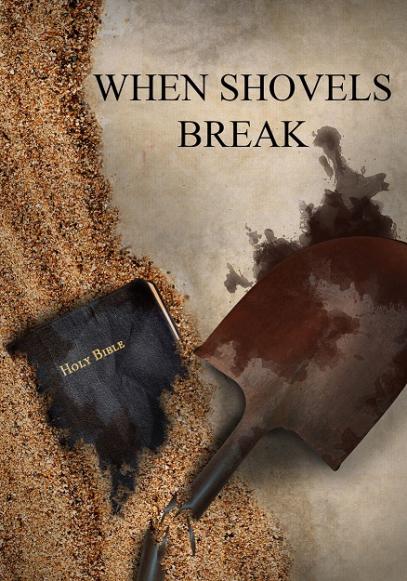
When Shovels Break (by Michael Shank) – A Review

I’ve known Michael Shank for the better part of a decade, and we both “cut our teeth” doing fill-in preaching for the same little congregation in Southern Illinois.  So, it was with great pleasure that I wrote the first real review of his first book, Muscle and a Shovel (you can read the review/article at BrotherhoodNews.com).  A few years have passed, and God has used Muscle and a Shovel in ways far beyond what I–or anyone else–could have imagined.

Soon after it began to spread through the brotherhood, Mike began work on his second book, When Shovels Break.  It has taken a few years, but it’s finally ready.

And let me tell you this: It is powerful.

While Muscle and a Shovel was written for the non-Christian, to help show them the biblical path to life in Christ, When Shovels Break was written for the struggling Christian, the wayward Christian, the unfaithful brother or sister in Christ.  It is a stirring testimony that no matter what you have done, no matter how far you have fallen away from Him, God is always ready to take you back and forgive you.

But there’s more to When Shovels Break than that–a LOT more.

wsb_cover_small

A Sequel

When Shovels Break acts as a sequel to Muscle and a Shovel in many respects.  It follows the life of Michael Shank and his wife where the previous book left off.

But it also introduces us to one of Mike’s oldest friends, a man named John.  John and Mike had a lot in common: both came to Christ around the same time (both converted by “Randal”), worked  in the same industry, lived in the same neighborhood, even liked the same kinds of food.  In fact, John and Mike were as close as two friends could be.

The book begins [and this isn’t much of a spoiler, since Mike posted the first chapter on Facebook months ago] with John distraught over his sinful life, absolutely certain that he’s lost forever, not seeing any way of hope, and Mike trying to help him.  Then John lifts the gun to his head.

What could bring a man–a baptized believer in Jesus Christ–to such desperation that he thinks the only way out is to kill himself?  Could God ever take him back after all the sins he’s committed?  After he’s insulted his Savior by going back headlong into a life of sin?

A Message for the Church

Muscle and a Shovel was written for non-Christians, but it became a great tool to teach faithful members of the Lord’s church that evangelism doesn’t have to be hard!  It gave a clear and simple method to help show others God’s path to salvation.  It served to energize once-inactive Christians into active service for their Lord.  It helped remind experienced brethren of what they were fighting for, and the Lord’s church has become stronger as a result of God’s use of that book.

When Shovels Break is also a great tool for members of the Lord’s church.  Throughout the story of Mike and John’s life, you will see very clearly the importance of having brothers and sisters in Christ who care.  You will see the damage that can be done through a brother’s (or a congregation’s) indifference and the discouragement it can cause others.

This new book is also an example of God’s providence.  In the later part of the story, we get to see how God worked so many unexpected (and sometimes frustrating) things out in Mike’s life to bring him to the point of writing and publishing Muscle and a Shovel.  That bit of information is a nice little bonus to those who like to know “the rest of the story.”

You’ll also probably chuckle as Mike tries to show the Jule Miller Filmstrips to a bunch of drunks.

The Road Back Home

I surprised Mike when I told him that I thought the final dozen or so chapters were just as good–if not even better–than the story itself.  But I stand by it.

After concluding the story itself, Mike dedicates several chapters to a straight-forward conversation with Christians.  He devotes time to showing wayward members the way back home, but he also writes to encourage brethren whose strength may be faltering.  He describes some of these chapters as “God’s plan to keep you from ever falling away again–ever.”

And they are good.

The Survey

I’m not a prophet, but I believe the part of the book that will have the most impact within the church is where Mike gives the results of a survey he conducted, interviewing 400 people who have left the church.  It is an eye-opener–and it shows that the church itself must take at least part of the blame for their departure.

Final Thoughts

Even though I was already privy to part of the story (a side benefit of being friends with Mike since before Muscle and a Shovel), I got goosebumps reading through it.  Mike writes with a clarity and emotional power that makes you instantly identify with his struggles.  You hurt when he hurts.  You get frustrated when he is frustrated.  And you rejoice when he rejoices.

And you will never look at the Ego Board the same way again.

[note: I was not asked to write a review, but I thought it needed to be done]

To get your own copy of When Shovels Break, you can order direct from Mike Shank (or if you want it in Kindle format, it’s available here).

Are You Behaving Unseemly?

scan0004

Over the past several weeks, we’ve been posting articles on how to have a great marriage.  We’re continuing that theme again this week by looking at the ways the Bible describes love.

Unseemly

If you’ve got a King James Bible, and you look at I Corinthians 13:5, you’ll see that charity [love] does not behave itself unseemly.

Now what exactly does this word mean?

Unseemly is acting rudely. It’s making snide comments under your breath as you walk off. It’s mocking your spouse.  But this word also includes the idea of behaving disgracefully, indecently, or dishonorably.

I hope you’re starting to get the picture here. This covers a LOT.

It’s being out in public and being loud and obnoxious—embarrassing your wife. Belching loudly, getting drunk, making a spectacle of yourself.

It’s engaging in lewd behavior, telling inappropriate jokes, flirting with other women or men, letting other men or women flirt with you.

It’s wearing clothing in public that is too tight, or too short, or which are open down to the top of the breasts.

You might say, “wait a minute. What does wearing low-cut shirts have to do with love?”

If you love your husband, you’ll keep what’s his covered, and you will not be showing it off to anyone who happens to glance in your direction. Your body belongs to HIM. Letting other people peek at your body because you’re not covering it up enough is the opposite of love.

What about homosexual marriage?

You might wonder why I’m even bringing this up here, especially since we covered that pretty clearly in this post.  It all has to do with that word “unseemly.”

This same basic Greek word also appears in Romans 1:27. There, God says, “Likewise also, the men, leaving the natural use of the woman, burned in their lust one toward another; men with men working that which is unseemly, and receiving in themselves that recompense of their error that was due.”

So, let’s make a sound, logical, Biblical argument here.

1. Homosexuality is called “unseemly.”
2. True love does not behave “unseemly.”
3. Therefore, homosexuality is not truly “love.”

Or, to put it another way, homosexuals have completely lost any right to claim “love” as an excuse for their sinful behavior.

You want a good marriage? Then don’t behave unseemly.  That is, don’t be rude. Don’t be obnoxious. Don’t give undue attention to people of the opposite sex other than your spouse. Don’t show off your body.

In short, put your mate first.

Don’t Do This…

Me, me, me. I, I, I. I’m the one who matters. I’m the one who’s important. Let’s focus on me!

That’s so annoying! We don’t like being around people who always focus on themselves.  No, we want to be around people who will focus their attention on US! Because we’re the ones that should be focused on, right?

One person recently said that he was trying to do a comprehensive sermon on the topic of sin, and asked what he should include in it.  One of the answers was, “All sin is self-centered. It’s all about me. It’s focused only on what I want. That’s why there’s an “i” in the middle of “sin”.”

And that’s absolutely true. We are all tempted when we are drawn away by our own desires and enticed. And when lust has conceived, it gives birth to sin. And when sin is full grown, it brings forth death. (James 1:14-15).

Love is the opposite of sin.  Love—true love—is selfless. It is focused on the needs of others. It is putting other people first.  It’s true in every relationship. And it’s especially true in marriage.

We’ve looked at a couple things that love is. You’ll remember, “if you REALLY love me, you’d be patient with me,” and “If you REALLY love me, you’d be kind.”

Starting today, we’re going to look at some things that love ISN’T.

That is, these are things that will be noticeably absent from a great marriage.  So, if you want to have a great marriage (you do, right?), read on:

Don’t be envious

Look at I Corinthians 13:4.  Love is not envious (KJV) Love is not jealous (NASB).

These are two very similar ideas.  Jealousy is feeling bitterness at others because of what they have.  Envy is wanting what someone else has—their success, their money, their looks, their life, etc…

The Corinthians had a real problem with this. People were jealous—envious of other Christians who had supposedly “better” miraculous gifts. So, really, Paul’s using this opportunity to show them that when they’re envious, they’re not obeying the command to “love one another.”

But how does this fit in marriage?

After all, I don’t think a single one of you guys wishes you looked like your wife. And I know that not a one of you women wish that you had your husband’s looks.

But there is jealousy and envy in marriage ALL THE TIME.

The wife who stays home is envious of her husband because he is able to interact with real adults during the day. She’s jealous of the fact that he gets to go somewhere to work while she’s stuck at home. Some wives are jealous of the attention that their husbands get from others—he is praised for his accomplishments and she feels ignored by comparison.  Many wives feel a resentment to their husband—a feeling of envy—because of these things.

On the other side, husbands can be envious of their wife because she gets to stay at home all day and do nothing. One man made it very clear that he’d love to trade places with his wife because she only had to take care of a couple kids, and meanwhile he had to do “real work.” Other men hear their wife get complimented, and they are bitter because she’s getting attention and they’re not.

It goes both ways.

You can’t be envious.

You have to be content with what you have (Hebrews 13:5).  The basis of envy is that you aren’t content with what you already have.  It’s having a poor self-image.

Hey, Jesus died for you. He thinks you’re pretty important. And for some reason, that’s not good enough for you? You still want more? You still want what someone else has?

It’s time to change your focus to what you HAVE instead of what you DON’T have.  Instead of being jealous, wanting what your spouse supposedly has, be happy for them!  If your spouse is getting complimented because they’ve lost weight, or they’ve gotten a promotion, or they’ve accomplished something, BE HAPPY for them!

Realize that the things you’re jealous of might not really be the way they seem.  Oh, he gets to go to a job and interact with adult people every day. More likely, he’s going to a frustrating place and dealing with people who frequently don’t know how to do their job, and it is a place of immense stress.

Oh, she gets to stay home and do nothing all day except watch the kids. Yeah, if you think that, you need to get something called a “clue.” She’s home dealing with immature children who require constant supervision, and she’s deprived of any real intellectual interaction during that time.

If you want to have a great marriage, and one that is also pleasing to God (double bonus!), you need to kick envy out of the house.

-Bradley S. Cobb

“If You REALLY Loved Me, You Would … “

a.k.a. “How to Have a Great Marriage (part four)”

There’s a game that gets played at church camps and other youth gatherings on occasion, and here’s how it’s played:

All of the kids, except for one, will sit on chairs in a circle. The person who is “it” stands in the middle of this circle, and he looks for a place to sit down—someone whose chair he wants to take. In order to do this, he has to go up to one of the people sitting down and—without touching them—get them to smile by only saying the words, “Honey, if you love me, you’ll smile.” The person sitting down has to reply—with a straight face—”Honey, I love you, but I just can’t smile.” If they crack a smile at all, they have to give up their seat.

It’s funny to watch them struggle against smiling, and it’s also just as funny to see how dramatic the person can get who is asking them to smile.

But there’s something I’d like for you to think about…

People try to make demands of love all the time.

  • IF you love me, you’ll smile.
  • If you REALLY loved me, you wouldn’t complain about visiting my parents.
  • If you REALLY loved me, you’d take me out to eat.

Those might seem kinda funny. But how about these:

  • If you REALLY loved me, you’d become a Baptist (this happens)
  • Or when a couple is dating—before they’re married—if you REALLY loved me, you’d have sex with me.

And you want to know what most of this boils down to? Someone being self-centered and saying, “You don’t really love me if you don’t do what I want to do.”

YOU DON’T REALLY LOVE ME if you don’t give in to my demands!

Talking like that is hypocritical. It is egotistical. It is mean-spirited. It is emotional warfare. And it is something that can destroy your marriage.

Why? Because most of the time when people use this phrase, they’re trying to manipulate their spouse. Because most of the time, when people use the “If you love me…” they are demanding something that has nothing to do with love at all! Because most of the time, when someone says, “if you really love me…” they’re showing that they don’t really love the person they’re talking to.  Because many times, when people say “If you love me…”, they’re trying to get the other person to sin.

They’re asking you to prove your love by doing something that doesn’t prove love at all!

Satan used this tactic when talking to Jesus. (Matthew 4).

  • If you’re REALLY the Son of God, prove it by jumping off a building.
  • If you’re REALLY the Son of God, prove it by doing a selfish miracle.

These things wouldn’t have proven Jesus was the Son of God. It would have proven quite the opposite, because He would be sinning.

God says there are things that you will do if you really love your spouse.

It’s not wrong to say, “if you REALLY love me you will _____.” That is, so long as you fill in the blank with something actually that the Bible says about love.  After all, Jesus said, “If you love me, you will KEEP MY COMMANDMENTS.”

If you REALLY love me, you’ll be patient with me (I Corinthians 13:4).

“Charity [Love] suffers long.”

The word “charity” is AGAPE, or love.  It’s the love we are commanded to have for each other (John 13:34).  As we mentioned last week, we are all supposed to have this kind of love for our spouse.

So, in order to have a God-honoring marriage, a marriage that is pleasing to God, a marriage that is happy and enjoyable and GREAT, we will “suffer long” with our spouse.

The phrase “suffers long” is the same word which is also translated “endured” and “patient” in other verses.  In order to have a God-honoring marriage, you have to be patient with your spouse.  You have to be long-suffering with your spouse.

What’s that mean? It means you may have to suffer for a long time with your spouse.  People don’t change overnight. Bad habits take time to overcome. Love is a learning process. People make mistakes.

As a spouse, you MUST exercise patience. You HAVE TO give them time to get things right. You may have to endure a lot, but if you do, your strengthened marriage will be worth it.

A woman confessed to a marriage counselor, “I love him, but I can’t stand it. He’s always messing up. I’ve been after him for years to improve himself. He still says things sometime without even thinking. I’ve had it up to here with him!”

The marriage counselor shook his head and said, “You don’t really love him.” Shocked, she said, “Of course I love him!” He repeated, “You don’t really love him. You said yourself that you constantly criticize him because he hasn’t changed enough for you yet.”

“So? I still love him.”

“You’re not patient with him. And love is patient. No patience? That means you don’t love him.”

If you aren’t patient with your spouse, it means you don’t really love him/her.

Now, I understand, it’s easier said than done. But do you really think God’s going to accept your excuse of “he keeps messing up” when he asks why you weren’t patient with your spouse?

After all, YOU keep messing up too, and God is patient with you.

A comic strip I read a couple years ago had two women talking to each other. One of them says, “What’s that smoke?” The other one says, “Well, Ole Ben burned dinner.” “And what’s that big stain on your shirt?” “Well, Ole Ben spilled grape juice one me.” Why didn’t you get it cleaned?” “Well, Ole Ben cleaned it for me. And then he dropped it in the mud when he was hanging it out to dry.” “Sounds like your husband messes up everything he touches. I’d be furious!” “Naw, I love him.” “How could you love someone who keeps destroying your stuff?” ” I love him because no matter how much he messes up, he keeps trying.”

When YOU keep trying, regardless of how much you mess up, God will forgive you.  When YOUR SPOUSE keeps trying, you should have patience with them.

Even when it seems like your spouse ISN’T trying, you need to have patience with them.  You can’t expect him to become a perfect husband overnight. If you start trying to change everything he does, you know what message that sends to him? I don’t like you the way you are. If there are things that need to be changed, you need to be patient, realizing it may take years before it finally takes hold; before he finally “gets it.”

And husbands, if you want your wife to change the way she does some things, you have to be patient too. It takes time to change and to get used to doing things differently. BE PATIENT.

“If you love me, you’ll be patient with me.”

This is true, because “Love is patient.”

How to Have a Great Marriage (part three)

A couple posts ago, we mentioned that love is not a requirement for God to recognize a marriage as valid.  And that’s true. Love isn’t a requirement for God to join two people together (Matthew 19:4-5).

However, it IS a requirement for your marriage to be pleasing to God, to be a God-Honoring marriage.

Love your spouse.

What kind of love?

Ask anyone who knows me, and they’ll tell you that I love pizza. They’ll also tell you that I love my kids. But obviously these aren’t the same kind of love.

Even in the Bible, there are different kinds of love.

  • The Pharisees LOVE to pray standing in the synagogues and on the corners (Matthew 6:5).
  • Thou shalt LOVE the Lord thy God with all thy heart, and with all thy soul, and with all thy mind (Matthew 22:37).
  • Beware of the scribes which LOVE to go in long clothing, and LOVE salutations in the marketplace (Mark 12:38).

Three different verses, three different Greek words that are translated “love.”

In the New Testament, there are generally two different words for “love.”

Agape – This is the most common word which is translated LOVE in the New Testament. It means a conscious decision to put someone else first. It is sacrificial. It is what God has towards us (John 3:16) and what we are to have towards God (Matthew 22:37).

Phileo – This word shows friendship. It shows enjoying something. It might be better translated as “like”, as in “I like this.” We sing, “I’ll be a friend to Jesus,” and that is exactly what is commanded of us (I Corinthians 16:22 – If any man does not love [LIKE–phileo] the Lord Jesus Christ, let him be anathema). It is what Jesus is to us, if we obey Him (John 15:14 – Ye are my friends [LIKED ONES–philos] if ye keep what I have commanded you).

But what kind of love are you supposed to have for your spouse? The answer may surprise you!

You must show agape love towards your spouse.

Husbands are commanded to AGAPE their wife (Ephesians 5:28).

Husbands must stop thinking about themselves and put their wife’s needs first. That means her physical needs (provide food, shelter, clothing). That means her emotional needs (which falls under showing her “respect”). That means her spiritual needs—many women are not being led spiritually by their husband.

How can a husband show this love?

Lots of ways—but it’s not the one-time acts that matter. It’s the constant, day-in and day-out acts that show you truly have AGAPE for your wife.  Changing diapers. Carrying the groceries. Helping with housework. Turning off the TV and just talking with her. Taking care of the kids so she can rest.

And it’s doing these things with no strings attached.

John spent a couple hours cleaning the kitchen and living room of his house. Then his wife comes home, and he helps her carry in the groceries. She smiles, and he says, “I’m going to the ballgame with the boys.” She objects, “but we were going to have a nice quiet night at home.” He says, “Look, I cleaned the living room and the kitchen. What else do you want from me?”

He did those things, not out of love, but because he expected something in return.

Wives must show agape love towards their husband (John 15:12).

Jesus says, “This is my commandment, that you love one another as I have loved you.”  This applies to everyone, including wives.  This means that wives are to show AGAPE to others—including her husband.

It is interesting that there is no direct command “wives, AGAPE your husband.”  We can deduce that it’s necessary from other passages (love thy neighbor as thyself, for example). All the “love one another” passages prove that a wife must show AGAPE to her husband.

God made a specific command for husbands to AGAPE their wife. In fact, it’s stated point-blank multiple times in the Bible (Ephesians 5:25, 28, 33, Colossians 3:19).

A marriage where both spouses show this love for each other will grow, and it will be a blessing to both of them.

“The Gift of the Magi” is a great story about a man and his wife. It’s Christmastime, but they are very poor. They want so desperately to get a gift—a meaningful gift—for the other, but neither can afford it. The husband has an old gold pocket watch that he got from his father. It’s the most important possession he has in the whole world. But he takes it and pawns it so that he can buy his wife a new hairbrush to use on her long hair. A bit later, the wife comes into the house. He presents her with the brush and she begins to cry. She takes the scarf off of her head, and he sees that her long hair is gone. She had cut it off and sold it so she could afford to buy him a gift—a gold chain to use for his pocket watch.

Love is putting your spouse first.

You must show PHILEO love towards your spouse.

God commands that you be friends with your spouse. God commands that you enjoy their company. God commands that you LIKE them.

Wait a second, how can God tell me to like them if I don’t like them?

You know, if you become the spouse YOU’RE supposed to be, it’s likely that they will be more like the spouse THEY’RE supposed to be. And liking them will come naturally.

And honestly, especially in America, if you’re married to them, that means you like them—or at least you did at one point. God’s just telling you to keep liking them.

Wives are to LIKE their husbands (Titus 2:4).

The older women were to teach the younger women to love (PHILEO) their husbands.

In a society that encourages women to complain about their husbands, to stand up to them, don’t take no garbage from them, women’s lib and all that stuff…it’s important that we teach our girls that they are supposed to love their husbands—to like their husbands. To enjoy their company. To be friends with them.

Sometimes that’s a hard thing to do. More than once, you’ve probably heard (or maybe even said) the words, “I still love you, but I don’t like you right now.”

If you don’t like your husband, then repent and start being his friend again.

Acts 28:2 translates this same word as “kindness.” It means showing kindness—being a friend.

Husbands are to LIKE their wives.

Just as there is no direct statement that wives are supposed to AGAPE their husbands, there is no direct statement that husbands are to LIKE their wives.

However, if both are Christians (which is how it should be), the following verses settle the matter:

  • Be kindly affectioned one toward another with brotherly love (PHILEO for your brethren in Christ) in honor, preferring one another. (Romans 12:10)
  • Let brotherly love continue (Hebrews 13:1).

The Scriptures specifically say that husbands are to love their wives as Christ loved the church (Ephesians 5:25).

The Scriptures also tell us that Christ is a friend to His people—the church (John 15:15).

If you love your spouse with AGAPE love, true love with no strings attached, your marriage will be happier and healthier.  If you make it a point to be a friend with your spouse, your marriage will be stronger for it.

Now don’t go home today and say, “honey, you need to read this article on TheCobbSix.com. You need to start loving me better and being a better friend.”

DON’T DO THAT!

It all starts with YOU. YOU do your part. No strings attached. YOU do it. YOU be the one you’re supposed to be.  If you do that, you may be very surprised at how much they start to change as well.

Almost all troubled marriages are missing something. Respect has gone AWOL. Love—both kinds—has been replaced with anger and hatred. And if those things aren’t changed—if love and respect aren’t brought back into the marriage, it will fail.

A man and woman are sitting at the kitchen table. On her plate is a piece of toast—the end piece. She hates the end piece, and finally, after years of her husband giving it to her, she erupts. “Why do you hate me? You give me this stinking end piece of the bread every time. I HATE the end piece, yet you insist on giving it to me for the whole ten years we’ve been married. Why? WHY?!?” After the initial shock subsides, he looks over at her and says, “I didn’t know you didn’t like it. You never told me. I wish you would have. The end has always been my favorite.”

Jesus loves you. And He expects you to show that same love to others—especially your spouse.