Category Archives: Announcements

Baptism: The Purposes it Fulfills and Changes it Effects

EmailFooterLogo

As we continue our anniversary celebration (The Jimmie Beller Memorial eLibrary is one year old this month!), we are proud to announce yet another addition to the FREE eBooks available exclusively from our website.

Today’s new offering was originally published in 1949 as a tract.  It is called “Baptism: The Purposes it Fulfills and Changes it Effects” and was written by John Anderson, a preacher in Australia.

We think you will find it interesting, as he approaches the topic of baptism in a slightly different way than you usually hear in sermons.

As always, we’ve reformatted and corrected this book so that you can enjoy it on your digital devices.  Just click the link below to add it to your collection!

Baptism: The Purposes it Fulfills and Changes it Effects (John Anderson)

-Bradley S. Cobb

The Roller-Coaster of Faith – The Life of the Apostle Peter (Part Five)

Before we get into today’s post, we thought we’d share some news with you.  As of the moment I type this, the “Who Were The Apostles?” book is up to 1,004 footnotes–and we’re still not done with Peter or Paul or the appendices at the end of the book!  It continues to be a rewarding study for me, and I hope it has been enjoyable for you as well.  Now, on to today’s entry in the life of Peter.

ApostlesLogo

Simon Peter’s Confusion

After six days had completely passed,1 Jesus took Peter, along with James and John, up to a mountain in order to pray.2  As Jesus prayed, Peter, James, and John fell asleep.3  But when Peter awoke, the sight that he saw was absolutely beyond his comprehension: There was Jesus, His face changed, shining like the sun, and His clothing white as the light and shining.4  Standing with Jesus were two other individuals, appearing in glory.5  It was Moses and Elijah, who were both speaking with Jesus about His upcoming exodus from life which would happen in Jerusalem.6

As Moses and Elijah began to depart from the scene,7 Peter decided to speak up—even though he didn’t have a clue what to say, because he was scared.8  He said, “Lord, it’s good for us to be here.  We will make [or I will make]9 three tabernacles: one for you, and one for Moses, and one for Elijah.”  It seems as though Peter didn’t want these great men to leave just yet.10  But God had other plans.  While Peter was saying this to Jesus, a cloud “overshadowed them, and they were afraid as they entered into the cloud.  And there came a voice out of the cloud, saying, ‘This is my beloved Son: hear Him.’”11  Peter fell on his face in fright (and wouldn’t you be scared as well, with a voice coming from the cloud that you are now inside?), until Jesus touched him and said, “Get up, and don’t be afraid.”12  Then Peter gets up, and Moses and Elijah have disappeared—Jesus stands alone.

Then the Lord said something that might have struck them as odd: “Don’t tell anyone what you have seen until the Son of man is risen from the dead.”13  There were two things that got Peter’s attention: First, How can we not tell others that we just saw Moses and Elijah?!?  And second, What does “rising from the dead” mean?14 Peter, James, and John discussed this second question as they were going down the mountain, still pondering on what they had just seen.  It’s then they asked the Lord:

“Why do the scribes say that Elijah must come first?”15

They asked this because, if Jesus truly was the Christ, the Son of God, then Elijah should have come before He started His ministry—but instead, Elijah just appeared mere moments ago.  Jesus answered them:

“Truly, Elijah comes first, and restores all things
 But I tell you, that Elijah has already come, and they have done to him whatever they desired, as it is written of him.”16

When Jesus said this, Peter’s spiritual eyes were opened, and he understood that the prophecies weren’t talking about the literal Elijah coming first, but of a figurative Elijah—which was John the immerser.17

Another time, Jesus spoke a parable to the disciples about the importance of being prepared for His coming at all times.18  But Peter was confused about the application.  He came to Jesus and said, “Lord, are you speaking this parable to us [alone] or to everyone else too?”19  Instead of giving a plain answer, Jesus responds with another parable which shows the universal application.20  It seems Peter understood the meaning of the parable, but not the specific application (to whom).  There are many who fall into the same problem—usually thinking that certain passages apply to everyone but them.

-Bradley S. Cobb

1 Matthew (17:1) and Mark (9:2) both say “after six days,” while Luke says “about eight days after
” (Luke 10:28).  There is no contradiction here, for without a doubt, “after six days” means after six days have passed (putting it no earlier than the seventh day from the previous events), and seven days can certainly said to be “about eight days.”

2 Luke 9:28.  Matthew, Mark, and Luke each record the transfiguration, but Luke is the only one who tells us the stated purpose of the mountain journey.

3 Luke 9:32.  Luke is the only one to record their sleeping on the mountain.  Some (Meyer, Alford, Lange, etc.) have argued that they were simply extremely tired and drowsy, based on Luke’s choice of the Greek word which is translated “when they were awake.”  One of the meanings of this word is “having remained thoroughly awake.”  It is impossible to be both “extremely tired and drowsy” and “thoroughly awake” at the same time, as these commentators imply.  The fact is, Peter, James, and John were all extremely tired and fell asleep.  But when they awoke (possibly because of the voices of Jesus, Elijah, and Moses), they were wide awake, seeing the astounding scene before them.

4 Matthew 17:2; Luke9:29.

5 Luke 9:30-31. What this “glory” entails, so far as Moses and Elijah’s visible appearance, we are not told.  It could be that they were shining or glowing as well, since Peter uses this same word (glory) to describe Jesus’ appearance during the transfiguration in 2 Peter 1:16-18.

6 Luke 9:30-31.  The King James Version says “decease,” as does the ASV, NKJV. The ESV says “departure.”  The Greek word is exodos, which is where the word Exodus comes from.

7 Luke 9:33 is the only place where this information is given.  We are forced to wonder, did they begin to leave by walking? Or did they both begin to ascend?  Did they begin to simply fade?  Regardless, it may be that seeing them begin to leave is what spurred Peter to action in what he was about to say.

8 Mark tells us that Peter didn’t know what to say, because the disciples were “sore afraid” (Mark 9:6).  Luke, however, is a bit more blunt and says that Peter “didn’t know what he was saying” (Luke 9:33).

9 There is a variant in the Greek manuscripts of Matthew 17:4.  Most manuscripts say “We will make,” but there are some older ones that say “I will make.”  However, all the manuscripts of Mark and Luke’s account of Peter’s quote say “We will make.”  Peter wasn’t volunteering himself only, but him and James and John.

10 Some have suggested that Peter was trying to get them to stay for the impending Feast of Tabernacles, or feast of booths, and that He, James, and John would even take care of putting up their tents for them.  However, that would go against what Mark and Luke say about Peter not knowing what he was saying—plus no evidence is given by these commentators to suggest that this Jewish feast was near.  See Robertson’s Word Pictures on Luke 9:33.  Vincent’s Word Studies suggests that he wanted to give them shelter for the evening.  This seems more likely if, as we suggest, that Peter was trying to get them to stay longer.

11 Luke 9:34-35.

12 Matthew 17:6-7.  This detail is unique to Matthew’s account.

13 Matthew 17:9.  Most translations say “Tell no man the vision.”  But the primary meaning of the Greek word is “That which is seen” or a “Spectacle” (Thayer).  The Living Oracles, 1835 edition renders it “Tell no person what you have seen.”  See also The Amplified Bible, and Vincent’s Word Studies on this passage.  There is reason to believe that this is not a “vision” as the word is commonly used in the New Testament: (1) Moses and Elijah appeared and spoke with Jesus while the apostles were sleeping—and the apostles didn’t know anything about it until they awoke; (2) Generally speaking, a “vision,” is that which is seen by someone in their head—like a dream while you’re awake—and not something that is actually taking place in the physical realm; (3) If this is a miraculous vision, it is the only time in the New Testament where this word is used to describe something seen by more than one person (Acts 7:31; 9:10, 12; 10:3, 17, 19; 11:5; 16:9-10; 18:9.  Acts 12:9 is what Peter thought was a vision—these are the only other places in the New Testament where this word is used); (4) The same word is used in Acts 7:31 to describe the burning bush; the KJV translates it “the sight,” and not “the vision,” because it was actually a bush that was actually on fire and not being consumed—it wasn’t something in his head, therefore isn’t what we generally consider to be a “vision.”  (5) Please note that there are other words translated “vision” in the New Testament, but these are not connected to the word Jesus used in Matthew 17:9, except for the word used in Acts 2:17 (“your young men shall see visions”), Revelation 9:17 (“
I saw the horses in the vision”), and Revelation 4:3 (“He that sat was, to look upon, like a jasper and a sardine stone; and there was a rainbow round about the throne, in sight like unto an emerald”).  These three passages, containing the only four occasions of this specific Greek word in the New Testament, show that this word could refer to a miraculous vision, or simply what something looked like.  This word shares its root with the Greek word translated “vision” in Matthew 17:9 (as well as the other places mentioned in point #3 of this footnote).

14 Mark 9:10.  This is interesting that Peter, James, and John should be discussing what “rising from the dead” means when all three of them had seen Jairus’ daughter risen from the dead (admittedly after a very short amount of time), but they had just seen Moses and Elijah—Moses, at least, having long since been dead!  (Elijah’s physical existence certainly ceased hundreds of years earlier, but whether or not it is correct to say he “died” is something which can be debated by others).

15 Mark 9:11, Matthew 17:10.

16 Mark 9:12-13.

17 Matthew 17:13.  This is a lesson that many people still have not learned—a prophecy doesn’t have to be fulfilled literally to still be fulfilled.  Many prophecies of the Bible are given in figurative or typological ways, such as with Elijah and John the immerser.  Jesus prophesied the “coming of the Son of man” which would take place in a single generation (40 years), but this wasn’t a reference to Him literally coming to the earth within 40 years of His death—it was a reference to His execution of judgment against the wicked Jewish nation that had rejected Him and put Him to death (Matthew 24:27-34).  Many other examples could be given, but these will suffice to prove the principle.  That isn’t to say that all prophecies are fulfilled this way, but that some are.

18 Luke 12:35-40.

19 Luke 12:41.

20 Luke 12:42-48.  There are different servants described in the parable—those who knew the Lord’s will and didn’t do it, and those who were ignorant of the Lord’s will.  Neither of these could describe the apostles; therefore the parable has application beyond just them.  Some claim that this is a parable describing the coming of Jesus Christ in judgment upon Jerusalem in AD 70, but that doesn’t match up with the concept of the servants of the Master being punished—some with many stripes, others with few stripes.  In AD 70, the servants of Christ were spared, and it was the wicked who were punished with destruction inside the city by the Roman armies—they didn’t give out different levels of punishment.

The Work of the Holy Spirit – A Sermon

EmailFooterLogo

One of the most hotly-debated topics in so-called “Christendom” is the work of the Holy Spirit.  It’s been that way for well over a hundred years, as today’s entry in the Jimmie Beller Memorial eLibrary shows.

Today’s addition to the eLibrary is a sermon delivered by James Anderson, with the title “The Work of the Holy Spirit.”  It was first published back in 1896 as a tract, and it still has value today.

Contents

  1. Life Comes from Life
  2. How the Spirit Operates
  3. The Indwelling of the Holy Spirit
  4. Things We Do Not Believe
  5. Only One Way Out of Confusion
  6. An Earnest Appeal

This short work has been reformatted, and any errors that we caught were corrected so that you can have the best possible copy of this work available!

To download it, or save for later reading, just click the link below!

Work of the Holy Spirit (James Anderson)

-Bradley S. Cobb

God and Me

EmailFooterLogo

As promised, we are continuing to add more books to the Jimmie Beller Memorial eLibrary!

Today’s addition is called “God and Me: Being a Brief Manual of the Principles that Make for a Closer Relationship of the Believer with God,” written by Peter Ainslie back in 1908.  It is a devotional book, encouraging the readers to think of God and walk with Him in every facet of life.

Contents

  1. FOREWORD.
  2. A MORNING PRAYER.
  3. BELIEF.
  4. REPENTANCE.
  5. OBEDIENCE.
  6. FRUIT-BEARING.
  7. BIBLE STUDY.
  8. PRAYER.
  9. THOUGHTS.
  10. TALKING.
  11. TEMPTATION.
  12. AMUSEMENTS.
  13. COMPANIONS.
  14. BOOKS.
  15. DAILY ROUNDS.
  16. FINANCES.
  17. TELLING THE STORY.
  18. MISSIONS.
  19. SORROW.
  20. ANOTHER.
  21. FORGIVENESS.
  22. DEATH.
  23. HEAVEN.
  24. AN EVENING PRAYER.

To read this book online, or to download it for further perusal, just click the link below!  And in case you were wondering, yes, we’ve done our part to try fix all the typos we could find and completely reformat it to make it a more pleasant reading experience for you.

God and Me (Peter Ainslie)

-Bradley S. Cobb

Our One Year Anniversary Gift to You

You might be scratching your head right now, especially if you’ve been following us very long.  We’ve been online since April 7th, 2014–more than two years now.  So what is this one year anniversary gift thing?

It was one year ago this month that the Jimmie Beller Memorial eLibrary was launched.  And to celebrate this moment, we are going to be doing something very special.

Jimmie Beller

But before I get to that, please read this short story about Jimmie Beller.  Back in 1968, Jimmie’s draft number was called, and the US Army claimed him.  Jimmie knew it was coming, and he shared his main concern with his father before it did.  It wasn’t getting killed.  It wasn’t contracting some horrible disease.  It was this: “Dad, I don’t know if I can kill someone.”  His dad, Roy Beller (who is a great Christian man, and one of our closest friends), a veteran himself, said, “That’s a decision you’ll have to make for yourself.”

Jimmie went to boot camp and excelled, catching the attention of his commanding officers.  One day, his father and mother came down to the base to see him, but he was still in the middle of exercises.  The top officer, however, found out that Jimmie’s dad was there, and asked to meet with him.  So, Roy went to his office and sat down.  The officer told him that Jimmie was top of the recruits in everything.  Well, everything except for one thing.  When it came time for them to practice stabbing a dummy with the bayonet at the end of their gun, Jimmie always hesitated.  And, as the officer stated, when you hesitate, you die.

Roy told the officer about the conversation they had prior to Jimmie’s drafting, and the officer asked him, “So, is he a conscientious objector to the war?”  Roy shook his head, “No, he wants to serve his country, but he doesn’t like the idea of killing people.”  The officer was unsure what to do.  But then Jimmie came, and they talked, and Jimmie made it known that he was ready to go to Vietnam, but that he wasn’t going to shoot anyone–he wanted to go in as a medic, to help people.

He served in Vietnam, narrowly escaping being shot on at least one occasion, but he never shot at anyone.  He always made sure he worshiped God on the Lord’s Day, and made sure as many of the other soldiers as he could convince did as well.

Jimmie died from cancer last year–cancer that most likely was brought on by exposure to Agent Orange while he was in Vietnam.  But he had no regrets about serving his country and serving his Lord at the same time.  We still miss him very much.  And it’s because of him that the Jimmie Beller Memorial eLibrary is so important to us.

Now, for the special announcement…

We are going to do our absolute best to post 20 new books this month–starting tomorrow–as a celebration of our one-year anniversary.  That averages out to one each weekday for the whole month!

Please tell others about the Jimmie Beller Memorial eLibrary!

-Bradley S. Cobb

Some Special Handouts for Kids (and Adults too)

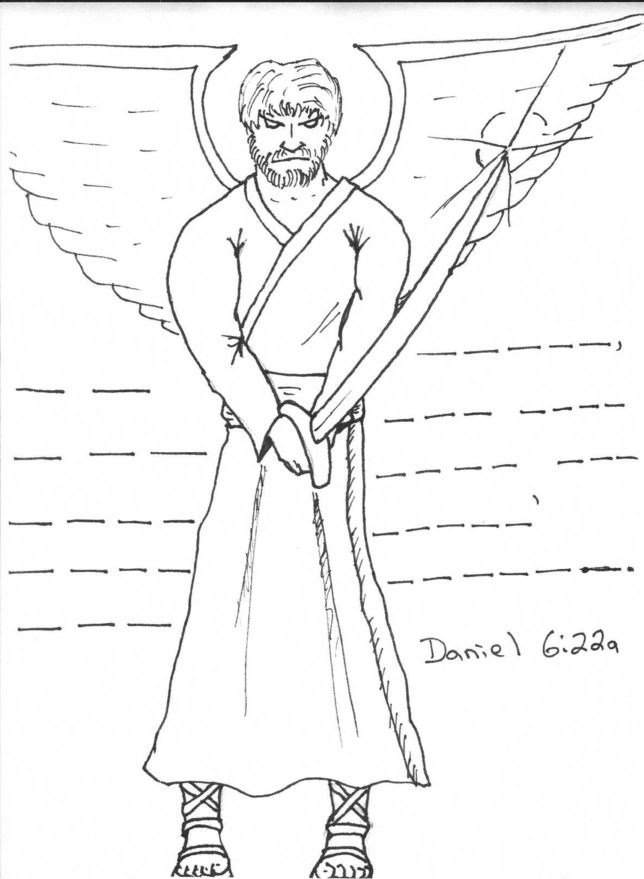
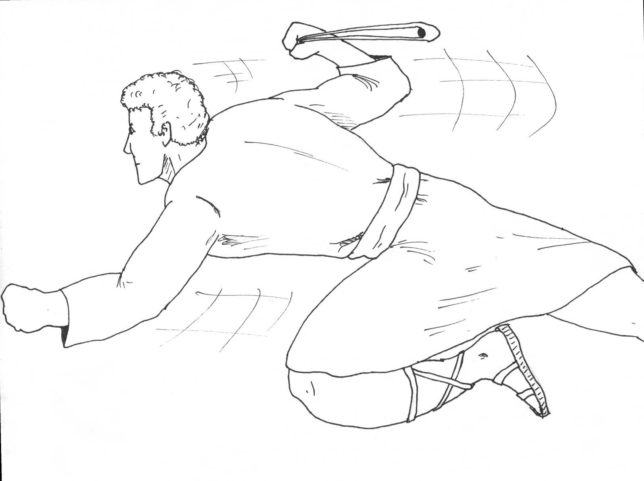
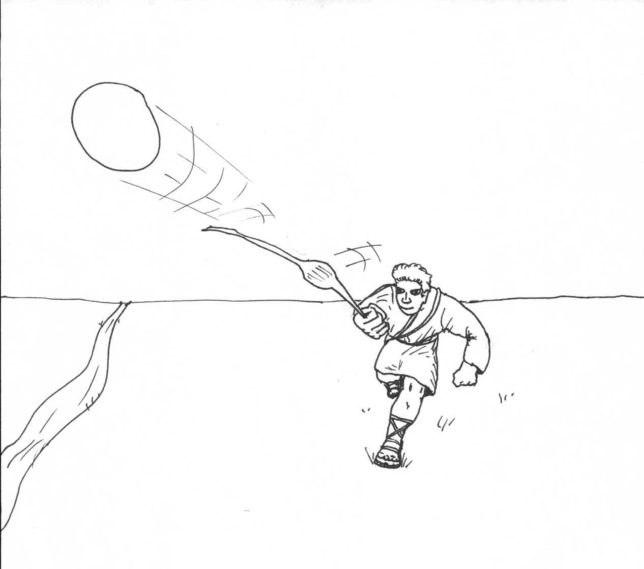
This week is Vacation Bible School at the Gravel Hill church of Christ.  One thing that makes Gravel Hill unique is that they don’t ever purchase VBS materials–instead, they make their own.  Each teacher creates his/her own curriculum.  This year, Jesse is helping teach, and together, we created several worksheets/handouts for her class (Yes, I drew the pictures below).

These handouts/worksheets are suitable for anywhere from 3rd/4th grade up to adults.  Even if the adults aren’t really into the games or pictures aspect of it, it does help them to remember parts of the Bible lessons, and makes them think.

So, feel free to download them and print them off for your kids, your Bible classes, or yourself!  But please, don’t share them digitally.  If you think they’re worth sharing, please just point people here.  We really appreciate it.  🙂

First, a coloring/memory verse sheet for Daniel 6:22a “My God hath sent his angel, and hath shut the lions’ mouth.”

Angel-Daniel_Memory

Second, a color sheet of David running with a stone in his sling.

David-Running

Third, a color sheet of David slinging the stone.

David-throwing

Fourth, a worksheet over the book of Esther, in the style of “Who Am I?” (for example, one of the questions is: “I built a really tall gallows to hang Mordecai from.  Unfortunately, they put me there instead, and now I’m dead.  Who am I?”)

Esther_Who-am-I

Fifth, a memory verse worksheet for the Parable of the Lost Sheep, done as opposites (look for yourself).

Lost_Sheep_Memory

Sixth, a memory verse worksheet for Esther 7:6

Esther_Memory

Seventh, a True/False worksheet on the Parable of the Lost Sheep (with Jesus the Good Shepherd as part of the topic).

Lost_Sheep_TF

That’s it for now, but if you would like to see more things like this made available, please let us know!

-Bradley S. Cobb

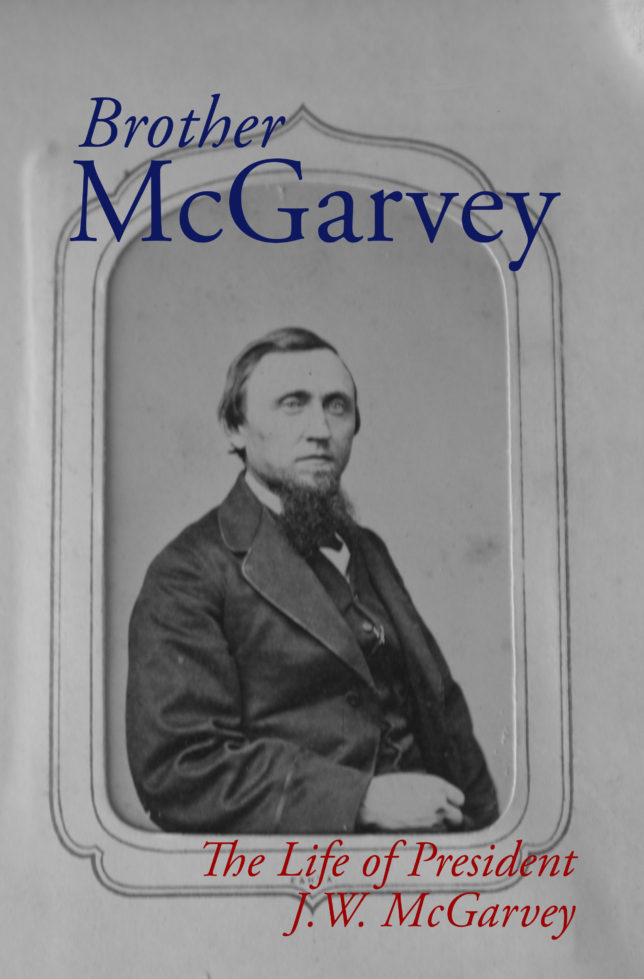
Pre-order Brother McGarvey now!

One of the most influential men in the Lord’s church in the last 200 years is, without a doubt, John William (J.W.) McGarvey.  He is well-known for his strong, conservative commentaries, his numerous articles on Biblical Criticism, and for being a prolific trainer of preachers in the late-1800s and early-1900s.

There is only one full-length biography written about this influential man of God, and it is about to be back in print for the first time in over fifty years!

BrotherMcGarvey(Front)

Brother McGarvey, written by W.C. Morro, will give you glimpses at “President McGarvey” from many different perspectives–from friends and “enemies” alike.  You will read excerpts from his own writings and journals, and see letters from those who knew him best.

PRE-ORDER INFORMATION:

Brother McGarvey will be officially released on August 12th.  This 244-page book will cost $13.99.  However, if you pre-order before August 1st, you will receive FREE SHIPPING, and receive the book on (or maybe even before) its official release date.  Pre-orders after August 1st will still receive free shipping, but there’s no guarantee that it will be there prior to the official release date.

*In order to receive the FREE SHIPPING, enter the coupon code: BroMcG at checkout!

Baptism, Our Lord’s Command

It’s been just a little bit, but we’re happy to announce that we are posting more new books on the Jimmie Beller Memorial eLibrary.  And today’s is one we think you’ll really like.

This book was originally published in Australia, 1913, by the Austral Publishing Company of Melbourne.  We have not changed any content from the original, but we have made some changes that we believe you will find worthwhile: (1) We have Americanized the spelling of words [for example, baptise is now baptize], (2) We have corrected incorrect Scripture references [usually, this was simply a reference to the wrong chapter in a book], (3) We have also corrected punctuation mistakes when we came across them.

Also, just like with every other book that we have published, we have completely reformatted it to give it a more pleasing look.  We have changed the font size, increased the size of the headings, and just overall tried to give it a facelift.

We are happy to present “Baptism: Our Lord’s Command (Containing a Reply to ‘The Question of Baptism’ by Mr. A. Madsen, a Methodist Minister)” by A.R. Main.

Contents

  1. PREFACE. 2
  2. Introduction to the 2016 Edition. 3
  3. Baptism: Our Lord’s Command. 5
    1. HOW MAY WE SETTLE THE QUESTION?. 7
  4. New Testament Example and Precept. 11
    1. SOME STRIKING ADMISSIONS. 14
    2. SCHOLARLY AUTHORITIES. 16
  5. The Commission. 20
  6. The Argument from Circumcision. 30
    1. THE PÆDOBAPTIST ARGUMENT STATED. 32
    2. REPLY. 33
    3. CHURCH CONTINUITY. 35
    4. DID CIRCUMCISION ADMIT INFANTS INTO THE CHURCH?. 37
    5. HAS BAPTISM TAKEN THE PLACE OF CIRCUMCISION?. 39
    6. COLOSSIANS 2:11-12. 42
  7. Jewish Baptism. 46
  8. Family Baptisms. 52
    1. CORNELIUS. 53
    2. CRISPUS. 54
    3. THE JAILER. 54
    4. STEPHANAS. 56
    5. LYDIA. 57
    6. OIKOS AND OIKIA. 58
    7. PÆDOBAPTIST ADMISSIONS. 63
    8. PLUMMER ON HOUSEHOLD BAPTISMS. 66
  9. Jesus and the Little Ones. 70
    1. “OF SUCH IS THE KINGDOM.”. 71
    2. “BABES AND SUCKLINGS.”. 74
    3. “FEED MY LAMBS.”. 75
    4. TO YOUR CHILDREN (ACTS 2:39). 76
    5. ACTS 21:4-5. 79
    6. PAUL’S LETTERS. 80
    7. 2 JOHN. 81
    8. CHILDREN OF CHRISTIAN PARENTS HOLY (1 COR. 7:14). 82
    9. BABES IN HEAVEN. 86
  10. A PĂŠdobaptist Miscellany. 88
    1. JOHN’S BAPTISM. 88
    2. THE EUNUCH. 89
    3. SIMON MAGUS. 90
    4. THE BAPTISM OF SAUL. 91
    5. THE LORD’S DAY. 92
  11. Post-Apostolic Practice. 94
    1. THE DIDACHE. 95
    2. JUSTIN MARTYR. 96
    3. IRENÆUS. 97
    4. ORIGEN. 97
    5. TERTULLIAN. 98
    6. CYPRIAN. 101
    7. “A HISTORICAL FACT.”. 103
  12. The Action of Baptism. 109
    1. LEXICONS. 110
    2. DICTIONARIES AND ENCYCLOPÆDIAS. 112
    3. CHURCH HISTORIANS, ETC. 113
    4. SECONDARY MEANING OF “BAPTIZO.”. 115
    5. LUTHER AND CALVIN. 118
    6. NEW TESTAMENT TEACHING. 120
      1. The Baptism of John. 120
      2. The Eunuch. 122
      3. Baptism a Burial. 123
      4. John 2:23. 127
      5. Baptism of Suffering. 128
      6. Baptism in the Holy Spirit. 128
      7. 1 Corinthians 10:1-2. 130
      8. 1 Peter 3:20-21. 131
      9. Baptism of Three Thousand. 132
      10. Baptism of the Samaritans. 133
      11. Ezekiel 36:25. 135
  13. The Evil of Infant Sprinkling. 137

To download this well-researched book, or read it online, simply click the link below:

Baptism: Our Lord’s Command (A.R. Main)

Taking a Short Break

A note to our wonderful readers:

We will be taking off the rest of this week to focus on getting more work done on the Apostles series (Peter and Paul are the last two!), preparing more books for the Jimmie Beller Memorial eLibrary, and getting things ready to go in order to get back to out regular schedule next week!

I do apologize for the fact that there won’t be any new posts the rest of the week (barring something unforeseen taking place).  But we’ll be back next week, not to worry!

Thanks again to all of you who make running this website such an enjoyable experience.

-Bradley S. Cobb

The Disciple Whom Jesus Loved–The Life of the Apostle John (Part 4)

John after the Ascension

After listening to Jesus teach about the “things pertaining to the kingdom of God” and seeing the Lord ascended into heaven, John stayed in Jerusalem with the rest of the apostles.1  On the day of Pentecost, John heard the sound of a mighty rushing wind, and he started preaching the gospel in another language.  People gathered around to listen, and were amazed by what was happening.2  After Peter spoke up and proved that Jesus is the Messiah that had been prophesied in the Old Testament, John spent several hours baptizing people into Christ,3 and rejoicing at the salvation received by them.

Some days later, John accompanied Peter to the temple during the hour of prayer, 3:00 PM.4  They came upon a man who had never walked before, a man who was physically impaired from the time of his birth to prevent him from ever being able to walk.  Men carried him each day to the temple gate so that he could beg for money to survive.  As John walked towards the temple, the man asked him and Peter for money.  Instead of money, the man was given something even greater—healing.  John and Peter walked into the temple area with this man clinging to them, leaping for joy, as the people began to stare and follow them because they recognized this as the lame man who had been unable to ever walk.5  Peter took the opportunity to preach a sermon to the people, resulting in thousands believing in Jesus.  But the priests and Sadducees were extremely upset,6 and they arrested John and Peter, leaving them in jail overnight.7

The next morning, John, as well as Peter, was called to stand before the Sanhedrin, and questioned about how they were able to accomplish this great miracle.  The council wanted to know where John and Peter got the miraculous power, and also by whose authority it was done.8  They already knew that the miraculous ability had to have come from God (see John 3:2), but they wanted to know who gave them the authority to go into the temple complex and heal this man.  The book of Acts only records Peter speaking, but it is obvious that John wasn’t silent during this time, because after they were done answering, condemning the Jewish leaders for murdering Jesus Christ, the Bible says: “Now when they saw the boldness of Peter and John, and perceived that they were unlettered and common men, they marveled, and recognized that they had been with Jesus.”9

The council couldn’t speak against John or Peter, because the proof of their claim was standing right next to them in the form of the formerly crippled man.  Instead, they threatened them not to speak at all or teach in the name of Jesus, to which John and Peter both replied, “You judge whether it is right in the sight of God to listen to you more than to God; for we are not able not to speak the things which we have seen and heard.”10  Even though threatening John and Peter was completely ineffective, they threatened them again before finally letting them go, because they were too afraid to punish the two apostles.11

John and Peter, after being released, went to the other apostles,12 and reported what had happened.13  The whole group prayed together, asking for continued boldness, and as a result, God filled them with the Holy Spirit, and they spoke again with boldness, and were able to exercise “great power.”14

Sometime later, after Stephen was murdered and Saul of Tarsus began to viciously persecute the church, John and the other apostles received word that Philip had gone into Samaria and converted many of them to Jesus Christ.  They were excited about this new information, certainly remembering the words of Jesus before He ascended that the gospel would be spread from Jerusalem, to Judea, and to Samaria as well.15 The apostles chose John and Peter to go to the Samaritans,16 with the purpose of facilitating their reception of the miracles which were given by the Holy Spirit.17  It is interesting that John was sent, since at one time he asked for power to call down fire on a village of Samaria18—what a difference now!  Some have suggested that John and Peter were sent in order to confirm to the Jews in Jerusalem that the addition of the Samaritans was approved by God, and not just something cooked up in the mind of Philip.19

After arriving, John and Peter went to God in prayer on behalf of the Samaritan Christians, asking that they might also receive the miraculous gift of the Holy Spirit.  They were then guided by God to lay hands on certain individuals for this purpose. 20 When Simon, a magician-turned-Christian with a significant desire for prominence, saw this, he offered the two apostles money if they would give him the power to pass on the miraculous gifts.  Peter and John both replied, condemning his actions and him as well if he did not repent, after which Simon asked them to pray to God on his behalf so that the things which they had said wouldn’t happen to him.21

After this incident, John and Peter gave their testimony about Jesus, and proclaimed the word of the Lord to them.  Then they left that city, returning to Jerusalem, but stopping to preach in many Samaritan villages along the way, converting more souls to Jesus Christ.22  Upon returning to Jerusalem, they no doubt gave a first-hand report of the things which occurred in Samaria to the other apostles who had sent them, and joined with them in rejoicing about the new souls that had joined in the Kingdom of Jesus Christ.

The joy in the growth of the church continued, but John also experienced some sadness.  The Gentiles had just begun to be added to the church, which upset many of the Jews greatly.  Herod, who continually sought for the approval of the Jews, arrested and killed John’s brother, James.23  Such a thing pleased the Jews, and certainly John was happy that his brother had passed into Paradise, but there was no doubt a great sadness that he would no longer see his brother in this life.

Within a few years, a great controversy erupted in the church over whether Gentile converts to Christianity must first be circumcised.  Paul, Barnabas, and Peter were the star witnesses for God during a large gathering in Jerusalem to deal with this issue.  After the matter was decided, John, Peter, and James (the brother of our Lord)24 gave Paul and Barnabas the right hand of fellowship, showing that they endorsed the preaching of the gospel to the Gentiles.25

Thus we see John being connected with the gospel in Jerusalem, Samaria, and the uttermost part of the earth.

-Bradley S. Cobb

1 Acts 1.

2 These events are recorded in the second chapter of Acts, specifically verses 1-12.

3 If we assume that the apostles were not hurrying people along, we can estimate that each apostle baptized one person per minute (it can be done much quicker than that, but we’ll go with longer period here for the sake of argument).  That means that each apostle could baptize 60 people per hour.  There’s 12 apostles, so that makes 720 baptisms per hour.  At that rate, the apostles themselves could have easily baptized the 3,000 souls into Christ in just over four hours.  And since the sermon took place around nine in the morning (Acts 2:15), that would make the baptisms completed by around 1:30-2:00 in the afternoon.  Even if they went twice as slow, they’d still have gotten everyone baptized while there was still daylight.

4 It should be noted that this was not a time which was commanded by God, but was something that the Jews had gradually turned into a tradition.  There was nothing wrong with it, and the two apostles did not sin by observing the religious traditions of the Jews.  They would have sinned if they had attempted to bind it on others, or if they had condemned others for taking that time to pray.  Religious traditions, so long as they do not violate the Law of God, are fine—understanding that they are traditions and not something to be bound upon others, nor something to condemn others for observing.

5 This incident is recorded in Acts 3.

6 The priests were upset because if what Peter and John were preaching was true, their service in offering sacrifices was no longer valid.  Additionally, as the priests were teachers in the temple area, they would have had quite a fit of jealousy when the people flocked to hear John and Peter.  The Sadducees were extremely upset because Peter’s sermon was promoting the resurrection—something which they vehemently denied.  In essence, Peter’s sermon identified the Sadducees as false teachers, and they didn’t like it one bit.

7 The response of the people is seen in Acts 4:1-4.

8 Acts 4:7.  Campbell makes the following observation on the question of the council: “ΠοÎčα ΎυΜαΌΔÎč, not Ï€ÎżÎčα Î”ÎŸÎżÏ…ÏƒÎčα—physical strength.  In what strength—in what name?  There was strength and authority also in the name of the Lord.  But as to the spectators—in this case of physical infirmity—their attention was absorbed in the strength put forth.” (Alexander Campbell, Acts of the Apostles, Translated from the Greek, on the Basis of the Common English Version.  With Notes.  New York: American Bible Union, 1858, page 25).

9 Acts 4:13.  KJV says “unlearned and ignorant,” but this isn’t accurate according to the present use of those terms.  Robertson says, “Unlearned
Unlettered men without technical training in the professional rabbinical schools of Hillel or Shammai. 
ignorant
a layman, a man not in office (a privatae person), a common soldier and not an officer, a man not skilled in the schools.” (Robertson’s Word Pictures, on Acts 4:13).  The Greek word translated “ignorant” is idiotai, from where we get our word idiot.

10 Acts 4:19-20.  Note the two negatives in the last part, “we are not able not to speak.”  In other words, “It is impossible for us to remain silent.”

11 Acts 4:21-22.

12 Acts 4:23.  The word “company” (KJV) certainly includes the apostles, though some believe it includes other Christians as well.  Campbell says “
to their own friends, not especially to the Apostles.” (Acts of the Apostles, page 28).  This is unlikely.  The Greek word, idios, means “one’s own,” and is used in the Bible to refer to one’s own countrymen (John 1:11), one’s own family (1 Timothy 5:8), one’s own disciples (John 13:1), and one’s own friends (Acts 24:23).  The group under consideration all prayed together, asking for continued boldness, and the result was a miraculous filling with the Holy Spirit (Acts 4:31), and “great [miraculous] power” was exercised by the apostles, not by the Christians in general (Acts 4:33).  The context, and what we learn from Acts 8 relative to the way miraculous gifts were passed on (including the inspiration mentioned in Acts 4:31), leads us to conclude that John and Peter went to their own company, that is, they went to the other ten apostles.

13 The other Apostles (and other Christians too), would have been worried about John and Peter, since they no doubt would have heard of their arrest and heard that there was going to be a trial of sorts.  Most likely, the apostles were gathered for a time of prayer on behalf of John and Peter.  Christians did this same thing in Acts 12 when Peter was in jail (see especially verse 12).

14 Acts 4:31, 33.  See also the author’s notes on this passage in The Holy Spirit in the Book of Acts.

15 Acts 1:4.

16 Literally, the apostles apostled John and Peter (Acts 8:14).  The word “sent” (KJV) is the verb form of apostle.

17 Acts 8:14-16.  This passage is treated extensively in The Holy Spirit in the Book of Acts by this author.  See there for a much fuller explanation and proof that the reception of the Holy Spirit is equivalent to being able to perform miracles.

18 Luke 9:54.

19 See Robertson’s Word Pictures on Acts 4:14.

20 It was not a universal promise that all Christians would receive the Holy Spirit.  Acts 2:38-39 limits it to a single generation, and then only to those whom God selected for that purpose.  It is obvious that Simon had become a Christian (Acts 8:12-13), but he only knew that the Holy Spirit was given by what he saw take place when the apostles laid hands on others—he did not know it from person experience, but only from seeing it.  Thus we have an example of a Christian who never “received the Holy Spirit.”

21 Acts 8:18-24.  Simon’s response in verse 24 proves that John wasn’t a silent partner in the condemnation.  Simon said, “You [plural] pray to the Lord for me so that none of these things which you [plural] have spoken happen to me.”  Whether Simon ever truly repented is difficult to say.  We would like to think that he did, especially based on his belief of the condemnation that was pronounced on him, but that is inferring something that might not be a necessary inference.  It is the almost universal declaration of early Christian writers that Simon remained apostate and worked to lead people away from Jesus.  See the International Standard Bible Encyclopedia, “Simon Magus.”   Ignatius calls him “the firstborn of Satan” (James Hastings’ Dictionary of the Bible, “Simon Magus”).

22 Acts 8:25.

23 Acts 12:1-2.  It is generally assumed (and quite probably right) that James was beheaded (see Johnson’s The People’s New Testament with Notes, on Acts 12:2), though the words used by Luke don’t demand that interpretation. “The Jews considered beheading a shameful death” (Robertson’s Word Pictures, on Acts 12:2), which explains why it please them to see it happen to one of the leaders of the Christian movement.

24 See chapter dealing with this James for more information on his role during this incident.

25 Compare Acts 15 with Galatians 2:1-10.