All posts by BradleyCobb

The Church and Sound Doctrine

It used to be that any lectureship book put out by a college associated with the churches of Christ was worth getting, and was filled with great, sound material.  Unfortunately, that’s not the case anymore.

But, what we are offering you today is from a time when it was.

Today’s addition to the Jimmie Beller Memorial eLibrary is called “The Church and Sound Doctrine,” and is a selection of lectures from the 1947 Biblical Forum and Lectureship at Pepperdine College.

The contents are as follows:

  1. Defining The Subject: The Church And Sound Doctrine
    (W.B. West, Jr.).
  2. Imperatives Of The Christian Way
    (Hugh M. Tiner).
  3. Some Christian Fundamentals
    (E.V. Pullias).
  4. Conversion Of Saul Of Tarsus
    (Frank Pack).
  5. The Deity Of Jesus
    (R.G. Wilburn).
  6. The Inspiration Of The Scripture
    (Wade Ruby).
  7. The Miracles Of Jesus And Modern Disbelief
    (R.G. Wilburn).
  8. What Is A Christian?
    (Hubert G. Derrick).
  9. “Some Dangers Confronting The Church”
    (Joseph W. White).
  10. When Unity Ceases
    J. Herman Campbell).
  11. The Second Coming Of Christ: Premillennial?
    (Wade Ruby).
  12. What Is A Christian College?
    (George Pepperdine)

To read it online or download for future enjoyment, simply click on the link below:

1947 Pepperdine Mini-Lectures

-Bradley S. Cobb

What Happened to the IRS Agent?

Matthew, According to Tradition

With Matthew, perhaps more than any of the other apostles, there is confusion about some of the traditions surrounding him.  This is due, for the most part, to confusion among some ancient writers between him and Matthias (whose name is almost identical in Greek).  So there is uncertainty as to which of the two apostles is spoken of.

It is said by Clement of Alexandria (AD 153-217) that “the apostle Matthew partook of seeds and nuts [hard-shelled fruits], and vegetables, without flesh [meat].”1  The same author asserts that Matthew was one of the apostles who did not die a martyr’s death.2

The Gnostics had a tradition that, “Matthew the apostle constantly said, that ‘if the neighbor of an elect man sins, the elect man [also] has sinned.  For had he conducted himself as the Word prescribes, his neighbor also would have been filled with such reverence for the life he led as not to sin.’”3

A man claiming to be Clement of Rome (who lived in the first century)4 recorded that Matthew engaged the high priest at the temple in Jerusalem in a public debate.  The priest began:


exalting with many praises the rite or sacrifice which had been bestowed by God upon the human race for the remission of sins, he found fault with the baptism of our Jesus, as having been recently brought in in opposition to the sacrifices.  But Matthew, meeting his propositions, showed clearly, that whoever will not obtain the baptism of Jesus shall not only be deprived of the kingdom of heaven, but shall not be without peril at the resurrection of the dead, even though he be for-titled by the prerogative of a good life and an upright disposition.  Having made these and such statements, Matthew stopped.5

The Gospel of Pseudo-Matthew

This writing, whose date is unknown, was written to try to advance the importance of Mary.  It details the miraculous birth of Mary to Anna (probably meant to be the same one who prophesied in Luke 1), and how Joseph got her as a wife.  It is a Catholic Church production through and through, which claims to have been written in Hebrew and translated into Latin by Jerome, though most scholars doubt both parts of that claim.6

The Acts of Andrew and Matthew

There are discrepancies in the Greek manuscripts of this apocryphal work.  Most have “Matthew,” though one manuscript reads “Matthias.”7  Most of the Latin writers who referenced this work believed it was talking about Matthew.  In the story, the apostles got together to decide who was going to which place to preach the gospel.  Matthew’s lot was to go to the country of cannibals.  Instead of eating meat and drinking wine, they ate human flesh and drank blood.  Matthew, upon arriving, was captured and his eyes were thrust out, and he was given a drug to make him deranged, but it didn’t affect him.  Instead, he kept praying, and then a light shone around him and he heard a voice say “receive your sight,” and Matthew could see again.  He was instructed, then, to stay in that city and preach for 27 days.  At the end of 27 days, the Lord sent Andrew to go rescue him.

After Andrew was captured as well, they both prayed and began to heal the blind men in the prison whose eyes had also been thrust out.  They then freed the prisoners and sent them out to safety, and Andrew “commanded a cloud, and the cloud took up Matthew and the disciples of Andrew; and the cloud set them down on the mountain where Peter was teaching.”

The sequel to this story, The Acts of Peter and Andrew, finds Matthew on the mountain with Peter, but doesn’t give any other details about him.8

The Acts and Martyrdom of Matthew

In this tale, Jesus sends Matthew back to deal with more cannibals.  He casts out a demon named Asmodaeus from the king’s wife, son, and daughter-in-law, and for a time the king was happy until they started following Matthew.  He sent soldiers to capture the apostle, but Jesus appeared in the form of a little boy with a torch, and burned out the eyes of the men.  The king pretended repentance, using it as a ruse to capture him.  Matthew, rebuking the king, was afterwards sentenced to a painful death.

[Telling the soldiers], “Having laid him, therefore, on the ground on his back, and stretched him out, pierce his hands and feet with iron nails, and cover him over with paper, having smeared it with dolphins’ oil, and cover him up with brimstone and asphalt and pitch, and put 
 brushwood above. Thus apply the fire to him; and if any of the same tribe with him rise up against you, he shall get the same punishment.”

But when the fire was lit, it simply turned to dew.

Then he ordered a multitude to carry coals of fire from the furnace of the bath in the palace, and the twelve gods of gold and silver; and “place them,” says he, “in a circle round the sorcerer, lest he may even somehow bewitch the fire from the furnace of the palace.” And there being many executioners and soldiers, some carried the coals; and others, bearing the gods, brought them. And the king accompanied them, watching lest any of the Christians should steal one of his gods, or bewitch the fire. And when they came near the place where the apostle was nailed down, his face was looking towards heaven, and all his body was covered over with the paper, and much brushwood over his body to the height of ten cubits. And [the king] ordered the soldiers to set the gods in a circle round Matthew, five cubits off, securely fastened that they might not fall, again he ordered the coal to be thrown on, and to kindle the fire at all points.

Matthew prayed, and the fire did not consume him, but instead burned up the idols and chased the king as a dragon, destroying everything in its path until the king in fear truly repented.  It was soon thereafter that Matthew gave up the ghost.  But he appeared in a vision that Jesus gave the king, and when the king awoke, he came to the elders of the church and begged for baptism, and changed his name to King Matthew, and changed his son’s name to Matthew as well.9

Other Traditions

[Another] tradition states that he preached for 15 years in Palestine and that after this he went to foreign nations, the Ethiopians, Macedonians, Syrians, Persians, Parthians and Medea being mentioned. He is said to have died a natural death either in Ethiopia or in Macedonia.10

-Bradley S. Cobb

1 Clement of Alexandria, The Instructor, Book 2, chapter 1.  Ante-Nicene Fathers, Vol. 2, page 241.

2 However, Clement gives “Matthew” and “Levi” as different men in the list.  The Stromata, or Miscellanies, Book 4, chapter 9.  The Ante-Nicene Fathers, Vol. 2, page 422.

3 Clement of Alexandria, The Stromata, or Miscellanies, Book 7, chapter 13.  The Ante-Nicene Fathers, Vol. 2, page 547.

4 There is debate as to whether this is truly written by Clement, one of his hearers, or someone over 200 years later.  See The Ante-Nicene Fathers, Vol. 8, pages 73-74 for more details.

5 “Pseudo-Clement,” Recognitions, Book 1, chapter 55.  The Ante-Nicene Fathers, Vol. 8, page 92.

6 See The Ante-Nicene Fathers, Vol. 8, pages 351-352, 368 for more details.

7 The editors of the Ante-Nicene Fathers, following Tischendorf, chose to go with “Matthias,” though all the Latin writers use “Matthew.” (See the introduction to the apocryphal Gospels and Acts in volume 8 of the Ante-Nicene Fathers.  The spelling in the original is very similar: Matthaios or Mattheias

8 This work only exists in fragment form, there being no known complete manuscript.  The name “Matthias” shows up halfway into the extant portion, and it may be that it should read “Matthew” as well, but there aren’t multiple manuscripts to compare.  What there is of this story appears in the Ante-Nicene Fathers, Vol. 8.

9 See The Ante-Nicene Fathers, Vol. 8.

10 International Standard Bible Encyclopedia, “Matthew.”

Healing, Casting, and Praying

Sermon 5: Healing, Casting, and Praying

Text: Mark 1:29-39 – And immediately, when they had come out of the synagogue, they entered into the house of Simon and Andrew, with James and John.  But Simon’s wife’s mother lay sick with a fever, and immediately they tell Him about her.  And He came and took her by the hand, and lifted her up; and immediately the fever left her, and she ministered to them.

And at evening, when the sun set, they brought to Him all that were diseased, and them that were possessed with demons.  And all the city was gathered together at the door.  And He healed many that were sick of various diseases, and cast out many demons; and did not permit the demons to speak, because they knew Him.

And in the morning, rising up a great while before day, He went out and departed into a solitary place, and there [He] prayed.

And Simon and they that were with Him followed after Him.  And when they had found Him, they said to Him, “All are seeking for You.”  And He said to them, “Let’s go into the next towns, that I may preach there also: for into this [work] I have come.”

And He preached in their synagogues throughout all Galilee, and cast out demons.

Introduction

Mark spends a good deal of time in the first part of his gospel account showing that Jesus is powerful and has authority.  He’s shown Jesus’ authority over His disciples, His authority in religion, and His authority over a single demon.  Mark’s original readers might have been thinking, “What does this matter to me?  After all, we’re not Jews, nor are we Jesus’ disciples, nor are we possessed by a demon.”  They might have even thought that Jesus’ victory over a single demon was alright, but it wasn’t as though He had to face a bunch of them.  But what comes next would overrule these objections.

The Text, part 1 – Authority over a Fever (Mark 1:29-31)

(29) Immediately, when they had come out of the synagogue, they entered into the house of Simon and Andrew, with James and John.

It is the Sabbath day, and Jesus, having exhibited His power over the kingdom of darkness, has planned to spend the rest of the day in the company of His four new disciples.  Simon and Andrew lived in the same house, not far from the synagogue (a Sabbath-Day’s Journey was around a half-mile), and invited Jesus (as well as James and John) to come there.  This is a show of hospitality and friendship that is severely lacking in the lives of many Christians and congregations.

(30a) But Simon’s wife’s mother lay sick with a fever

Mark doesn’t give some of the details that Matthew and Luke do (they weren’t necessary to bring up for his readers).  But Matthew literally says she was “cast [or thrown] down with a fever,” meaning that it isn’t just that she’s laying down on her bed asleep while running a temperature (Matthew 8:14).  The fever has made her bed-ridden.  Luke says she was held by a “great fever” (Luke 4:38), which means it was a high temperature, and the fever wasn’t breaking.  But again, Mark doesn’t give these details, and if you look at the progression of healings going into chapter two, you’ll see why.

(30b) and immediately they tell Him [Jesus] about her.

Some people have scoffed at this part, saying, “Why didn’t they go tell a doctor?”  That’s an easy thing to say when we aren’t given details such as: how long had she had the fever?  Was it days?  Did it just hit her that morning while Simon and Andrew were at the synagogue?  And who’s to say that, if it had been a few days, they hadn’t called a doctor?  All of those questions and the objection are irrelevant to the discussion at hand.  The fact is, Simon’s mother-in-law was sick with a fever at this point, and they came and told Jesus.

But why would they tell Jesus about it?  Because Jesus had just shown amazing miraculous power in casting out a demon—certainly it’s worth a shot to bring it to His attention.  We can better understand their confidence in telling Jesus about this when we remember that they’d already traveled some with Jesus and seen other miracles (John 1-4).

But the lesson we can learn from this is that when you’ve got problems, sickness, or anything else that you need help with, you go to the one with the power.  Take your requests to God who has the power to answer them.

(31a) And He came and took her by the hand, and lifted her up; and immediately the fever left her.

Jesus showed compassion on her, and also showed His power over sickness.  There was no long, drawn-out recovery period.  There wasn’t a “I think the fever is going down” period where they could all start to rest easily because she was starting to get well.  It was immediately gone.  Jesus took her by the hand, and poof!  The fever was completely removed—as though it had never been there in the first place.

(31b) and she ministered to them.

Simon’s mother-in-law had been tired, and the great fever would have normally left her quite exhausted and unable to do much as she was getting better.  But when Jesus healed her, she was well, whole, and felt like working.  She got up and began to serve them.  Most likely, this included preparing food, perhaps even washing their feet.  Meanwhile, you can imagine the awe in the eyes of Simon’s wife, and of the disciples, at this instantaneous healing.

The Text, part 2 – Authority over Diseases and Demons (Mark 1:32-34)

Lest one of Mark’s readers should shrug and say, “It’s only a fever, no big deal,” Mark shows Jesus taking on—and showing power over—progressively bigger illnesses.

(32-33) At evening, when the sun set, they brought to Him all that were diseased, and them that were possessed with demons.  And all the city was gathered at the door.

These people had seen (or heard from those who had seen) Jesus casting out a demon in the synagogue on the Sabbath.  Immediately, then, they went back to their houses and told their families and their friends about what wonderful things God had done through Jesus of Nazareth.  They couldn’t wait to spread the word and share their wonder and amazement with others.

Jesus, the King, who has come to announce that His Kingdom is near, now has an evangelistic army to help Him in Capernaum.  He’s still doing His work, but these people are making it a lot easier for His message to be spread.

So, at nightfall, when the Sabbath is concluded, Jesus is in Simon and Andrew’s house, conversing with them and James and John, when crowds gather around the house, standing by the door, all coming to Him for help.  They, being good Jews, waited until the Sabbath was over before doing what some might consider “work” by bringing their sick to Jesus and possibly walking more than the half-mile that constituted a “Sabbath Day’s journey.”

The ones brought to Jesus were suffering from diseases, that is, they were badly sick (the Greek word means “bad” or “miserable” or even sometimes “evil.”  The sicknesses under consideration were not minor things—people weren’t bringing their kids to Jesus saying, “Heal his runny nose.”  These were significant illnesses, usually long-term medical problems.

(34a) And He healed many that were sick of various diseases.

Mark is answering the potential challenge from his readers by progressing from Jesus healing a fever to healing multiple people of serious significant illnesses.  And lest the readers think that Jesus’ victory over a demon was a fluke, here come even more of Satan’s minions to face Him.

(34b) He
cast out many demons.

Several knights of the Kingdom of Darkness were brought to Jesus.  They had taken over people’s lives, tormenting them, hurting them.  As we’ll see later in the book of Mark, it appears that being demon-possessed was such a horrible experience that some people tried to kill themselves to escape it.  But the King, Jesus, was coming to set them free, to overthrow the powers of darkness.  It didn’t matter if it was one demon-possessed man or a whole crowd of them; Jesus stood unafraid and ready to take them all on.

Before we move on from this point, it would probably be a good time to point out that demon-possession was a first-century phenomenon, and that it does not still take place today.  Zechariah 13:2 says:

“It shall come to pass in that day,” says Jehovah of Hosts, “that I will cut off the names of the idols out of the land, and they shall no more be remembered; and also I will cause the prophets and the unclean spirit to pass out of the land.”

If you look at the context, you will discover when “that day” which Jehovah mentions took place.  The verse immediately before it says:

In that day there shall be a fountain opened to the house of David and to the inhabitants of Jerusalem for sin and uncleanness.

Go back five verses from there (Zechariah 12:10-11a) and we see what this “day” (it’s actually a period of time, like we say “back in my day
”) means.

I will pour out on the house of David, and on the inhabitants of Jerusalem, the spirit of grace and of supplications: and they shall look upon Me whom they have pierced, and they shall mourn for Him as one mourns for his only son, and shall be in bitterness for Him, as one that is in bitterness for his firstborn.  In that day, there shall be a great mourning in Jerusalem


So, in the context of the death of Jesus and the time in which forgiveness of sins would be offered to the Jews, Jehovah would cause the evil spirit (demons) to pass from the land.  If we were to keep reading in Zechariah, we would see, just eight verses after that statement by Jehovah, these words:

Behold, the day of Jehovah comes, and your spoil shall be divided in the midst of you.  For I will gather all nations against Jerusalem to battle; and the city shall be taken, and the houses rifled, and the women ravished; and half of the city shall go forth into captivity, and the residue of the people shall not be cut off from the city (Zechariah 14:1-2).

Sometime between the death of Jesus on the cross and the time in which God brought the nations to destroy Jerusalem (AD 70), demonic activity would cease.  But when Mark was writing, demons were still active, so his readers were at least familiar with the concept.

(34c) He
did not permit them to speak, because they knew Him.

Like we discussed in the last lesson, Jesus didn’t want the demons to speak because it wasn’t time for Him to be revealed as the Son of God, nor did He want the testimony of demons—which would have been counter-productive.

The Text, part 3 – Praying and Jesus’ Purpose (Mark 1:35-39)

If you were to ask someone “Why did Jesus come to earth?” you’re likely to get a lot of different responses.  One answer, though, that you probably won’t get is what Jesus Himself said in this next passage.

(35) And in the morning, rising up a great while before day, He went out, and departed into a solitary place, and there He prayed.

After a busy night of healing the sick, and casting out demons, Jesus most certainly would have been tired.  However, early in the morning, a great while before the sun rose, Jesus got up and left Simon and Andrew’s house so He could go somewhere to be alone and pray.  To Mark’s readers, this shows the King is not doing this work for the attention—He needs time to Himself to spend in prayer.

This goes along with what Jesus said in Matthew 6:6 – But you, when you pray, enter into your closet, and when you have shut the door, pray to your Father which is in secret; and your Father which sees in secret shall reward your openly.  In other words, there is benefit to be had from (1) praying, and (2) doing it in a place where you’re alone with God.

Jesus—God Himself in the flesh—thought it was important to find a time when He could be alone to pray.  I’m convinced that prayer is one of the most under-utilized blessings that Christians have!  If prayer was important to our Savior, shouldn’t prayer be important to us as well?

(36-37) Simon and they that were with him searched for Him. And when they had found Him, they said to Him, “All are seeking for You.”

It seems as though Jesus left the house without waking anyone, but when morning came, the people all returned to Simon’s house, wanting to find Jesus.  Were they bringing more people to be healed?  Or was it (if we want to give them the highest possible motives) that they wanted to know more about the Kingdom of God, and to hear what this messenger of heaven had to tell them?  The text doesn’t say.  What we do know is that the people were anxious to spend more time with Jesus.

The King’s mission in spreading the word about the imminent arrival of His Kingdom is working.  Instead of it being exclusively Him finding people to tell about the Kingdom, now people are trying to find Him, presumably with an open mind to what He has to say.

(38) He said to them, “Let’s go into the next towns, so that I may preach there also: for into this [work] have I come.”

The King’s mission in traveling around was not to heal the sick—it was to prepare people for the coming of His Kingdom.  His mission wasn’t to cast out demons—it was to prepare people for the coming of His Kingdom.  Make no mistake, healing the sick and casting out demons helped to convince people of His message, but those things were not the purpose of His mission.

Instead, Jesus Himself said plainly that He needed to go elsewhere and preach [the gospel of the Kingdom of God], because it is “therefore” [literally “into this”] that He had come.  We can take a cue from our Lord here, realizing that helping others is a good thing, but it is not the purpose of our mission here on earth.  Our purpose is to bring people to the King, Jesus the Christ; aiding others in their misfortunes is something we can do that can help to accomplish that goal.  Never lose sight of the ultimate goal—bringing people to the Kingdom of God.

(39) He preached in their synagogues throughout all Galilee, and cast out demons.

With this short sentence, Mark shows his readers that the King continued His work proclaiming the overthrow of the Kingdom of Darkness and defeating some of Satan’s minions along the way to prove His point.  It’s such a short sentence, but don’t for a moment think that means it is insignificant.  The people met in the synagogues on the Sabbath, once a week, and so this one sentence takes up potentially months of Jesus’ life.  What would you give to be able to have seen Jesus in action?  To be able to spend just one day with Him in person?  To see Him cast out demons?  Many people got to see it, and it is all condensed into the sentence, “He preached in their synagogues throughout all Galilee, and cast out demons.”

Application

Spend Time with Your Brethren Outside the Worship Assembly.

Jesus didn’t limit His interaction with God’s faithful children to the weekly assembly.  Simon and Andrew didn’t either, nor did James and John.  Instead, they spent time together outside of the worship building.  They went into each other’s homes, ate together, spent time together.  The early church did the same thing, “continuing daily with one accord in the temple, and eating their bread from house to house, they ate their food with gladness and singleness of heart” (Acts 2:46).

The church grows stronger when it spends more time together.

Peter was Never a Pope!

I’m sure you noticed it in the text: Peter was married!  Mark 1:30 (and it’s mentioned in Matthew 8 and Luke 4 as well) says Peter’s wife’s mother.  The Catholic Church makes the claim that Peter was the first pope, and that no priest, or Bishop, or Archbishop, or Cardinal, or Pope can be married.  In truth, the doctrine that the “clergy” (priests, bishops, etc
) can’t be married came about hundreds of years after Peter was dead and gone.  The doctrine was made official Catholic Church policy, and they acted as though it had always been the case, thus saying Peter wasn’t married either.  This is one of those verses that many Catholics haven’t ever heard of.

When You’re Able to Serve Others, Do It!

Look at Peter’s mother-in-law.  She’s been sick with a horrible fever that has made her unable to get up and do anything.  She’s weak and tired.  Then comes Jesus who heals her—and her healing is absolutely 100% instantaneous and complete.  Now, everyone in the room would probably have had no problem if she had spent the rest of the day sitting and resting after the ordeal she’d been through.  But she was able to work, so she got to work.  The lesson we can take from her example is that if we are able to serve others, we should be serving others.  Whether that’s your family, your employer, your church family, your friends, or whoever, we need to spend time in service to others.

Don’t Enslave Yourself to Sin!

Citizens of the Kingdom of Darkness are really nothing more than slaves, being controlled by sin.  Demons were controlling some of these people, and that’s horribly sad, but being controlled by sin is even sadder, because you’ve chosen your enslavement.  Jesus calls you to freedom from sin, and He’s cleared the path to make it easy for you.

Invitation

Jesus cleared the way to lead you to freedom through His death on the cross, His burial, and His resurrection from the dead.  All you have to do is take that path.

Know ye not that so many of us as were baptized into Jesus Christ were baptized into His death?  Therefore we are buried with Him by baptism into death: that like as Christ was raised up from the dead by the glory of the Father, even so we also should walk in newness of life.  For if we have been planted together in the likeness of His death, we shall be also in the likeness of His resurrection: Knowing this, that our old man is crucified with Him, that the body of sin might be destroyed, that from here forward we should not serve sin.  For he that is dead is freed from sin (Romans 6:3-7).

God be thanked that you were the servants of sin, but you have obeyed from the heard that form of doctrine that was delivered to you.  Being then made free from sin, you became the servants of righteousness (Romans 6:17-18).

Be set free from the powers of sin by accepting Jesus Christ as the Son of God, making the choice to follow His path, acknowledging Him as the Savior, and being buried with Him in baptism so that you can be made free from sin.

Jesus the King pleads with you, and so do we.

-Bradley S. Cobb
The IRS Agent in Jesus’ Company (Part 2)

Matthew, Whose Name was also Levi

Mark and Luke both record the call of Matthew, but they don’t call him “Matthew” in that account.  Instead, they call him “Levi.”  Some have surmised that they did this so as to not embarrass him;1 but that argument seems weak, since Matthew’s gospel was written and distributed before either of the others began theirs.2  Others have suggested that “Levi” was his Hebrew name, and that “Matthew” was the name he used as a tax collector,3 though Matthew is a Hebrew name as well.  The suggestion that seems most likely is that upon being called to follow Jesus, he changed his name (or perhaps Jesus did, as He did with Simon Peter) to reflect his new life.4  From the time he was selected by Jesus to be an apostle, he was called “Matthew,”5 which is another version of the name “Matthias.”

Given that his original name was “Levi,” it seems safe to conclude that he was most likely from the tribe of Levi.  If this assumption is correct, then it also gives us some knowledge of one of the other apostles, James the son of Alphaeus.6

Matthew, the Son of Alphaeus

Mark is the only writer who informs us that Matthew’s father was named “Alphaeus,” but that presents us with another piece of the apostolic puzzle; because there is another apostle who is also known as “son of Alphaeus,” James.  Thus, contrary to the opinion of several learned writers, Matthew and James were brothers.7

“Alphaeus” is a Greek name which means “Chief.”8  Many writers identify him as Cleopas.9  Other writers, specifically among the Catholics and Anglicans, try to make him the brother-in-law of Jesus’ mother, Mary, which is absurd.10 If indeed Alphaeus and Cleopas are the same person, then Matthew’s father was also a disciple, one of the two on the road to Emmaus in Luke 24.  It would also mean that Matthew’s mother was a disciple, one of the women who were at the cross,11 as well as one of the women who were in the upper room prior to Pentecost.12

Matthew the Author

The Gospel which bears the name Matthew was written early.13  Though some have attempted to dispute the authorship, there exists no copy of the first gospel which has any other name attached to it as author.  The early church writers quoted from it as authoritative, and identified the tax collector as the one who wrote it.

Papias says “Matthew put together the oracles [of the Lord] in the Hebrew language.”14  To this, Irenaues (AD 120-202) agrees, saying that “Matthew issued a written Gospel among the Hebrews in their own dialect.”15  Tradition is pretty consistent in saying that Bartholomew took with him a copy of it in Hebrew when he went on his missionary journeys.  And the Acts of Barnabas repeatedly related the tradition that Matthew gave Barnabas a copy of his gospel in order to help him teach the Jews.16

-Bradley S. Cobb

1 Bridgeway Bible Dictionary, “Matthew.”

2 I realize there is debate among some liberal scholars about the “Primacy of Mark,” but it was the universal belief of the ancient writers that Matthew wrote his gospel first.  Additionally, though space forbids a more detailed explanation, Matthew’s gospel was clearly written to the Jews, the ones to whom the gospel was first taken.  There are some traditions that place the death of Bartholomew in AD 44, and those same traditions also say that he took a copy of Matthew’s gospel account with him as he preached.  Mark was a man whose influence was almost non-existent until the late 50s/early 60s; and Luke’s gospel was written around AD 60 as well.  See H. Leo Boles Commentary on Matthew, pages x-xi (introduction), as well as J.W. McGarvey’s Commentary on Matthew and Mark, pages 9-10.  “Some of the ancients give the eighth year after the ascension as the date, others the fifteenth” (Edwin W. Rice, People’s Dictionary of the Bible, “Matthew”).

3 American Tract Society Bible Dictionary, “Matthew.”

4 James Hastings, Dictionary of the Bible, “Matthew.”  See also Easton’s Bible Dictionary, “Matthew.”

5 Lest anyone decide to argue that Matthew the tax collector is different from Matthew the apostle, the man himself makes it clear: the apostle was “Matthew, the tax collector” (Matthew 10:3).

6 For more on this apostle, see the next chapter.

7 Mark calls both men “son of Alphaeus,” and there is no reason for doing so if there was no connection. Fausset, James Hastings, and the International Standard Bible Encyclopedia disagree, but the only argument they give is that Matthew and James aren’t together in the lists of the apostles.  Apparently when Matthew himself lists James right after himself, that doesn’t count (Matthew 10:3).

8 Hitchcock’s Bible Names, though Thayer gives the meaning as “changing.”

9 It is said that the Greek name Alphaeus is the same as the Aramaic name Cleopas.  The International Standard Bible Encyclopedia (see article “Alphaeus”) gives the arguments for this identification, but concludes that each of the points are nothing more than suppositions which cannot be proven.

10 The reasoning behind this will be detailed in the next chapter, and will be proven false.

11 John 19:25

12 Acts 1:13-14.

13 As mentioned in a previous footnote, the ancients universally agreed that Matthew was the first gospel written.  Some of them even said it was written within eight years of the ascension, AD 38.

14 Ante-Nicene Fathers, Vol. 1, page 155.

15 Irenaeus, Against Heresies, Book 3, chapter 1.  Ante Nicene-Fathers, Vol. 1, page 414.  The same author (Against Heresies, Book 1, ch. 26, par. 2) said that the Ebionites (A group of militant Christian Jews who rejected Paul’s writings and the possibility of Gentile salvation) only used Matthew’s gospel.  This points to its continued existence in Hebrew form.

16 The Ante-Nicene Fathers, Vol. 8, pages 494-495

An Exposition of Hebrews

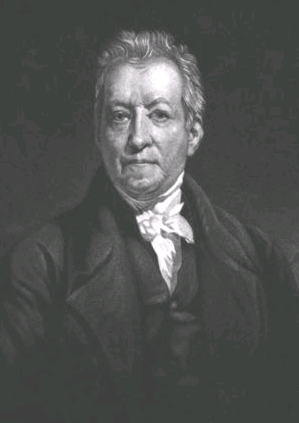
Before [amazon text=Alexander Campbell&asin=1491004711] came to the United States, he studied for a short time with a man from Scotland who, along with his brother, were trying to restore the purity and practice of the church as found in the pages of the New Testament.  His name was [amazon text=James Haldane&asin=1491004711], and along with his brother, Robert, these two men had a much larger effect on the thinking of Campbell than they are given credit for.

Prior to his death in 1851, James Haldane had written an exposition (commentary) of the letter to the Hebrews.  The book wasn’t published until nine years later.

However, this book is very worthwhile to the student of God’s word, which is why we have taken the time (around 30 hours of dedicated work) to fix the mistakes, correct some mistaken verse references, and completely reformat it to make it easy for you to use.

If, like us, you use e-Sword, we’ve also made this book available in that format as well.  And because we like real books, too, we’ve also made it available in paperback as well (as part of our “The Restoration Movement Library” Collection) [amazon text=here&asin=0692667903].

To download, or to read it online, just click the proper link below:

Haldane, James – Hebrews

(e-Sword) Haldane, James – Hebrews

-Bradley S. Cobb

The IRS Agent in Jesus’ Company (Part 1)

Welcome to yet another installment of our upcoming book on the apostles.  We hope you’re enjoying it!

Scripturally speaking, there are not a lot of things that we know about Matthew, but the few things we do know are interesting for certain.

Matthew the Tax Collector

The name “Matthew,” which means “Gift of God,” appears five times in Scripture—all but one of those is the listing of the names of the apostles.1  If not for Matthew himself writing his gospel account, we would not know anything about him except for the fact that he was one of the apostles.2  Matthew 9:9 is the key to everything else we know about this disciple of Jesus Christ:

As Jesus passed forth from there [the house], he saw a man named Matthew sitting at the tax office: and He says to him, “Follow me.”  And he arose and followed Him.

This tax office, or tax booth3 was located on the outskirts of Capernaum,4 next to the Sea of Galilee in order to charge taxes on the merchandise that came into Galilee from the ships on the sea, as well as the merchants who came from the north.  This port was quite busy, necessitating the employment of several “publicans” or “tax collectors” for the job.  Matthew was one of these men.

Apparently, Matthew did quite well as a tax collector, for he had a “great feast in his own house” immediately after being called by Jesus, and there “was a great company of tax collectors and of others that sat down with them.”5  Jesus’ disciples6 were also present, along with some of the Pharisees and disciples of John.7  This shows that Matthew didn’t live in a small house.

This feast, according to several commentators, was a farewell feast to his friends and family. 8   It may indicate that Matthew sold his ancestral property, or turned it over to the nearest male relative. However, it may have also simply been a great feat in honor of Jesus, the miracle-working Man of God who had been teaching in that area for some time.

The tax collectors were hated by the Jews at large, but especially by the Pharisees and Zealots, because ultimately they were collecting taxes for the Roman government—the government that was ruling over the Jews (plus, no one really like the IRS today, either).  Being a tax collector was, to the Pharisees, the same as renouncing Judaism and removing yourself from the family of God.  It is because of how the Pharisees treated the tax collectors that Jesus gave the parable of the Lost Son (usually called “the Prodigal Son”), showing that the tax collectors were still God’s children, and still loved by Him.9

The zealots were revolutionaries who would even stoop to assassinating government officials (like tax collectors) in their quest to overthrow Roman rule.  One of the other apostles, Simon the Canaanite, was a Zealot.10  But in Christ, these two political enemies were united in love, peace, and mission for their Master.

-Bradley S. Cobb

1 Matthew 10:1-3; Mark 3:14-19; Luke 6:13-16; and Acts 1:13.

2 Of course, the fact that he was one of the apostles tells us that he was also (1) a Jew, (2) a Galilean, (3) religiously-minded, (4) one who forsook Jesus, (5) one who preached on Pentecost, and (6) all the other things that involved all of the apostles.  But as far as any personal information about him, we have only what we know because of Matthew’s own writing.

3 This was not a walled building, but more of an open stand where all incoming and outgoing merchandise was taxed by Herod.

4 Compare Mark 2:1, 13-14.

5 Luke 5:27-29.  Here, Matthew is called “Levi.”  We will see in a later section that they Levi and Matthew are one and the same person.

6 At this point, it certainly included Peter, Andrew, James, John, Philip, and Bartholomew (Nathanael), if not more.

7 These groups both approached Jesus and His disciples at this feast in Mark 2.

8 See Eastman’s Bible Dictionary, “Matthew.”

9 Read Luke 15.

10 See Section on Simon (coming later).  Compare Matthew 10:4 with Luke 6:15.

Teaching the People and Casting out Demons

Sermon 4: Teaching the People and Casting out Demons

Text: Mark 1:21-28 – And they went into Capernaum; and immediately on the Sabbath day, He entered into the synagogue and taught.  And they were astonished at His doctrine: for He taught them as one that had authority, and not as the scribes.  And there was in their synagogue a man with an unclean spirit; and he cried out, saying, “Let us alone!  What do we have to do with you, you Jesus of Nazareth?  Have you come to destroy us?  I know you, who you are, the Holy One of God.”

And Jesus rebuked him, saying, “Hold your peace, and come out of him.”  And when the unclean spirit had torn him, and cried with a loud voice, he came out of him.  And they were all amazed, insomuch that they asked among themselves, saying, “What is this thing?  What new doctrine is this?  For He even commands the unclean spirits with authority, and they obey Him!”  And immediately his fame spread abroad throughout all the region round about Galilee.

Introduction

The King, Jesus of Nazareth, overcame a forty-day battle with Satan.  Afterwards, He began preaching that people needed to repent—to change their loyalties from the kingdom of darkness to the kingdom of God, which was very near.  He called His first disciples, four men who were ready to join the kingdom and follow their King wherever He would lead them.   But Jesus didn’t stop there; His mission of calling souls to join His side had only just begun.

In the remainder of chapter one, Mark presents Jesus as an authoritative King, a caring King, but most importantly, a powerful King.

The Text, part 1 – Authority in Teaching (Mark 1:21-22)

(21) They went into Capernaum; and immediately on the Sabbath Day, He entered into the synagogue and taught.

Jesus and the two sets of brothers (Andrew and Simon, James and John) went to Capernaum, which was most likely the nearest town, and was also where Andrew and Simon lived.  We’re not told what Jesus did between His arrival in Capernaum and the Sabbath Day (remember, Mark’s readers were interested in action), but we are told that once the Sabbath Day came, He made a point to be at the synagogue (which, in today’s language, would be the “weekly worship service” for the Jews).

The synagogue in Capernaum was “a beautiful structure, built of white limestone, show[ing] by its architectural features that it was built in the time of the Herods” (McGarvey, Fourfold Gospel, p 271).  And it was built by an officer of the Roman army—a Gentile.  Mark doesn’t mention this fact, but Luke does (Luke 7:1-5).  The first recorded synagogue sermon in Mark’s gospel written to a Roman audience, was preached in a synagogue built by a Roman Centurion.

The synagogues, according to most biblical historians, arose out of necessity while the Jews were captives in Babylon.  They had no access to the temple (for it was destroyed), and so these “meeting places” sprung up in various Jewish settlements where they could meet and devote time to learning God’s word each Sabbath.  Even after they returned from captivity, they continued to have synagogues (the Greek word being a compound of three words literally meaning the “coming-together-place”).   Jesus’ frequent visits to these synagogues showed that God approved of the set-up.  During the synagogue gatherings each Sabbath, they would pray, read the Scripture and hear a portion expounded to them.  It’s almost as though the synagogues were part of God’s plan to prepare the Jews for the worship assemblies of the church.

It was into this gathering of devoted Jews that the King went that Sabbath Day and taught.

(22) And they were astonished at His teaching: for He taught them as one having authority, and not as the scribes.

This is the same reaction that the people had after hearing the Sermon on the Mount (see Matthew 7:28-29).  Their astonishment wasn’t necessarily at the content of the message (we’re not told by Mark what He taught), but at the way in which He taught it.  He taught them with authority.

Don’t let this escape your notice, Mark is presenting Jesus as the King, spreading the word about His Kingdom—announcing that the Kingdom of Darkness is going to be overthrown.  His teaching in the synagogue would have absolutely included a discussion of this topic.  The King has gone to the people, in person, and is making the case for them to prepare themselves for His Kingdom.  People aren’t going to follow a weak leader, and Jesus was absolutely not weak—He taught them as one who had authority.

They were used to the teachings of the scribes.  These scribes were known for their teaching style of “probably” and “maybe,” and “it could be
”  That is, they were rarely firm on any matter of doctrine or practice, often quoting competing rabbis and leaving it up to the people to decide which one they liked best.  Not Jesus, though.  He taught them with authority: “This is how it is,” and as He so often did, He would have proven it from Scripture.  And don’t forget that He called His first disciples (the two sets of brothers) with an authoritative, “Come!” (Mark 1:17).

The Text, part 2 – Authority over Demons (Mark 1:23-28)

Jesus presented Himself as one who should be heeded by means of His message and delivery.  Next, He proceeds to prove that the Kingdom of God is at hand (and thus, He should be heeded) by His authority over the demonic world.

(23) There was in their synagogue a man with an unclean spirit

To put this in modern language, he was demon-possessed.  The word “unclean” literally means impure or defiled.  Some believe that these demons are fallen angels that God permitted to torment mankind.  I tend to agree more with Alexander Campbell, who made a pretty convincing case that the “unclean spirits” or “demons” (“devils,” KJV) were the souls of those wicked men who died in the flood (but that’s a completely different lesson).

This demon was there with the worshipers, in the same building during their worship!  This demon was a representative of the Kingdom of Darkness that Jesus was planning on overthrowing.  Let no one for a moment think that Satan doesn’t attempt to get at us even when we are gathered together to worship!  Think back to Job 1, where the “sons of God” (followers of God) came together to present themselves before God—and Satan was among them.  Think about Nadab and Abihu, offering worship to the Lord—but in a way that Satan wanted done.

Among most ancient cultures (and even many present-day ones), there was a fear of being taken over by an evil spirit.  And in the first century, when it was actually happening, that fear increased.  Later, Mark will record a demon-possessed man who would roam among the tombs and shattered the chains that they tried to bind him with, cutting himself and crying throughout the nights and days (Mark 5).

(24a) He cried out, saying, “Leave us alone!  What do we have to do with you, you Jesus of Nazareth?”

This demon recognized quite clearly that Jesus was different.   Most humans, the demons didn’t fear.  They could tell the demons “leave that man” and the demons could refuse—or as in the case of the seven sons of Sceva, they could turn on the pseudo-exorcists and attack.  But not Jesus.  The demon knew who Jesus was, and what He was there for.

Jesus is the King, announcing the establishment of His kingdom, taking citizens out of the Kingdom of Darkness, and now He comes face-to-face (so to speak) with part of the army of darkness.  It’s like the King we’ve mentioned before, traveling into enemy territory, telling the citizens that He is about to overthrow their ruler, and now meeting face-to-face with one of the powerful knights of the realm, sword in hand.  The knight says to the king, “Get out!  You have no business here!”  If the king backs down, all of his work is lost, no one will follow him.  He has no choice but to engage the knight in battle.

(24b) “Have you come to destroy us?  I know who you are, the Holy One of God.”

Depending on the inflection of one’s voice as he reads this passage, it could be read as a combination of fear and pleading, something like in Luke 8:28, where Legion begs Jesus not to torment him.  On the other hand, it could also be read in a scoffing tone of voice, the demon chuckling at the thought that this Jesus could hurt him.

Again, imagine that knight, armed with a heavy, sharp sword, facing the king who has been trying to turn the hearts of the citizens to him.  He sits atop his horse and scoffs at the king before him, “Have you come to destroy us?” and laughs in derision.  “I know who you are.”

The demon identifies Jesus as “the Holy One of God,” or it could also be translated, “God’s Holy One” or “God’s Saint.”  For Mark’s readers, this was a reference back to the very first verse, where Jesus is identified as the Anointed One, Son of The God, as well as verse 11, where God spoke from heaven saying, “Thou art my beloved Son in whom I am well-pleased.”  They would have seen this as the Kingdom of Darkness acknowledging that Jesus is the Son of the God.  They also would have seen this as a challenge to Jesus.

(25-26) Jesus rebuked him, saying, “Hold your peace and come out of him.”  And when the unclean spirit had torn him, and cried with a loud voice, he came out of him.

There was no long, drawn-out battle between Jesus and this knight of darkness.  There was simply Jesus opening His mouth, ordering the demon to be silent, and commanding him to depart.  The demon fought against it, trying to harm the man in the process, but his power was pitiful compared to the power of Jesus.

Many have asked, “Why did Jesus tell the demon to be silent when it was proclaiming the truth about Him?”  There are multiple reasons for it.  First, Satan is a liar, and the father of lies (John 8:44).  Thus, when a demon (a servant of Satan) proclaims the truth about Jesus, it can actually have the opposite effect of making people doubt the truth.  It’s like people say from time to time when they hear a story, “consider the source.”  Basically, you don’t want a chronic liar on your side, because it will make you look bad; the Pharisees could have used this event as evidence that Jesus was in league with Satan (as in Mark 3:22).  Second, though the statement from the demon was true, Jesus’ plan did not involve a public declaration to everyone of who He was (the Son of God) at that point.

(27a) They were all amazed.

And why wouldn’t they be?  Obviously, they knew that this man had an unclean spirit, and though Mark doesn’t describe for us the way the man had acted before (remember, Mark does very little in the realm of backstories), there must have been an incredible difference before and after Jesus spoke.  Before, the man may have been writhing in agony, moaning and crying, having seizures, or any number of other symptoms of his being overwhelmed by the dark knight.  After, the man would have been normal, in his right mind, most likely smiling, perhaps even having tears of joy running down his face.  The transformation would be amazing for certain!

(27b) they asked among themselves, saying, “What is this thing?  What new doctrine is this?  For He even commands the unclean spirits with authority, and they do obey Him!”

The devout Jews who gathered at the synagogue were amazed first because Jesus taught with authority, but now they are even more amazed, because His authority is even over the demons.  The demon said, “You leave us alone!”  And Jesus basically said, “No, you leave.”  And then the demon obeyed.

Mark’s readers couldn’t help but be surprised by this exchange between Jesus and the demon.  Like the people in Capernaum, they would have been amazed, wondering just how powerful this Jesus must be.  In the mythological stories of the Greek and Roman gods, there were always long, drawn-out battles, epic battles between the gods which sometimes lasted for years.  Yet this Son of the God won this battle by speaking a single sentence, a simple sentence.  It’s hard to place ourselves in their position, understanding it from their point of view, but what you’re reading right now in Mark is a description of sheer power.

Jesus, the King, had been promising that the Kingdom of God was “at hand,” and if there was any doubt as to His message, this absolute victory over one of Satan’s evil knights silenced them.

(28) Immediately His fame spread throughout all the region round about Galilee.

The people in Capernaum told their friends and family about Jesus, they in turn told others, and Jesus because very famous very quickly in that area.  And how could He not be?  Imagine that a doctor moves here, and he has the ability to genuinely cure cancer in one day—without chemotherapy, without surgery, without any of that stuff.  He heals a person who everyone knows is suffering horribly from that awful disease—it’s gone completely, and the person who before was weak and frail from this cancer is now healthy and energetic.  And not only that, people watched as this doctor did it.  Word would spread very quickly, and thousands of people would be pounding at his door begging to be healed in the same way.  It would be a very big deal.  This is what happened to Jesus after He healed this demon-possessed man (see verse 32).

Mark records this miracle of Jesus to show his readers (both then and now) that God’s Kingdom was indeed coming, and clearly had the power to overthrow the Kingdom of Darkness.

Application

Jesus Attended Worship Services, Do You?

Do not let this point escape your notice.  On the Sabbath Day, the day in which the Jews gathered together to study God’s word, to pray, to read the Scripture, and to hear a lesson from God’s word, Jesus was there in the synagogue with them.  To put it in modern language, Jesus “went to church.”  We can learn a lesson from that.  Jesus attended the worship services, and so should we.  And if you keep reading the gospel accounts, you’ll see that Jesus was frequently found in the synagogue on the Sabbath.  It wasn’t an isolated incident.

When Jesus died on the cross and was raised again, establishing His eternal Kingdom on the Day of Pentecost, He did away with the Old Testament Law.  From that point forward, the Lord’s Day, the day when citizens of the heavenly kingdom meet together in worship, is on the first day of the week.  It is a day to honor our King, remember His death, and celebrate each week the day that He came out of that grave, victorious over the king of Darkness.  Our King thought assembling for worship was important—do you?

Demons Confess Jesus, Do You?

Regardless of the motivation behind the demon saying “I know you, who you are, you’re the Holy One of God,” the fact remains that the demon openly acknowledged Jesus before others.  Still, how many people claim to know Jesus, claim to follow Jesus, claim to serve Jesus, yet outside of the church building, they never mention Him?  Can we really claim to be a follower of Jesus if the demons themselves do a better job of confessing Him than we do?  James says “the demons also believe, and tremble” (James 2:19).  The King says, “If you confess me before men, I will confess you before my Father which is in heaven” (Matthew 10:32).  How good of a job are you doing at confessing Jesus?

Jesus is the Authority.

Sad, so very sad is the fact that people who claim to follow Jesus Christ and who want the salvation He has to offer reject His very words when it comes to obtaining it.  Jesus is the authority.  He taught with authority, and in fact, He made the statement, “All authority is given to me in heaven and on earth” (Matthew 28:18).  Since Jesus is the one with “all authority,” why don’t people simply follow it?

Invitation

For example, Jesus said, “Unless you believe that I am he, you will die in your sins” (John 8:24).  It’s not that hard of a statement, yet there are those who say good, religious Jews will be saved today without a belief in Jesus.

Jesus, the King with all authority, said that “repentance” was to be preached “in his name [that is, by His authority] among all nations” (Luke 24:47).  But, how often do we hear the cry of “faith only!”?  My friends, if it’s “faith only,” then there’s no need to repent, and Jesus’ authority means nothing!

The Lord and Savior of the world said that we must acknowledge Him as the Christ.  It is that very fact upon which His whole kingdom is based (Matthew 16:15-19).  He does not admit anyone as citizen in His Kingdom who does not acknowledge Him as King.

The Conqueror of demons said plain as can be, “He that believes and is baptized shall be saved” (Mark 16:16).  And yet those people claiming to be His friends deny the very thing which He said, denying that obedience to the King’s command to be baptized has anything to do with being a part of His kingdom.

The great Hero who overthrew the Kingdom of Darkness gave the order: “Be thou faithful unto death, and I will give thee the crown of life” (Revelation 2:10).

This great King loves you and wants you to be saved.  But you’ve got to make the decision to obey His commands.  Won’t you do that today?

-Bradley S. Cobb

So, Whatever Happened to Thomas?

Traditions about Thomas

Who was Thomas’ Twin?

The name Thomas is the Aramaic word for “twin,” and John informs us that he was “called Didymus,” which also means “twin.”  Thus, this was his nickname as well.  Guy N. Woods says, “It seems most likely that Thomas had a twin brother or sister; how else may his name be accounted for; but, there is no mention of either in the sacred writings.”1  But that hasn’t stopped people from making guesses.

One tradition is that he had a twin sister named Lysia, while another tradition says he was the twin brother of Jesus Himself, and is to be identified as Jude2 (there is a lot of extra-biblical evidence to suggest his name was Judas Thomas). 3 Another tradition is that his twin brother was named Eliezer.4

The “Gospel of Thomas”

There are two different writings with this title.  One of them makes up stories about Jesus as a youth, such as these:

Jesus, when five years old, was playing in the fjord of a mountain stream; and He collected the flowing waters into pools, and made them clear immediately, and by a word alone He made them obey Him.  And having made some soft clay, He fashioned out of it twelve sparrows.  And it was the Sabbath when He did these things.  And there were also many other children playing with Him.  And a certain Jew, seeing what Jesus was doing, playing on the Sabbath, went off immediately, and said to His father Joseph: “Behold, your son is at the stream, and has taken clay, and made of it twelve birds, and has profaned the Sabbath.”  And Joseph, coming to the place and seeing, cried out to Him, saying, “Why are you doing on the Sabbath what it is not lawful to do?”  And Jesus clapped His hands, and cried out to the sparrows, and said to them, “Off you go!”  And the sparrows flew, and went off crying


And the son of Annas the scribe was standing there with Joseph; and he took a willow branch, and let out the water which Jesus had collected.  And Jesus, seeing what was done, was angry, and said to him, “O wicked, impious, and foolish!  What harm did the pools and the waters do to you?  Behold, even now you shall be dried up like a tree, and you will not bring forth either leaves, or root, or fruit.”  And immediately that boy was dried up.  And Jesus departed and went to Joseph’s house.  But the parents of the boy that had been dried up took him up, bewailing his youth, and brought him to Joseph, and reproached him because, they said, “You have such a child doing these things.”

After that, He was again passing through the village; and a boy ran up against Him, and struck His shoulder.  And Jesus was angry, and said to him, “You shall not go back the way you came.”  And immediately he fell down dead. 
 The parents of the dead boy went to Joseph, and blamed him, saying, “Since you have such a child, it is impossible for you to live with us in the village; or else teach Him to bless, and not to curse, for He is killing our children.”5

This work, usually referred to as The Gospel According to Thomas, was a favorite among the Naasseni, a second-century Gnostic sect. 6

Another work, titled The Gospel of Thomas is a collection of 114 sayings attributed to Jesus which was discovered in the Nag Hammadi Library.  About half of the sayings are similar to things found in the true gospel accounts, while the others seem to have a Gnostic origin/slant to them.

“Acts of Thomas”

This work, which some experts date to the first century, was held in high esteem among some of the heretical groups.7  “The main heresy which it contained was that the apostle Thomas baptized, not with water, but with oil only.”8  This work may be the origin of the tradition that Thomas evangelized in India.

The story begins with the apostles gathered together to assign regions of missionary work.  Thomas got stuck with India, and wasn’t happy about it.  He complained, then prayed, saying, “Wherever You wish to send me, send me elsewhere; for I am not going to the Indians.”

So, Jesus appears and finds a traveling Indian merchant who is looking for a carpenter, then tells him, “I have a slave, a carpenter, and I wish to sell him.”  And He points to Thomas at a distance, and then writes out a bill of sale that says, “I, Jesus, the son of Joseph the carpenter, declare that I have sold my slave, Judas by name, to you Abbanes, and merchant of Gundaphoros, the king of the Indians.”  Then Jesus went to Thomas and began walking with him to Abbanes.  The Indian merchant asked Thomas, “Is this your master?”  Thomas said, “Yes.”  The Indian says, “I have bought you from him.”  And Thomas was silent.

They go to a wedding feast in India where Thomas is hit on the head by a wine-pourer for using too much perfume, then Thomas prophesies that the man will be forgiven for this action in the world to come, but on the earth, he was going to be killed.  Thomas then sings a song in Hebrew (so no one there understands), and a lion kills the wine-pourer.

Later, Jesus appears to the groom, who thinks He is Thomas, for they looked identical.9  The wedded couple is converted to the Lord, which greatly upsets the king of India, and he demands Thomas be arrested.  But Thomas had already sailed away to other parts of India.

Some time afterwards, the merchant who had bought Thomas went to see the king because the king wanted a new palace built.  He hired Thomas to build it, and provided him with money to buy materials and to pay the workers.  Several months later, Thomas sends him a message that the temple is done.  So the king comes to the city, and asks where the temple is, and the people told him, “He has neither built a palace nor done anything else of what he promised to do; but he goes around the cities and districts, and if he has anything, he gives all to the poor and teaches that there is one God, and heals the diseased and drives out demons
”  So the king tracks down Thomas and asks him directly, “Have you built me a palace?”  And Thomas replies, “Yes, I built it.”  The King says, “When, then, are we to go and see it?”  Thomas’ reply is, “You can’t see it now; but when you have departed this life, then you will see it.”  So Thomas and the merchant are thrown into jail while the king decides how he wants to kill them.

But, in the night, the king’s brother dies, is taken to heaven, and sees the palace that was built in heaven for his brother, and demands to be taken back to the land of the living so he can buy it from the king.  The king, seeing his brother come back from the dead believes about the heavenly palace, and frees Thomas and follows him.10

Other Traditions about Thomas

A work attributed to Clement of Rome states that Thomas argued before Caiaphas that what Jesus taught was exactly what the Old Testament prophets believed.11  Later, the same writer said that seven years after the Lord’s ascension, Thomas was preaching to the Parthians.12

Clement of Alexandria seems to argue that Thomas did not die a martyr’s death.13  But Hippolytus says:

Thomas preached to the Parthians, Medes, Persians, Hyrcanians, Bactrians, and Margians, and was thrust through in the four members of his body with pine spears at Calamene, the city of India, and was buried there.14

This story about his death is also recorded in Consummation of Thomas the Apostle.15

The Christians of St. Thomas

In India, in the 1500s, Portuguese sailors landed and discovered a group who called themselves “Christians of St. Thomas.”  This group taught the necessity of baptism and the Lord’s Supper, and were governed by elders.  The rejected the authority of the pope, and rejected celibacy for their ministers.  They rejected praying to saints, and rejected images.  As a result, they came under heavy persecution from the Catholics, including torture and death.  Well over half of the Christians of St. Thomas finally accepted Catholicism.16

But their existence does seem to give some validity to the missionary work of Thomas in India.

-Bradley S. Cobb

1 [amazon text=A Commentary on the Gospel According to John&asin=0892252618], page 234.

2 McClintock and Strong’s Cyclopedia of Biblical, Theological, and Ecclesiastical Literature, Vol. 10, page 367.  Eusebius seems to make this connection as well, though he doesn’t say that this Judas is the brother of Jesus.  [amazon text=Ecclesiastical History&asin=082543307X], Book 1, Chapter 13, paragraph 10.  The east Syrian (Mesopotamian) churches still identify Thomas with Jude, and call him the twin brother of Jesus.

3 In the apocryphal Acts of Thomas, he is called “Judas Thomas,” and the names are used of him interchangeably.  The Old Syriac translation of the New Testament reads “Judas Thomas” instead of “Judas, not Iscariot” in John 14:22.

4 See Homily II, Chapter 1, in the Pseudo-Clementine Literature section of The Ante-Nicene Fathers, Vol. 8, page 229.  It is possible that this is a different Thomas, but it is noteworthy that he is a twin and accompanies Peter and Zacchaeus.

5 The Gospel of Thomas, first Greek form, 2-4.  See The Ante-Nicene Fathers, Vol. 8, page 395.

6 This quote is given by Hippolytus in The Refutation of All Heresies, Book 5, Chapter 2.  See Ante-Nicene Fathers, Vol. 5, page 50.

7 There is debate among scholars whether this was originally written in Syriac, then translated to Greek, or if it was first in Greek, then in Syriac, and then back into Greek when the original Greek writing was lost.  It is highly doubtful that this book is to be dated any later than the middle second-century.

8 From Professor M.B. Riddle’s “Introductory Notice” to the Apocryphal Acts in The Ante-Nicene Fathers, Vol. 8, page 357.

9 If this were true, it would explain why the Jewish leaders needed Judas to identify Jesus.  They wouldn’t want to accidentally grab Thomas instead.

10 The Ante-Nicene Fathers, Vol. 8, pages 535-549.

11 Recognitions of Clement, Book 1, Chapter 61.  See The Ante-Nicene Fathers, Vol. 8, page 93.

12 Recognitions of Clement, Book 9, Chapter 29.  See The Ante-Nicene Fathers, Vol. 8, page 189.  Origen agreed with this assessment, see Eusebius, Ecclesiastical History, Book 1, Chapter 13.

13 Clement of Alexandria, Strata, or Miscellanies, 3.4.25.  Found in The Ante-Nicene Fathers, Vol. 2. Page 385.

14 Hippolytus on the Twelve Apostles.  Where Each of Them Preacher, and Where He Met His End.  See The Ante-Nicene Fathers, Vol. 5, page 255.

15 This work is a sequel of sorts to Acts of Thomas, and many consider it to be part of the same writing.

16 This information comes from McClintock and Strong’s Cyclopedia of Biblical, Theological, and Ecclesiastical Literature, Vol. 10, page 368.

The Courageous Man of Doubt (part 2)

Doubting Thomas

The apostle had, just hours before Jesus’ death, proclaimed his willingness to die for Him before he’d ever deny him.1  But soon afterwards, he forsook Jesus, running away into the night.  The Sunday following, he heard rumors about the empty tomb and the resurrection of Jesus, but he didn’t believe them.  That evening, Thomas was noticeably absent from the gathering of Jesus’ disciples, and missed the appearance of the Lord in their midst.  Why he was absent isn’t given.  It could be something as simple and innocent as sickness, or, given what John records for us, it might be that he was dejected.  Perhaps he wouldn’t gather with them because Jesus is dead; it’s over.2

But soon after that meeting that he didn’t attend, the other apostles tracked him down and began to tell him an amazing story: Jesus is back; He appeared while you were gone!  Thomas wasn’t going to get his hopes up.  Surely he wanted to believe them, but he wasn’t going to believe something like that unless he saw it for himself.3  His answer to the other apostles was a strong one: “No, I will not believe unless I see the print of the nails in His hands, and put my finger into the print of the nails, and might thrust my hand into his ribs.”4

The next Lord’s Day, Thomas gathered together with the rest of the apostles, the doors being shut, when Jesus appeared in the middle of the room.  He approached Thomas and looked at him, and submitted to Thomas’ request for proof.  “Bring your finger here and behold my hands.  And bring your hand here and put it into my ribs, and do not become unbelieving, but believing.”5  Thomas wasn’t chastised verbally; Jesus didn’t ask him, “Why didn’t you believe the others?”  But you can almost guarantee that in the midst of his joy over seeing Jesus alive, he was also disappointed in himself for not believing.  But he didn’t let that keep him from accepting what he saw.6

Thomas went from doubt in the physical resurrection of Jesus to proclaiming Him as both Lord (Master) and God.  Seeing Him raised from the dead confirmed that Jesus indeed was the Christ, and that He also was God.7  This is not, as some wish to argue, Thomas calling Jesus “My Lord,” and then pausing, looking upward to heaven and saying to the Father, “My God.”  There is nothing in the text to justify such a splitting of Thomas’ statement.8

But, after Thomas’ statement, Jesus gives him a gentle reminder about the importance of faith and trust.  “Because you’ve seen me, you have believed; those who have not seen [me] and yet have believed are blessed.”  This is reminiscent of what is said in Mark 16:9-16:

Now when Jesus was risen early the first day of the week, He appeared first to Mary Magdalene, out of whom He had cast seven demons.  And she went and told them that had been with Him, as they mourned and wept.  And they, when they had heard that He was alive and had been seen by her, did not believe.  After that, He appeared in another form to two of them as they walked, and went into the country.  And they went and told it to the rest, but they didn’t believe them either.  Afterwards, He appeared to the eleven as they sat eating, and upbraided them with their unbelief and hardness of heart, because they did not believe them which had seen Him after He was risen.  And He said to them, “You go into all the world and preach the gospel to every creature.  The one having believed and having been baptized shall be saved, but the one having not believed shall be damned.”

From that point forward, we have absolutely no indication that Thomas ever had doubt regarding Jesus again.

The final mention of Thomas comes in John 21, where the apostle joins with Peter in an unsuccessful evening of fishing, followed by Jesus telling them to fish on the right side of the boat.  The result was that they caught so many fish that they couldn’t lift them all up onto the boat.  Thomas helped row the boat to shore where Jesus Himself was fixing breakfast for them.  He ate the fish and bread, knowing he was eating with the Lord.9

-Bradley S. Cobb

1 Matthew 26:35

2 Barton W. Johnson said, “The failure of Thomas to be present with the other disciples was probably due to his utter despair” (The New Testament Commentary, Vol. III.—John, page 302).  Larry Deason, in his “That You May Have Life
” An In-Depth Study of the Gospel of John (pages 405-406) presents a plausible scenario:

Thomas earlier was so willing to follow Jesus into the dangers of Judea that he led all the rest (see John 11:16), but is now filled with a grief made worse by a sense of guilt; he had not made good his promise to die with Him.  “Why should he be dead and I still alive?” he asks himself.  And then he learns that they have seen Him alive—all but he.  They try to console him, but he cannot share their joy.  Day after day that week, one disciple after another tries to convince Thomas to believe.  “I believed once,” he says.  “I believed that He was the Messiah and would deliver the nation from all its woes.  But look where it got me.  Dashed hope is worse than no hope at all.”

One after another tries to describe for him in detail what he saw when Jesus appeared.  Finally, Thomas has had enough.  To curtail all further attempts to convince him, he shouts out in his frustration, “I will not believe unless I myself see His wounds.  Unless I myself actually feel the nail prints and put my hand into His side.”  The other disciples are shocked into silence, and Thomas is finally left alone to his guilt and grief.

3 Ted Clarke said of Thomas, “He deserves criticism because of this.  None of us today have seen the Lord, but we believe the testimony of the men who did see Him.  Thomas should have believed the combined testimony of the other apostles” (Preaching School Notes, 2008-2010, notes on John 20:24-29; Bradley Cobb, Editor).

4 The Greek of John 20:25 has Thomas using two negatives to express his refusal to believe without visual evidence.  See An Outline Commentary on John by Max Patterson, page 254.

5 John 20:27, Modern Literal Version.

6 It’s worth noting here that Thomas does not appear to have actually touched the nail-prints or thrust his hand into Jesus’ side.  Seeing Him there in front of him was enough to prove that Thomas had been wrong to doubt.

7 There are many Old Testament prophecies which point to the Christ being God, among which are Isaiah 7:14, 9:6-7, Zechariah 12:10, etc.  Thus, Thomas had a much greater insight into the nature of Jesus and the Messiah than some people even today do.

8 There are examples of someone speaking and changing the person to whom he is talking.  Perhaps the most obvious one is Mark 2:8-11.  But in those cases, the change of audience is given to us in the text.  There is no such indication in John 20:28.  Funny enough, there is such a change in verses 26-27, where Jesus speaks to the apostles, then just to Thomas—and again, it is spelled out for us in the text.  Therefore, those who argue that Thomas’ words “My God” were addressed to the Father instead of Jesus have no basis for their argument except for the false doctrine which they are trying to defend, denying the deity of Jesus Christ.

9 John 21:1-14.

The Age of Enquiry

The history of the effort to restore the church as found in the New Testament is full of interesting people and events. [amazon text=Abner Jones&asin=1490907394] was a doctor who eventually gave up his profitable medical practice to be a full-time evangelist. [amazon text=Alexander Campbell&asin=1491004711] was begged by influential men of most the major denominations to be their representative in a debate against a well-known atheist.  There are several [amazon text=other men&asin=1491056983] whose lives are worth reading about.

For more information, check out some of the books in the Jimmie Beller Memorial eLibrary.

Today, however, we are bringing you a book written by Elias Smith, called “The Age of Enquiry.”  In this relatively short book (76 pages), a series of questions are asked by an “enquirer” about different biblical topics, and they are all answered from Scripture.  The second half deals with comparisons between what the denominations practiced and what the Bible says.  And part three deals with the significance of the name “Christian.”

The Age of Enquiry: Part I

  1. A DIALOGUE BETWEEN AN ENQUIRER AND A CHRISTIAN.
  2. ENQUIRY. Concerning The Church Of Christ,  Called “Christians.”
  3. ENQUIRY. Concerning The Rule  For Christians To Walk By.
  4. ENQUIRY. Concerning Baptism.
  5. ENQUIRY. Concerning The Lord’s Supper.
  6. ENQUIRY. Concerning The Officers In Christ’s Church.
  7. ENQUIRY. Concerning What Christ’s Ministers Preached To The World, Being Sent By Him
  8. ENQUIRY. Concerning Public Worship.
  9. ENQUIRY. Concerning The Meaning Of The Word Bishop.

The Age of Enquiry: Part II

  1. Ancient and Modern Things concerning Ministers.
  2. Ancient And Modern Things Concerning Baptism.
  3. Ancient And Modern Things Concerning Churches.

The Age of Enquiry: Part III

  1. A SERMON, On The Sacred Import of The Word “Christian.”

We think you will find some worthwhile material in this book, which is why we took the time to completely revitalize it: correcting the mistakes, fixing the formatting, and making it fully searchable.

to download it or to read it online, simply click the link below!

The Age of Enquiry (Elias Smith)

-Bradley S. Cobb