Tag Archives: Jesus Christ

This Present Dark World

[Note to our readers: for the next several weeks, our Thursday posts will be by Kyle Frank, a friend and brother in Christ, who graciously consented to be a “guest-blogger” for us once a week.]

We, as the children of God, are operating in hostile territory. The Apostle Peter tells us such when in 1 Peter 2:11, says “Beloved, I beseech you as sojourners and pilgrims, to abstain from fleshly lust, which war against the soul;” A sojourner or a pilgrim is traveling through unfamiliar, and often hostile lands.  We are in enemy territory and as such we are to be cognizant to whatever the enemy has at his disposal. This world that we live in, although originally created by God, has been taken prisoner by the Evil One when sin came into the world through Adam and Eve. It now really is hostile, dark and in bondage. Romans 8:21-22 says that

“the creation itself also shall be delivered from the bondage of corruption into the liberty of the glory of the children of God. For we know that the whole creation groaneth and travaileth in pain together until now.”

That is painfully clear. Since we are in fact operating in enemy territory, it behooves us to be very alert and watchful of the path we are on and what is actually occurring around us. This present dark world is full of traps, distractions and anything else in which the enemy can mislead, misdirect or simply distract us from the real reason for our still being here. I have heard babes in Christ say that they wish that after baptism, they could just “go home” and not have to deal with the treachery inherent in this world. I concur
.except that we are servants of the Most High, who has saved us to serve, to hold forth the light and be

“a(n) elect race, a royal priesthood, a holy nation, a people for (God’s) own possession, that ye may show forth the excellencies of him who called you out of darkness into his marvelous light:10 who in time past were no people, but now are the people of God: who had not obtained mercy, but now have obtained mercy.”

1 Peter 2:9-10. What more could we hope to be, or hope to do than to be involved in such? What a blessing-to be involved in the rescue of our captive race. We will be involved in the redemption and plan of salvation as given by our blessed Lord who has loved us with a indescribable love. The selfishness in each of us works against us, and against our loving Creator and redeemer. This again, is used by the enemy and we need to be on guard against this.

Another way of looking at this present dark world is by looking at it through the lens of the Bible. We know it to be truth by a myriad of proofs and evidences as has been previously showed. Scripture tells us that there is more to creation than just the world we live in. There are other realms that are invisible to our  physical eyes. The spiritual realm-the PRIMARY realm is beyond our present sight.  2 Corinthians 5:1-4 tells us:

“For we know that if the earthly house of our tabernacle be dissolved, we have a building from God, a house not made with hands, eternal, in the heavens.  For verily in this we groan, longing to be clothed upon with our habitation which is from heaven:  if so be that being clothed we shall not be found naked.  For indeed we that are in this tabernacle do groan, being burdened; not for that we would be unclothed, but that we would be clothed upon, that what is mortal may be swallowed up of life.”

It IS there, it IS beyond our physical sight but if we use the eyes of faith we can see that it is there beyond our current condition.

-Kyle Frank


A Brief Biography of Jesus’ Brother (Part Two)

James the Elder

God did not deem it necessary for us to know when James was made an elder in the church at Jerusalem,*[1] but by the time fourteen years had passed from James’ meeting with Saul of Tarsus, he was one.*[2]  He was extremely influential in the church at Jerusalem, being called a “pillar” of equal standing with Peter and John (Galatians 2:9).  In fact, after Peter’s angelic rescue from prison, he instructed the disciples to go “tell James” about what happened.*[3]  Some trouble had erupted with some Jewish Christians teaching that Gentiles could not be saved without first being circumcised.  Saul (now called “Paul”), along with Barnabas, came to Jerusalem and had a meeting with the “apostles and elders” to discuss the matter.*[4]  James was one of the “apostles and elders” who was present,*[5] and in fact appears to be the one who was supervising the whole proceeding, issuing his “sentence” or “judgment” after hearing Peter, Paul, and Barnabas give their testimony.*[6]

James’ judgment was that the Gentiles were not to be troubled with keeping any part of the Law of Moses.  In accordance with this judgment, James wrote a letter to be sent to the Gentile Christians in Antioch, Syria, and Cilicia.*[7]  It is also at this time that James (along with Peter and John) gave Paul and Barnabas the right hand of fellowship, acknowledging that Jesus had commissioned them to go to the Gentiles, while James’ (and Peter and John’s) commission was to the Jews.*[8]

Some time afterwards, some men came “from James” to Antioch; and though the circumstances causing this journey is not given,*[9] it does point to James’ status as a leader in the Jerusalem church.*[10]  The apostle Paul even appealed to James as a person of authority when writing to the Christians in Corinth: first, as an approved example of a married man being supported by the church;*[11] second, as a reputable person who was a witness to the resurrection of Jesus Christ.*[12]

Several years later, James received a visit from Paul, Timothy, Luke, and several others*[13] in order to receive financial aid sent by predominantly Gentile churches for the poor Jewish saints in Jerusalem.  James, along with the other elders in Jerusalem, met with them and rejoiced at the great work God was doing through Paul’s missionary efforts.  However, there was something that James and the other elders needed to talk to Paul about.*[14]  They had heard rumors—as had the other Christians in Jerusalem—that Paul was teaching Jews to forsake the customs of the Law of Moses, specifically circumcision.  James and the elders knew that this wasn’t truly the case, but they also knew that something needed to be done to prove to the Jewish Christians that the rumors were false.  So, James and the rest of the elders (potentially hundreds of men) asked Paul to purify himself and pay the temple offering for himself and four other Jewish Christians who had taken a vow.  This, they were confident, would be sufficient proof to the Christians that Paul still respected the Law of Moses. Unfortunately, some of the Jews who had caused Paul such problems in Asia had come to Jerusalem as well and stirred up the multitude, almost causing Paul’s death, and rendering James’ suggestion moot.

Many people want to condemn James’ actions here, but the evidence doesn’t warrant condemnation.  The idea that one inspired man (James) and potentially hundreds of other leaders in the church (most of whom probably had miraculous gifts) would ask another inspired man (Paul) to sin—and then that inspired man agreed to sin—is despicable and unworthy of serious consideration.*[15]  The fact that, just a few days after these events, Paul testified that he had lived “in all good conscience” up to that point shows that the inspired apostle didn’t see anything wrong with the request made by James and the elders in Jerusalem—or else he was lying (Acts 23:1).  James and the elders were not asking Paul to reject the sacrifice of Jesus Christ and return to the Old Law; they were asking him to show that he still had respect for the customs of the Jews contained in the Law of Moses (see Acts 21:21).*[16]  In short, James was asking Paul to do something expedient to assist in keeping peace and unity within the Jerusalem church.*[17]

[1] *Epiphanius (Haeres., 78), Chroysostom (Homilies xi in 1 Corinthians 7), as well as others, state that James was made an elder by the Lord Jesus Himself.  Eusebius agrees in one place, but elsewhere states that he was ordained an elder by the apostles (Ecclesiastical History, 2:23).  Clement of Alexandria places James at a higher level in the Jerusalem church than even the apostles, suggesting that Peter, James [son of Zebedee], and John “might well have been ambitious” for it (McClintock and Strong’s Cyclopedia of biblical, Theological, and Ecclesiastical Literature, Vol. 4, page755).

[2] *The Scriptures do not describe how or when elders were first installed in the church.  The first mention of elders in the church is in Acts 11:30, and they are portrayed as men who were already seen as the leaders of the church [most likely in Jerusalem].  Since Paul and Barnabas ordained elders in every congregation (Acts 14:23), it would be logical to assume that all the other established congregations (such as Antioch and those congregations outside of Jerusalem) also already had elders at that time as well.

[3] *Acts 12:17.  James, the son of Zebedee, had been murdered before Peter’s arrest, eliminating him from possible consideration in this passage.

[4] *Acts 15:1-6.

[5] *If one were to argue that James was not an elder, this phrase requires that they place James among the apostles—which very few would be willing to do.  He is either one or the other (or both, see 1 Peter 5:1-3).

[6] *Acts 19:13-21.  It is difficult to see how James could have authority in this meeting without being an apostle of Jesus Christ.  There are arguments given that there were only twelve full-fledged apostles of Jesus Christ, yet Matthias was a thirteenth (though admittedly, he replaced Judas) and Paul was definitely not one of the twelve.  Paul categorizes James with Peter and John (who were both apostles), and even appears to call James an apostle in Galatians 1:18-19.  If the post-resurrection appearance of Jesus Christ to Paul was enough to commission him to be a full-fledged apostle, why could not the same thing be said of James?  The office of apostle was a miraculous one (2 Corinthians 12:12), and regardless of how many people filled that role, it was one which ended with the age of miracles—that is, when the Scriptures were completed and Jerusalem was overthrown.  See the Appendix in the author’s book The Holy Spirit in the Book of Acts for more information regarding the end of miracles.

[7] *Though the text does not explicitly state James as the author, there are multiple phrases in that short letter which only appear in one other place in Scripture: the letter known as “James,” which was written by the brother of the Lord.   For most commentators, this is sufficient proof that the same man wrote both letters.  See the introduction to this author’s book: Justified by Works: A Study of the Letter from James.

[8] *Galatians 2:7-9.

[9] *There is speculation on almost every aspect of Galatians 2:12.  Commentators dispute among themselves over whether these “certain men” were really sent by James, or if they were simply men who were in agreement with him, or they just claimed to be in agreement with him.  They argue over why James sent these men (if indeed he actually sent them): was it to make sure Peter was behaving according to the Jewish customs, or to tell the Jewish Christians that they were still obliged to follow the Law of Moses, or any number of other things?  They argue over why Peter was scared of them: was it because he was scared of James, or scared of these men who would be upset with him for not following Jewish customs regarding eating with Gentiles, or scared that he—as a Jew—was somehow keeping his national brethren from coming to the truth?

[10] *Whether these men were actually sent by James or simply claimed to be sent by James, the fact remains that the name of James carried such weight that Peter was scared of doing something that would upset him or his emissaries.

[11] *1 Corinthians 9:1-6.Paul’s argument is that he could have demanded that they support him financially, but he didn’t.  He didn’t take advantage of what was proper.  He could have commanded them to provide his food and drink; he could have taken a wife and had the church support both of them like the other apostles, the brethren of the Lord [including James], and Peter himself.  Thus, Paul appeals to James as one of the many examples of a person who was supported by the church full-time because of his work with the congregation.  This matches with 1 Timothy 5:17, where elders have the right to be financially supported.

[12] *1 Corinthians 15:4-7.  There was no reason to mention James by name unless his name held some level of importance within the church.  The fact that his name was well-known to Gentile Christians hundreds of miles from Jerusalem speaks to his importance.

[13] *These others are mentioned by name in Acts 20:4.  The visit itself is recorded in Acts 21:17-ff,

[14] *This speech is most often attributed to James alone by commentary writers, but the text attributes it to the entirety of the elders in Jerusalem—potentially hundreds of men.  See Acts 21:20-25.

[15] *Lipscomb states:

They were not under obligations to observe the law; but as they had been accustomed to its observance, they did not at once see that it was incompatible with faith in Christ Jesus. So they continued to observe it. It is probable that they gradually learned that Jesus was the end of the law, and turned from it by degrees, the destruction of Jerusalem likely enforcing the final truth upon them.

[16] *McGarvey, after noting that this is a “most difficult” section of Acts to explain, said the following:

The truth is, that, up to this time, Paul had written nothing which directly conflicted with the service of the altar, and he did not yet understand the subject correctly. His mind, and those of all the brethren, were as yet in much the same condition on this subject that they were before the conversion of Cornelius, in reference to the reception of the uncircumcised into the Church. If we admit that the proposition above quoted from Galatians, affirming that “we are no longer under the law,” was, when fully understood, inconsistent with the continuance of the sacrifice, we make his case only the more likely like Peter’s in regard to the Gentiles; for he announced propositions, on Pentecost, which were inconsistent with his subsequent course, until he was made to better understand the force of his own words. Peter finally discovered that he was wrong in that matter, and Paul at length discovered that he was wrong, in his connection with the offerings of these Nazarites. Some years later, the whole question concerning the Aaronic priesthood and animal sacrifices was thrust more distinctly upon his mind, and the Holy Spirit made to him a more distinct revelation of the truth upon the subject, and caused him to develop it to the Churches, in Ephesians, Colossians, and especially in Hebrews. In the last-named Epistle, written during his imprisonment in Rome, he exhibited the utter inefficiency of animal sacrifices; the sacrifice of Christ, once for all, as the only sufficient sin-offering; and the abrogation of the Aaronic priesthood by that of Christ, who was now the only high priest and mediator between God and man. After these developments, he could not, for any earthly consideration, have repeated the transaction with the Nazarites; for it would have been to insult the great High Priest over the house of God, by presenting, before a human priest, an offering which could not take away sin, and which would proclaim the insufficiency of the blood of the atonement. We conclude, therefore, that the procedure described in the text was inconsistent with the truth as finally developed by the apostles, but not with so much of it as was then understood by Paul. This conclusion presents but another proof that the Holy Spirit, in leading the apostles “into the truth,” did so by a gradual development running through a series of years. (Commentary on Acts, notes on 21:18-26).

[17] *The same ones who wish to condemn Paul and James for this act of expedience have no problem with Paul’s circumcision of Timothy, which was also an act of expedience.

A Brief Biography of Jesus’ Brother (Part One)

[As we promised, we are presenting you with a gift.  As we continue to write sections for our upcoming book, “Who Were The Apostles?” we will be posting them here, so you can read them before the book is released!]

James the Non-Believer

James was the son of Joseph and Mary.*[1]  Jesus was her firstborn, but James was the next-oldest among the brothers.*[2]  It’s not difficult to imagine that James might have been jealous of Jesus while they were growing up together.  Jesus would have been the perfect child, always obedient, never getting in trouble.  That’s a difficult act for His brothers to follow.

James first appears in the gospel records as someone who was outside, waiting to talk with his brother, Jesus (Matthew 12:46).  At that point in the narrative, we don’t know his name yet (or the names of his other brothers), but we do see something that might give us some insight on later events.  James and his brothers (and their mother) were waiting outside to talk to Jesus—to talk to their own brother—and Jesus’ response was to say that His true family was His disciples (Matthew 12:47-50).  Depending on what kind of people James and his brothers were, they could have taken this as an incredible insult.

The tension between James and Jesus shows up shortly before the Feast of Tabernacles.  James and his brothers mocked Jesus, telling Him that He needed to go to Jerusalem and do mighty works (even though the Jews there wanted to kill Him).  They basically accused Him of being a liar, saying that if He really was able to do these mighty works, He wouldn’t be in hiding.  But the reason they said these things is because they didn’t believe in Him—they didn’t believe He was really the Messiah.*[3]  Is it any surprise, then, that Jesus said, “A prophet is not without honor, except in his own country, and in his own house”?*[4]

James the Believer

If not for a single mention of it by Paul, we would never know for certain how James went from being a scoffing non-believer to one of the foremost disciples of Jesus Christ.  Jesus had been taken away by a mob of soldiers and given mock trial after mock trial, and was finally sentenced to die by Pontius Pilate.  After being beaten, He was raised up on a cross, and hung there in agony until He finally died.  Mary, the mother of Jesus, was there at the cross, watching her Son.  But there is nothing said about whether James was there or not.

But some time within the next forty days, Jesus—now resurrected—found James and spoke with him.*[5]  James must have been in shock, seeing his dead brother standing right in front of him very much alive.  He would have seen the nail-prints and the whole in his side where the spear had pierced it.  And he would have felt a mixture of amazement, joy, and sorrow.  Amazement at seeing someone raised from the dead; joy at knowing his brother was alive again; and sorrow for ever doubting Him in the first place.

There is an ancient work called “the Gospel of the Hebrews”*[6] which records an interesting tradition about James:

And when the Lord had given the linen cloth to the servant of the priest, he went to James and appeared to him.  For James had sworn that he would not eat bread from that hour in which he had drunk the cup of the Lord until he should see Him risen from among them that sleep.  And shortly thereafter the Lord said “Bring a table and bread!”  He took the bread, blessed it, and brake it, and gave it to James the Just and said to him, “My brother, eat thy bread, for the Son of man is risen from among them that sleep.”*[7]

We’re not given the details of what happened next, but it certainly included a meeting between James and his younger brothers, telling them “We were wrong: Jesus is the Messiah.  He has returned.”  Then the brothers all went to Jerusalem and met with the disciples prior to the Day of Pentecost.*[8]

Somewhere between three to ten years later,*[9] the now-converted James got to meet someone else who had been an unbeliever, a mocker of Jesus Christ, but who had since been converted by a post-resurrection appearance of the Lord: Saul of Tarsus.  What an interesting conversation that must have been!  James, Peter, and Paul (and probably Barnabas as well) met together in Jerusalem, and no doubt the three men shared their stories of opposition to Christ (James through mocking and unbelief, Peter through his denial, and Saul through his persecution of Christianity), and of their full conversion by means of seeing the resurrected Christ.  It was almost certainly during this 15-day visit of Saul in Jerusalem that James told him about seeing his brother and his Lord raised from the dead.

[1] *The Catholic Church goes out of their way to try to deny this.  They hold to a false belief in the “perpetual virginity” of Mary, which is proven false by Matthew 1:25.  They attempt to say that James, Joses, Judas, an Simon, as well as their sisters, were all children of Joseph from a prior marriage—yet there is nothing in Scripture that would point to the existence of such a marriage.  Matthew 13:55-56 calls these four men his “brothers,” and the same thing is said of them elsewhere.

[2] *Matthew 13:55-56 lists James first among his brethren, indicating that he was the oldest of the four.  It should also be noted that Jesus didn’t appear to all four of his brothers after His resurrection, but only to James (1 Corinthians 15:7), who in turn went and told his other brothers.  This also points to James being the oldest after Jesus.

[3] *This is all told in John 7:1-5.

[4] *Matthew 13:57.

[5] *This specific meeting is not given in detail, but it is one of the events appealed to by the apostle Paul in 1 Corinthians 15:4-7.  Apparently, this event was well-known among the early Christians, for Paul simply states it as evidence, as if his readers had already heard of it at some point.

[6] *The date of this writing is usually placed at the beginning of the second century, though some believe it should be dated around AD 50-60.

[7] *Quoted by Jerome in De viris Inlustribus 2.

[8] *The brothers of Jesus were mentioned in Acts 1:14.

[9] *Galatians 1:18-19 states that Paul’s visit to Jerusalem, where he saw James and Peter (but no other apostles), took place “after three years.”  The general consensus is that this means three years after Paul’s conversion to Christ.  However, there is no real consensus on exactly when that event took place.  Some place Saul’s conversion within a year of Christ’s resurrection, while others place it seven years later.  So, depending on which view one takes, this meeting between James and Saul of Tarsus was somewhere between three and ten years after the Day of Pentecost, or stated another way, between AD 33 and 40.

The Divinity of Jesus Christ

The newest book in the Jimmie Beller Memorial eLibrary is by Edward Scribner Ames, and was originally published in 1911.  It is a series of sermons all about Jesus Christ.

Special thanks goes to Stephen Scaggs who volunteered to proofread this one and took the time to find each Bible quotation and list the verse references (which are now included as footnotes).  Originally, the references weren’t given.

The sermons are as follows:

  1. The Divinity of Christ
  2. The Empirical View of Jesus
  3. Why I am Not a Unitarian
  4. The Friendship of Jesus
  5. The Reincarnation of Jesus
  6. Two or Three and Christ

As always, just click the link below to read this book online, or right-click it to download to your computer for later use.

The Divinity of Christ (Edward Scribner Ames)

Thank you!

When Did You Wake Up?…Or Did You?

If you’ve done much driving, you’ve had this experience. You’re on the road when you start getting tired. You’ve heard about people who fell asleep behind the wheel, and you know how dangerous it can be to drive tired, but you knew that it wouldn’t get you. You’re a good driver.

That’s what everyone thinks.

The question is, when you realized that you were getting sleepy, what did you do?

Fight it?

Some people fight off sleep, realizing that they’re nodding off and struggle against it. Maybe they roll down the window and stick their head out. Maybe they pull over and walk around the car a few times. Maybe they turn up the music. Whatever it is, they recognize that they are starting to nod off and they work to make sure they wake up.

Spiritually, there are people who are self-aware enough to realize that they’re starting to drift off to sleep, and they make a concerted effort to wake themselves up. They will rededicate themselves to the Lord. They will put more thought into their prayers and singing. They will get back to studying their Bibles. In short, they make certain that they don’t fall into the trap of falling asleep spiritually.

“Therefore, let us not sleep as others, but let us watch and be sober” (1 Thessalonians 5:6).

Need a warning?

On the road, cars and trucks are often seen drifting onto the shoulder until they hit that warning—the rumble strip. That warning is often enough to wake up the driver. It makes the driver stop and think “I’ve been getting tired and I need to wake up.” And many times, that’s all it takes.

1 Corinthians 11:30 was a warning designed to wake up the Christians in Corinth before it was too late. Because of a lack of thought and dedication, Christians were getting spiritually sick and some had even fallen asleep—they were spiritually dead!

“Careless soul, O heed the warning, for your life may soon be gone. O, how sad to face the judgment unprepared to meet thy God.”

Get scared?

One time, I was driving early in the morning, delivering newspapers, trying not to fall asleep. I had turned onto a road that led to a fancy subdivision. And that’s all I remember until I heard the loud WHAM! as I ran into the mailbox of the Lutheran Church and sent it flying fifty feet or so into their yard. That jolt, that noise scared me so badly that I had no problem staying awake the rest of the morning.

Nathan, a prophet of God, came and spoke to David about his sin with Bathsheba (2 Samuel 12:1-13). David had committed these horrible atrocities against Uriah (Bathsheba’s husband) and Bathsheba herself, but for some reason, the impact of those sins didn’t get through to him. He knew his actions were wrong, because he kept trying to hide them. But spiritually, he was asleep. It wasn’t until Nathan told the parable and explained that David was the sinner in question that David finally woke up. That was the scare that got him to realize that he’d drifted from God.

Down in the worst possible condition?

Many years ago, when my brother had just gotten his license, he was out delivering newspapers when he fell asleep. His vehicle went off the side of the road, and he went down into a culvert. He didn’t wake up until his vehicle was upside-down, all the windows shattered, and he was hanging upside-down from the seat, held on only by the seatbelt.

It takes a lot to wake some people up, spiritually. They have to be in the worst possible condition before they recognize that they’ve drifted into spiritual slumber. Jesus told a story about a son who had ran off from home with his inheritance and had wasted all of it on partying and “riotous living.” He finally found himself far from home, working for a foreigner feeding pigs. He was so hungry that he actually considered eating the pig slop. It was about that time that Jesus said the young man “came to himself.” That is, he finally realized just how bad things were and woke up.

“It is now high time to awake out of sleep” (Romans 13:11).

Or did you not wake up at all?

My grandfather was taking some medicine which made him drowsy. Shortly after leaving a drive-through restaurant and getting back on the road, he fell asleep and the car wrapped itself around a tree. My grandmother survived, but my grandfather didn’t.

With some people, spiritual sleep is ignored until it’s too late. They are spiritually asleep, spiritually dead, and they don’t change. Then they die physically, and their condition is now permanent. They are lost eternally.

“There’s a sad day coming, a sad day coming, there’s a sad day coming by and by, when the sinner shall hear his doom, ‘Depart, I know you not.’ Are YOU ready for that day to come?”

Why are you sleeping?

What is it that causes spiritual sleep? Many things can contribute to it, but it is all on you. A lack of study. A lack of prayer. A lack of focus and thought. A lack of action. A lack of planning. We can blame other people and other events all we want, but when we get to the judgment, we will have to answer for our own actions. Why did YOU fall asleep? Why did you STAY asleep?

Are you sleeping?

“It is high time to awaken out of sleep” (Romans 13:11).

“Let us not sleep as do others, but let us watch and be sober” (1 Thessalonians 5:6).

-Bradley Cobb

Two New Sisters in Christ!!!

This isn’t an article.  I just thought I’d make that clear from the outset.  But I know you’ll want to read it anyway.

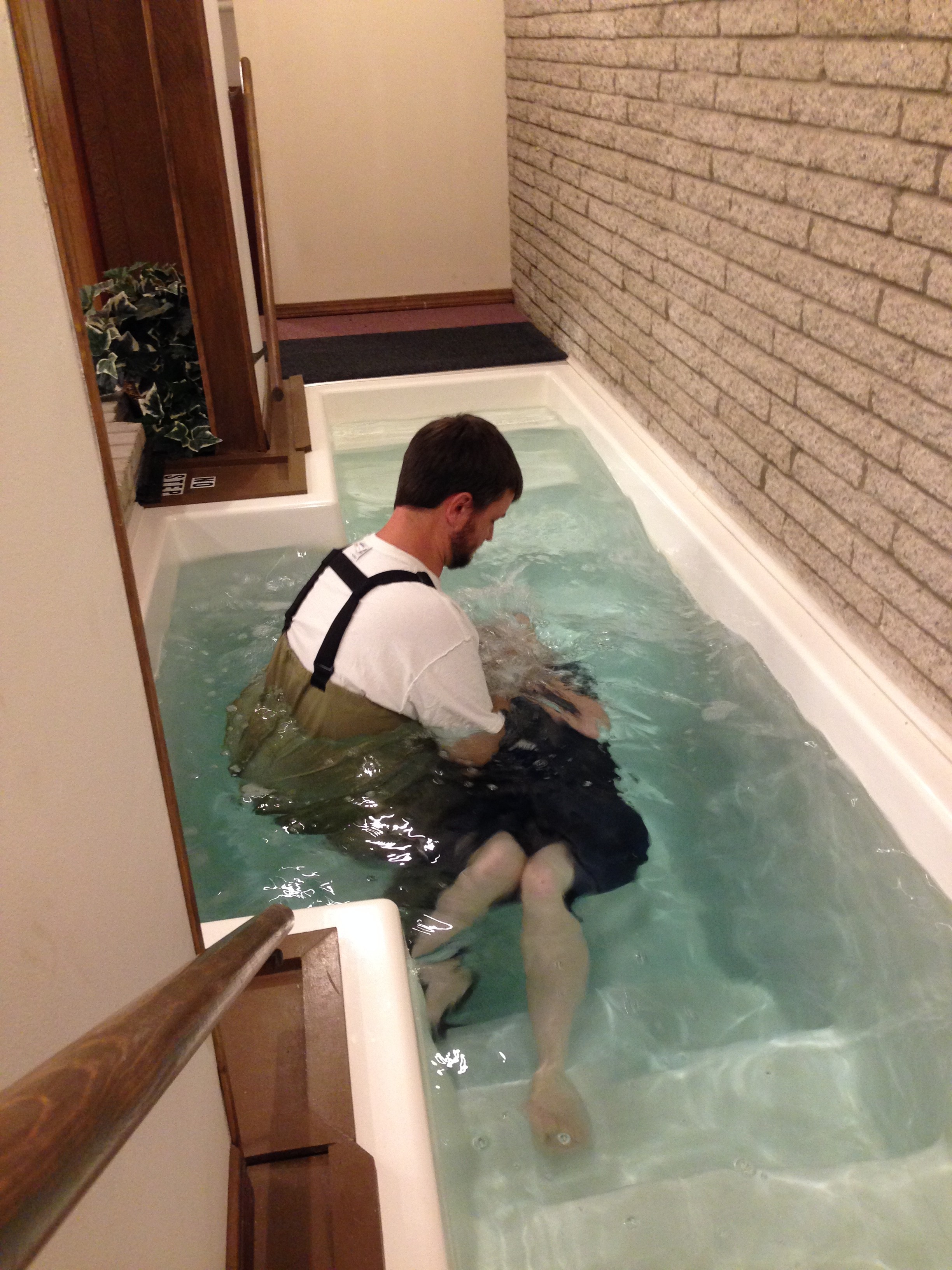
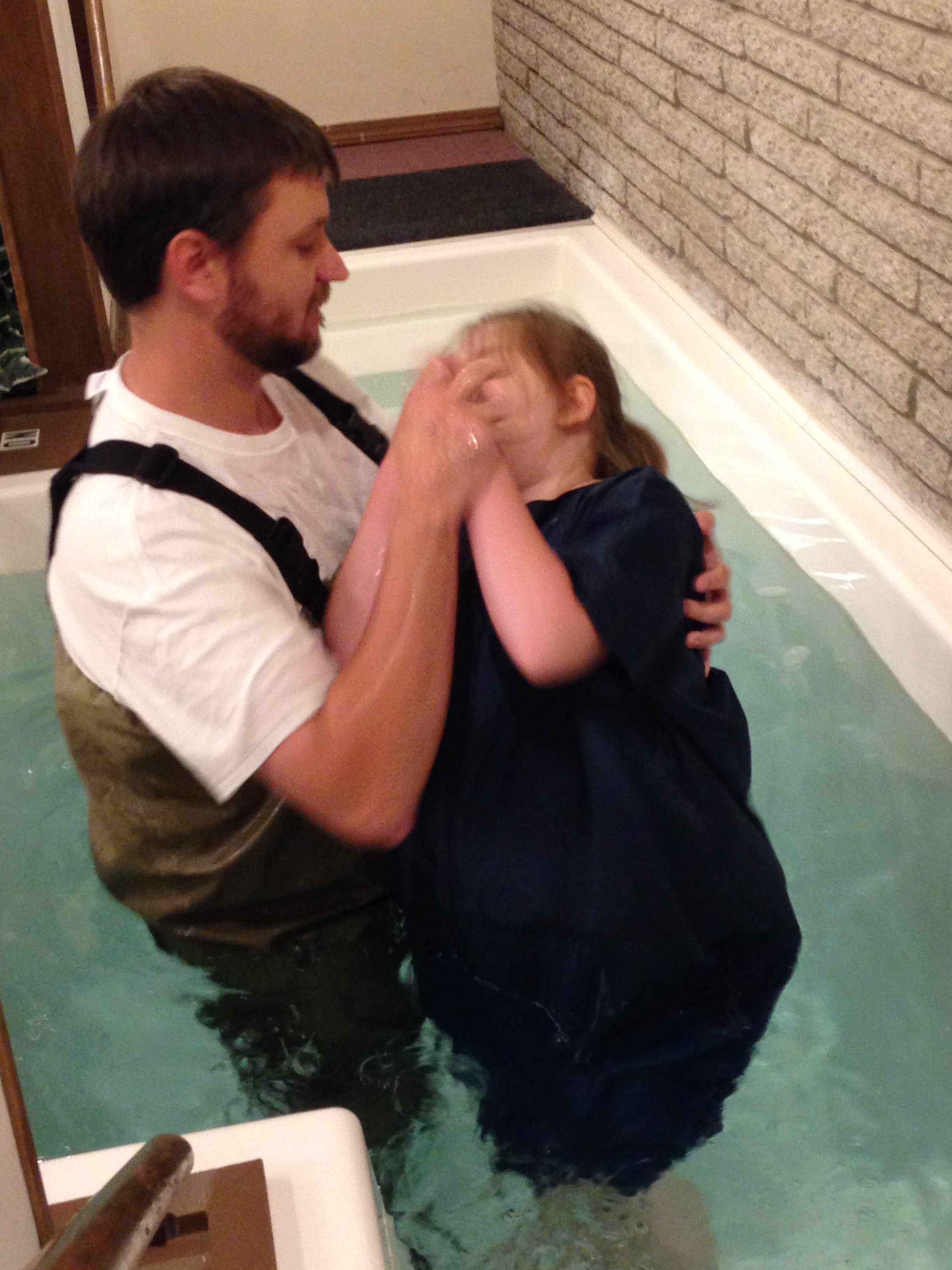
Just after Bible study, Savannah (our daughter) told me that she wanted to be baptized, and she didn’t want to wait any longer.  She said she needed to be saved, she didn’t want to go to the “bad place,” and she wanted to have her sins washed away.  She also added that she wanted to make sure that when she died, she’d be able to be with her mom and dad forever.

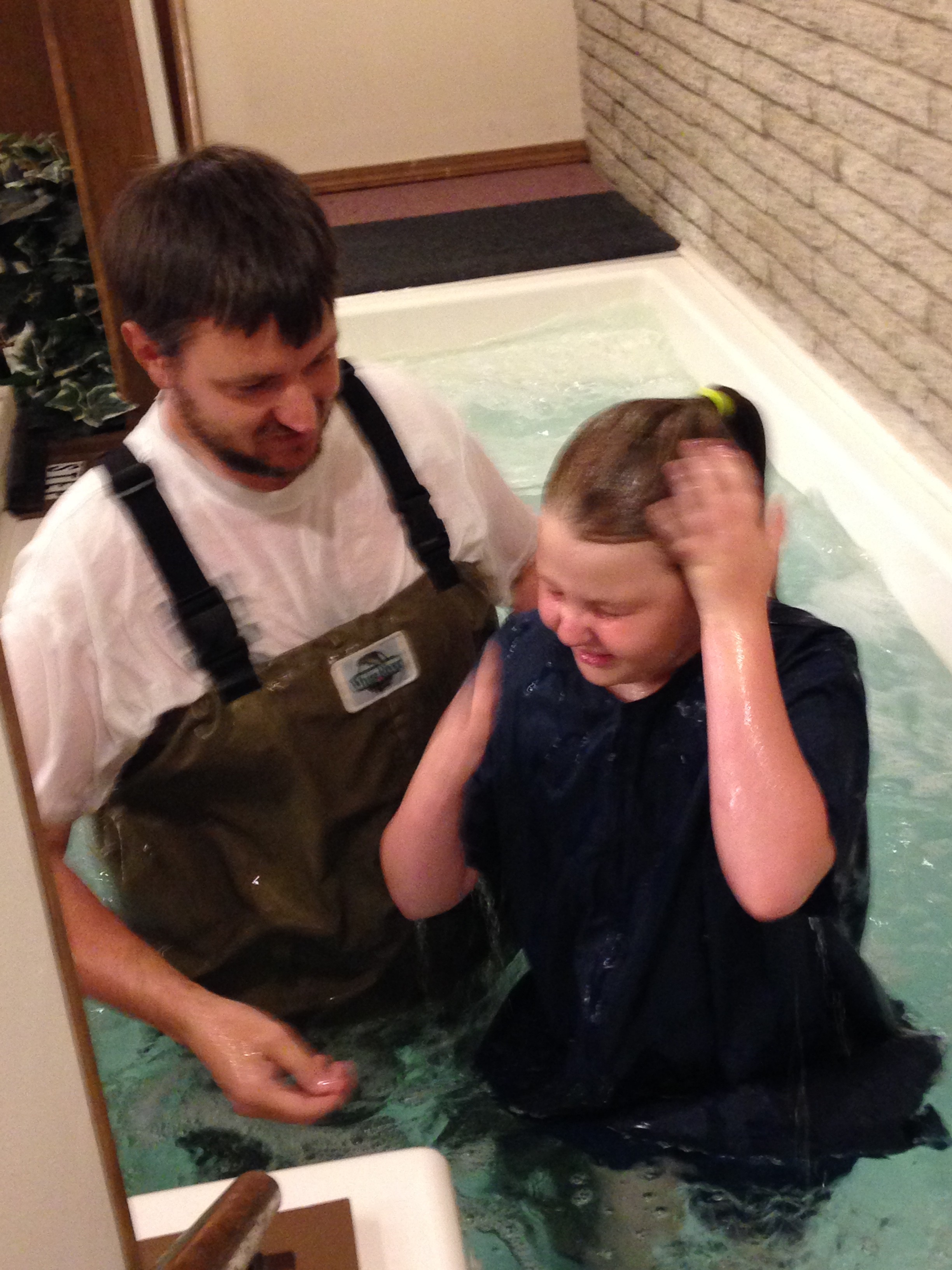
As she was getting ready, Deserae (also our daughter) decided that she was tired of waiting and worrying about her soul.  She confessed that she has sinned, that she knew it was sin, and that she needed to be forgiven by God for her sins.  She said “I need to be saved.”

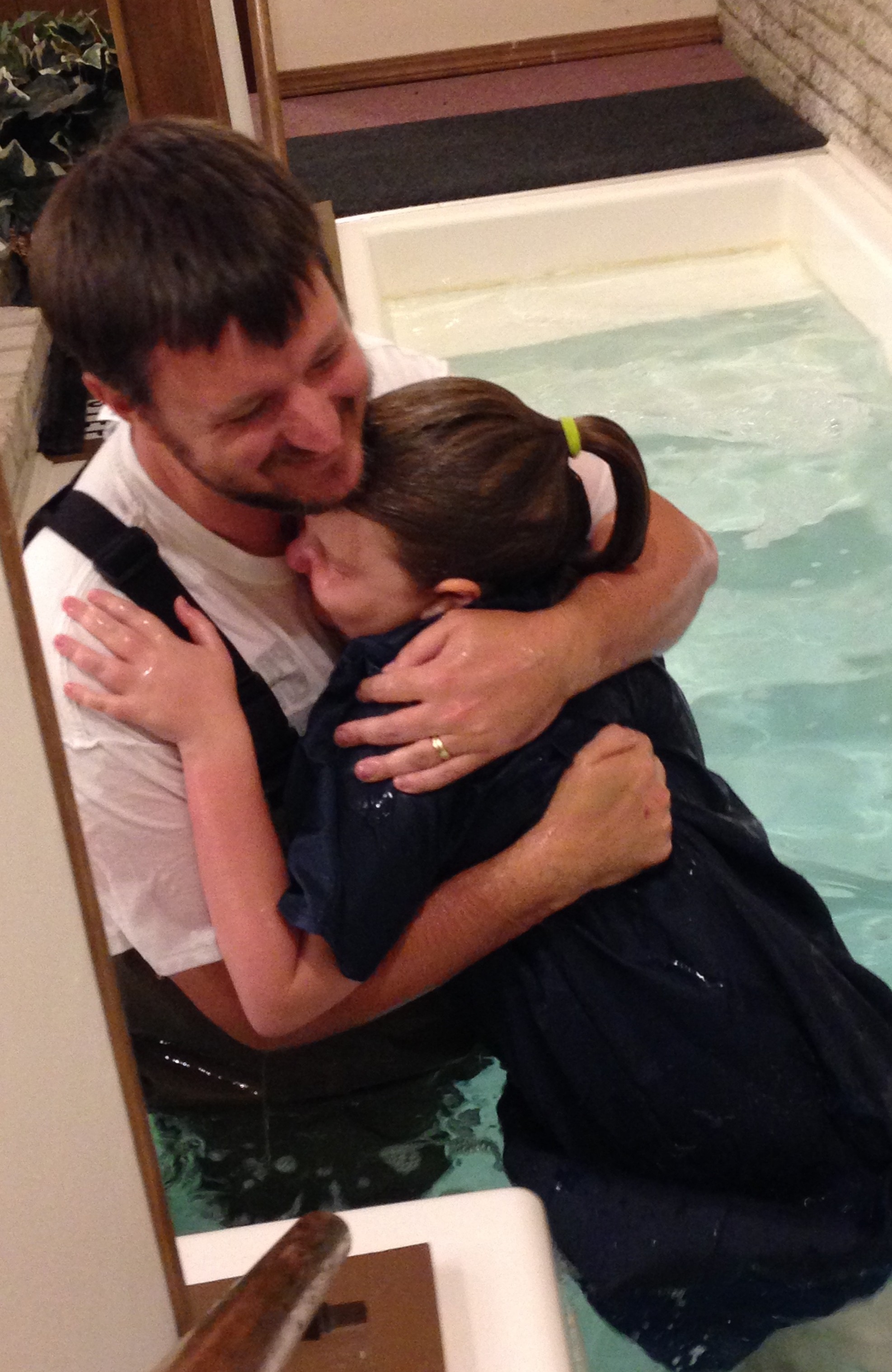
So just a few minutes later, I had the joyful pleasure of immersing both of them into Jesus Christ.

First Savannah:

IMG_0012

IMG_0014

Then Deserae

IMG_0020

IMG_0024

Stay in the House!

There are sounds of gunfire and screaming coming from outside his window.  The man slowly moves the curtain aside to see what’s going on, his kids getting more and more worried.  “Dad, what’s that noise?  Is somebody hurt?”

The man barks at them, “get back!”

He makes his way to the front door, and with tears the kids start begging, “Dad, don’t go! Stay here with us.”

The dad opens the door slowly and lightly steps out onto the front porch. Hesitating, he turns around, looks his children in the eyes, and sternly says, “Stay in the house!”

The door shuts, and the children don’t see their father anymore.  They run to the window and look as bullets fly and their father falls to the ground dead.

And through the crying and tears, they are haunted by the question that they can never answer: Why didn’t daddy stay in the house?

Why would a man tell his children to “stay in the house!”?

Because there is safety in the house. There is security in the house. There is protection in the house.  Because there is danger outside. It could cost them their lives to go outside.

In the Bible there was a strict command given to “stay in the house!”

It’s found in Joshua 2.  The Israelites—almost 3 million of them—are camped next to the Jordan River.  Across the Jordan stands the city of Jericho, surrounded by its two protective walls.

From the top of Jericho’s walls, you can see the Israelite camp, their tents, their campfires, and more people than you’ve ever seen in your life—and they’re about to attack.  Then, two of them show up in the city; on the walls; in your house!

Scared for your life, you don’t dare turn them in—you don’t want to anger their God.  You quickly hide them on your roof, and when the soldiers come to your door, you send them on a wild-goose chase—because you don’t want to anger the powerful Jehovah of the Israelites.  You send the spies out safely, but beg them to spare you and your family when they finally attack.

The spies agree, but give you the stern warning: “stay in the house!

If you want to be safe, get in the house!

For Rahab and her family to be safe, they have to get in the house (Joshua 2:18).

The spies said “when we come into the land, thou shalt bind this line of scarlet thread in the window which thou didst let us down by: and thou shalt bring thy father, and thy mother, and thy brethren, and all thy father’s household home unto thee.”  Literally, they said, “into your house.”

The only way that anyone in the city of Jericho was going to be saved was if they got in the house.  So, Rahab found her family, and brought them into the house with her—because she wanted to be saved, and she wanted her family to be saved too.

To refuse to come into the house was to refuse salvation.  To refuse to come into the house was to bring death on themselves.

For anyone today to be saved, they have to “get in the house” (Acts 2:47).

The house of God is the church (I Timothy 3:15 – “the house of God, which is the church”).  All saved people are in the church (Acts 2:47)—there are no saved people outside of the church.  Christ’s blood is required for salvation, and it only covers those who are in the church (Acts 20:28).

You’re surrounded by enemies who are ready to destroy you—and the only way to be safe is to “get in the house!”  Salvation is only found in the church, because it is the house of God, the body of Christ.

To reject the church is to reject salvation!  To reject the church is to bring destruction upon yourself!

If you’re not in the house yet, GET IN IT!

And if you are in the house, why aren’t you trying to get other people in it with you? Do you want them to be destroyed? Are you content to think, “Well, I’ll be saved, so it doesn’t really matter about anyone else?”

If you want to be safe, stay in the house!

For Rahab and her family to be safe, they have to stay in the house (Joshua 2:19).

“And it shall be that whosoever shall go out of the doors of your house into the street, his blood shall be upon his head and we shall be guiltless.”  Basically, the spies said, “If they leave the house, they’re dead. And it’ll be their own fault.”

Rahab and her family get all their belongings, and they all huddle together in the house. They look out the window, scared for their people, but also confident that God would keep His promise. They see hundreds of thousands of soldiers march around their city once a day for six days—and the soldiers don’t say a word. It is eerie, disconcerting, and frightening.

But through it all, they stay in the house because they know that they are only safe if they stay in the house.

For anyone today to be saved, they have to “stay in the house!”

Almost every letter in the New Testament contains warnings about losing your salvation.  But this is nowhere more clearly stated than in Revelation.

Jesus walks among the seven golden candlesticks, which are his church (Revelation 1:20).  A church who ceases to follow Christ will have its candlestick removed—that is, they will no longer be part of the church (Revelation 2:5).  In fact, Jesus describes the process as vomiting them out of His mouth, His body—vomiting them out of the church (Revelation 3:16).

When you leave the church, you leave the protection of the blood of Christ—and you bring it on yourself!  Those who returned to the Law of Moses willingly left the church of Jesus Christ—and had “fallen from grace” (Galatians 5:4).

You’re surrounded by an enemy that is ready to destroy you. You’re in the one safe place [the church] where they can’t harm you. And then you open the door and walk out—into the destructive hands of the enemy.  That’s like being in a storm cellar in the middle of a tornado, and then getting out as it goes right over you. You’re dead!

Instead, stay gathered with your family—your brothers and sisters in Christ—stay safe in the house (the church).

Conclusion:

On the seventh day of the siege, the hundreds of thousands of Israelite soldiers marched around the city seven times. The people in Jericho knew something was coming. As they looked out over the wall and through windows, they could see nothing but soldiers—silent soldiers—being led by God Himself.

Then, without warning, trumpets blast and six hundred thousand voices scream all at once. The ground shakes and the walls of the city crash to the ground. And through the dust they see the screaming soldiers running straight into the city with their swords swinging. Blood splatters and pools on the ground and person after person falls lifeless to the ground. Then comes the fire, destroying the city and everything in it.

But one section of the wall never fell. One small section of the wall still stood, with a house sitting on top of it. Inside that house was a woman who wanted to be saved. Inside that house was her family. Inside that house was a group of people who trusted in God’s promise.

What made that house different? Why did it stand when all the others fell?

After all, there were plenty of other houses. There were plenty of other people huddled in other houses. What made this one different? This house had a window. Out of that window hung a cord—a scarlet cord. That cord is what made that house stand out. That cord is what marked that house for salvation. That scarlet cord saved the spies, and now it saved Rahab and her family.

“And Joshua saved Rahab
and her father’s household” (Joshua 6:25).

On the final day, destruction will come upon this entire world. The trumpet will sound and Jesus will shout (I Thessalonians 4:16). No one will be able to stand in the face of His fierce destruction. And then comes the fire—the eternal fire (Mark 9:43-48).

But one house is spared. Inside that house are people who wanted to be saved when destruction came. But what made that house different? What makes this CHURCH different? After all, there’s plenty of other churches out there.

This church is different because of scarlet—the scarlet of Jesus’ blood. It is that blood which sets this church apart. It is that blood that makes this church stand out. The scarlet marks this church—this house—for salvation.

The people in this house are also saved by Joshua—of course, we know this Joshua by His Greek name, Jesus.

Jesus said He would build HIS church (Matthew 16:18). There is only one church that Christ recognizes. There is only one church that God adds to (Acts 2:47). Christ only built one church. Man has built many. Only Christ’s church—the one protected by the scarlet—will be saved.

The question now is this: Are you part of that church?

-Bradley S. Cobb
Is Baptism Essential?

IS BAPTISM ESSENTIAL?

By Paul Simon, Minister.

Is baptism essential to the remission of our sins? It is a shame that there is so much confusion over this question on which the Bible is so plain. There are many proofs that baptism is necessary to the remission of sins to the person who has reached the mental age of account­ability. Howbeit, I will not burden your minds with all of these proofs, but rather suffice it with four—any one of which would be conclusive in and by itself.

Condition of Salvation

Baptism is one of the conditions of the remission of sins. Jesus said, “He that believeth and is baptized shall be saved” (Mark 16:16). It must be agreed that this baptism is water baptism and not Holy Spirit baptism, because even those who teach that the Holy Spirit bap­tism is to be sought today, teach that it is not essential to salvation, but is a “blessing to be desired.” Jesus here makes faith and baptism equally necessary to salvation. Do you believe a responsible person can be saved without faith? Why then do you think he can be saved with­out baptism?

For Remission of Sins

Jesus says, through His apostle Peter, “Repent and be baptized, every one of you in the name of Jesus Christ for the remis­sion of sins, and ye shall receive the gift of the Holy Ghost” (Acts 2:38). Jesus here makes repentance and baptism of equal importance. The preposition, for, means the same thing in connection with “be baptized” as it does with “repent,” that is, to obtain. God is here saying, “Re­pent everyone of you in the name of Jesus Christ for the remission of sins, and be baptized everyone of you in the name of Jesus Christ for remission of sins.” Can one be saved without repentance? Then neither can he be saved without baptism.

God Commands It

God commands baptism. “And he com­manded them to be baptized in the name of the Lord” (Acts 10:48). (You) repent and (you) be baptized everyone of you (Acts 2:38).

Christ is going to punish those who obey not His commandments. II Thes. 1:7-9: “And to you who are troubled, rest with us, when the Lord Jesus shall be revealed from heaven with His mighty angels in flaming fire taking vengeance on them that know not God, and that obey not the gospel of our Lord Jesus Christ: who shall be punished with ever­lasting destruction from the presence of the Lord, and from the glory of his power.” Therefore, baptism is essential.

All who obey His commandments are to be saved.Rev. 22:14: “Blessed are they that do his commandments, that they may have a right to the tree of life, and may enter in through the gates into the city.”

All agree that to get into Christ is essential. Baptism is one of the acts of obedience which puts us into Christ. Gal.

3:27: “For as many of you as have been baptized into Christ have put on Christ.” This could not be Holy Spirit baptism, because all agree that Holy Spirit baptism does not put one in Christ. Therefore, water baptism is essential. (Note: Some­one might say, “The preceding verse says that we are saved by faith.” It does, but it does not say “by faith only.”)

Part of The New Birth

Jesus said “Verily, verily, I say unto thee, Except a man be born of the water and of the Spirit he CANNOT enter the kingdom of God” (John 3:5). Practically all commentators agree that the birth of water, here mentioned, refers to baptism. See Abbott, Wesley, Milligan, Whitby, Theluck, Olshausen. Alford says, “All attempts to rid this have sprung from doctrinal prejudices.” Even Adam Clarke admits that it refers to baptism, and then tries to argue out of it. Therefore, baptism is essential.

And yet, the church of Christ, the Christian Church, Church of Jesus Christ of Latter Day Saints, Second Adventist Church, Roman Catholic Church, Greek Catholic Church (with possibly some branch of the Holiness Church) are the only religious groups which teach and practice baptism as essential to the re­mission of sins.

The Truth About Baby Jesus

This week, a large section of the world is focusing on the birth of Jesus Christ.

What we need to remember is that ANYTIME people want to focus on Jesus, we should take advantage of it and show them what the Bible says about what happened with Baby Jesus.

The problem is not that they are focusing on the birth of Christ.
The problem is not that they do it every year at the same time.

  • The problem is that most people who focus on the birth of Jesus Christ on this day tend to forget about him the rest of the year.
  • The problem is that most people who focus on the birth of Christ don’t bother to look into the rest of the story: Baby Jesus grew up!

And also, because of the Catholic Church’s influence in years gone by, and their willingness to “Christianize” pagan celebrations, we have all sorts of things that get connected with the birth of Jesus that make no sense at all.  For example, how does a tree covered in electric lights have anything to do with the birth of Christ?  How do flying reindeer help us remember the birth of Jesus Christ?

But I digress…

It seems that people only want to think of baby Jesus as a cute little harmless baby in the manger, and ignore the rest of what the Bible says about Him.

Do you realize that the passages speaking about the birth of Jesus Christ comprise less than 2% of the gospel records? That means there is still 98% of the book to go!

What would you think of someone who only read the first chapter of a book and then stopped reading, all the while gushing about how wonderful that first chapter was?  Imagine them going on and on about how great the book starts out. They have you hooked. You ask, “well, what happens next?” and they say “I don’t know, I don’t feel like reading the rest.”

That’s how people seem to act this time of the year.  They gush about the birth of Christ, but they ignore the truth about Baby Jesus – He grew up!

Don’t get me wrong, the birth of Jesus was very important.  It was prophesied in the Old Testament (Isaiah 7:14 was ultimately fulfilled in the birth of Jesus).  It was miraculous (see Matthew 1:18-25).  It was announced by angels (see Luke 1:26-33 and 2:8-14).  Yes, the birth of Christ is a VERY important event.

But Baby Jesus grew up


Baby Jesus is easy to love.  Outside around this time, you’ll frequently see nativity scenes, because people love Baby Jesus.

  • Baby Jesus is cute (most babies are cute).
  • Baby Jesus doesn’t ask anything of you, so it is easy to accept and love baby Jesus.

But God didn’t send His Son to earth to remain a baby.

Baby Jesus grew into Boy Jesus (Luke 2:40-52).  The Bible tells us that, after being circumcised, Jesus went back home with His parents to Nazareth.  There, Baby Jesus “grew” (Luke 2:40).

At age 12, Jesus was found in the temple, listening to the teachers and asking them questions, and also answering them.  After returning with His parents, boy Jesus grew some more, and “increased in wisdom and stature and in favor with God and man” (Luke 2:52).

Boy Jesus grew into the Man Jesus.  When Jesus came to John the baptizer, he was “about thirty years of age” (Luke 3:23).  Immediately afterwards, He was taken into the wilderness to be tempted by Satan.  After overcoming the direct temptations of Satan, Jesus began to go around preaching repentance.

It was soon after this that people started to reject Him (who wants to actually repent?).  The people didn’t like that He claimed to be the answer to Old Testament prophecy, and they grabbed Him, and were going to throw him off a cliff.

These people who had no problem with Baby Jesus suddenly didn’t care for Him anymore once He started exposing their sinfulness.

The Man Jesus makes demands of people.  He told His disciples to “follow me.”  He told people that unless they repented, they would perish.  He told people that they had to put Him above even their own family.  He told people that they had to be righteous from the inside and not just the outside.  He told people that they had to love their enemies.  He told people that they had to actively spread the gospel after obeying it.

Why is it, do you think, that most people who love Baby Jesus don’t follow what the Man Jesus has to say?

Outside of the first two chapters of Matthew and Luke, the birth of Jesus isn’t the focus.  Instead, the Bible constantly points to the death of Christ as the most important part of His time on earth.

The apostle Paul said that his focus was on Christ and Him crucified–not on Baby Jesus.  When Peter preached on the day of Pentecost, He started by telling the people there to listen up and then proclaimed Christ crucified–not Baby Jesus in the manger.

Jesus Himself, when instituting the Lord’s supper, said that it was a feast to remember His death–He never told people to celebrate His birth.

Religious people today seem to love Baby Jesus, but they want to ignore the Man Jesus and His teachings.  And no surprise, because the Man who was once Baby Jesus was murdered by religious people who didn’t like what He had to say.  They had no problems with Baby Jesus, but now they’ve changed their minds because this Jesus—the man—exposed their sinfulness.  They went all out to silence this man who dared make demands of them.

But still, Jesus willingly died because through His death, all people could be saved from their sins.

But even with that, Jesus made demands.

  • Jesus demanded belief.
  • Jesus demanded repentance.
  • Jesus demanded ongoing confession.
  • Jesus demanded baptism in order to be saved.
  • Jesus demanded faithfulness, even if it meant death.

Don’t get me wrong.  There is ZERO problem with thinking about and being happy about the birth of Jesus Christ.  It’s in the Scripture, and “all Scripture is profitable.”

However, if you just stop at the cute little Baby Jesus, you are ignoring 98% of what the gospels tell us about Him.

As you go through your life, remember the truth about Baby Jesus–He grew up.  He died on the cross, and He was risen again on the third day.  And come judgment day, He will be the one deciding your eternal destination.

It’s about time you read the rest of the story of Jesus, don’t you think?

Tracts from the Past – Noah’s Salvation and Ours

Continuing our series of “Tracts from the Past” written by Paul Simon (date and location unknown), we now present to you one dealing with types and antitypes that deal with Noah and ourselves.  Enjoy!

NOAH’S SALVATION AND OURS

By PAUL SIMON, Minister

Noah’s salvation was very simi­lar to ours. Both were spiritual and physical. Although, first em­phasis was placed upon Noah’s physical salvation, he was also saved from the sins of the wicked by their being destroyed in the flood. First emphasis is placed on our spiritual salvation, and yet we are saved physically in that [generally speaking] he who lives a Christian life will live longer than he would have, had he lived an ungodly life.

Noah was saved by grace.

And the Lord said, ‘‘I will destroy man whom I have created from off the face of the earth, for it hath re­pented me that I have made them. But Noah found grace in the eyes of the Lord.” (Gen. 6). We, too, are saved by grace. “By grace are ye saved through faith; and that not of yourselves.” — Eph. 2:8.

Noah was saved by faith.

“By faith Noah, being warned of God concerning things not seen as yet, moved with Godly fear, prepared an ark to the saving of his house” (Heb. 11:7). We are saved by faith. “Wherefore being justified by faith, we have peace with God through Jesus Christ our Lord” (Romans 5:1). “For ye are all the children of God by faith in Christ Jesus” (Gal. 3:26). Although these passages state that we are saved by faith, they do not say that we are saved by faith only.

Noah was saved by obedience.

“By faith Noah being warned of God, concerning things not seen as yet, moved with Godly fear pre­pared an ark (obeyed) to the sav­ing of his house” (Heb. 11:7). We too are saved            by obedience. “Though he were a son, learned he obedience through the things which he suf­fered, and being made perfect he became the author of eternal sal­vation unto all them that obey Him” (Heb. 5:8-9). “To you who are troubled rest with us. When the Lord Jesus Christ shall be re­vealed from heaven with his migh­ty angels in flaming fire taking vengeance on them that know not God and that obey not the gospel of our Lord Jesus Christ” (2 Thes. 1:7-9). “Blessed are they that do his commandments that they may have a right to the tree of life and may enter in through the gates into the city” (Rev 22:14).

Noah was saved by water.

“For Christ also hath once suffered for sins: the just for the unjust that he might bring us unto God; being put to death in the flesh, but quickened by the Spirit by which also he went and preached unto the spirits in prison; which some­time were disobedient when once the long suffering of God waited in the day of Noah while the ark was a preparing, wherein few: that is, eight souls were saved by wat­er” (I Peter 3:18-20). Likewise we are saved by water in baptism. “The like figure whereunto even baptism doth also now save us” (I Peter 3:21).

Noah was saved in the ark.

We are saved in the spiritual ark, the church. “And the Lord added to the church daily such as should be saved” (Acts 2:47). “Wives sub­mit yourselves unto your own hus­bands as unto the Lord; for the husband is the head of the wife, even as Christ also is the head of the church and he is the saviour of the body. Therefore, as the church is subject to Christ so let the wives be to their own hus­bands. Husbands, love your wives even as Christ also loved the Church and gave himself for it, that he might sanctify and cleanse it with the washing of water by the word that he may present it unto himself a glorious church, not having spot or wrinkle or any such thing, but that it should be holy and without blemish” (Eph. 5:22-27). “Take heed therefore unto yourselves and unto all the church over which the Holy Spirit hath made you overseers to feed the church of God which he pur­chased with his own blood” (Acts 20:28).

More examples:

  • Noah built the ark. Christ built the church.
  • Noah built but one ark. Christ built but one Church.
  • The ark was Noah’s ark. The Church is Christ’s Church.
  • There was only one family in the ark, Noah’s family. There is but one family in the Church, God’s fami­ly.
  • All of Noah’s family was in the ark. All of God’s family is in the church.
  • All in the ark were Noah’s family. All in the church are God’s family.
  • Only Noah’s children were in the ark. Only God’s children are in the Church.
  • All of Noah’s children were in the ark. All of God’s children are in the church.
  • All in the ark wore one name, Noah’s. All in the church wore one name, Christ’s.
  • All the righteous were in the ark. All the righteous are in the church.
  • All out of the ark were disobedient to God. All out of the church are disobedient to God.
  • All in the ark were saved. All in church are saved.
  • All out of the ark were lost. All out of the church will be lost.
  • Had Noah and his family not entered the ark, or left the ark before God told them to, they would have been lost. All who refuse to enter the church, having obtained unto the age of accountability, will be lost and those who enter the church but refuse to remain faithful to the church will be lost.
  • There was but one entrance into the ark: the door. There is but one entrance into the Church: Christ.
  • There was but one source of light in the ark, the window. There is but one source of spiritual light in the church, the Bible.

You see how understanding our salvation is made simple by com­paring it with Noah’s salvation by the flood.