All posts by BradleyCobb

This Present Dark World

[Note to our readers: for the next several weeks, our Thursday posts will be by Kyle Frank, a friend and brother in Christ, who graciously consented to be a “guest-blogger” for us once a week.]

We, as the children of God, are operating in hostile territory. The Apostle Peter tells us such when in 1 Peter 2:11, says “Beloved, I beseech you as sojourners and pilgrims, to abstain from fleshly lust, which war against the soul;” A sojourner or a pilgrim is traveling through unfamiliar, and often hostile lands.  We are in enemy territory and as such we are to be cognizant to whatever the enemy has at his disposal. This world that we live in, although originally created by God, has been taken prisoner by the Evil One when sin came into the world through Adam and Eve. It now really is hostile, dark and in bondage. Romans 8:21-22 says that

“the creation itself also shall be delivered from the bondage of corruption into the liberty of the glory of the children of God. For we know that the whole creation groaneth and travaileth in pain together until now.”

That is painfully clear. Since we are in fact operating in enemy territory, it behooves us to be very alert and watchful of the path we are on and what is actually occurring around us. This present dark world is full of traps, distractions and anything else in which the enemy can mislead, misdirect or simply distract us from the real reason for our still being here. I have heard babes in Christ say that they wish that after baptism, they could just “go home” and not have to deal with the treachery inherent in this world. I concur….except that we are servants of the Most High, who has saved us to serve, to hold forth the light and be

“a(n) elect race, a royal priesthood, a holy nation, a people for (God’s) own possession, that ye may show forth the excellencies of him who called you out of darkness into his marvelous light:10 who in time past were no people, but now are the people of God: who had not obtained mercy, but now have obtained mercy.”

1 Peter 2:9-10. What more could we hope to be, or hope to do than to be involved in such? What a blessing-to be involved in the rescue of our captive race. We will be involved in the redemption and plan of salvation as given by our blessed Lord who has loved us with a indescribable love. The selfishness in each of us works against us, and against our loving Creator and redeemer. This again, is used by the enemy and we need to be on guard against this.

Another way of looking at this present dark world is by looking at it through the lens of the Bible. We know it to be truth by a myriad of proofs and evidences as has been previously showed. Scripture tells us that there is more to creation than just the world we live in. There are other realms that are invisible to our  physical eyes. The spiritual realm-the PRIMARY realm is beyond our present sight.  2 Corinthians 5:1-4 tells us:

“For we know that if the earthly house of our tabernacle be dissolved, we have a building from God, a house not made with hands, eternal, in the heavens.  For verily in this we groan, longing to be clothed upon with our habitation which is from heaven:  if so be that being clothed we shall not be found naked.  For indeed we that are in this tabernacle do groan, being burdened; not for that we would be unclothed, but that we would be clothed upon, that what is mortal may be swallowed up of life.”

It IS there, it IS beyond our physical sight but if we use the eyes of faith we can see that it is there beyond our current condition.

-Kyle Frank


A Brief Biography of Jesus’ Brother (Part Two)

James the Elder

God did not deem it necessary for us to know when James was made an elder in the church at Jerusalem,*[1] but by the time fourteen years had passed from James’ meeting with Saul of Tarsus, he was one.*[2]  He was extremely influential in the church at Jerusalem, being called a “pillar” of equal standing with Peter and John (Galatians 2:9).  In fact, after Peter’s angelic rescue from prison, he instructed the disciples to go “tell James” about what happened.*[3]  Some trouble had erupted with some Jewish Christians teaching that Gentiles could not be saved without first being circumcised.  Saul (now called “Paul”), along with Barnabas, came to Jerusalem and had a meeting with the “apostles and elders” to discuss the matter.*[4]  James was one of the “apostles and elders” who was present,*[5] and in fact appears to be the one who was supervising the whole proceeding, issuing his “sentence” or “judgment” after hearing Peter, Paul, and Barnabas give their testimony.*[6]

James’ judgment was that the Gentiles were not to be troubled with keeping any part of the Law of Moses.  In accordance with this judgment, James wrote a letter to be sent to the Gentile Christians in Antioch, Syria, and Cilicia.*[7]  It is also at this time that James (along with Peter and John) gave Paul and Barnabas the right hand of fellowship, acknowledging that Jesus had commissioned them to go to the Gentiles, while James’ (and Peter and John’s) commission was to the Jews.*[8]

Some time afterwards, some men came “from James” to Antioch; and though the circumstances causing this journey is not given,*[9] it does point to James’ status as a leader in the Jerusalem church.*[10]  The apostle Paul even appealed to James as a person of authority when writing to the Christians in Corinth: first, as an approved example of a married man being supported by the church;*[11] second, as a reputable person who was a witness to the resurrection of Jesus Christ.*[12]

Several years later, James received a visit from Paul, Timothy, Luke, and several others*[13] in order to receive financial aid sent by predominantly Gentile churches for the poor Jewish saints in Jerusalem.  James, along with the other elders in Jerusalem, met with them and rejoiced at the great work God was doing through Paul’s missionary efforts.  However, there was something that James and the other elders needed to talk to Paul about.*[14]  They had heard rumors—as had the other Christians in Jerusalem—that Paul was teaching Jews to forsake the customs of the Law of Moses, specifically circumcision.  James and the elders knew that this wasn’t truly the case, but they also knew that something needed to be done to prove to the Jewish Christians that the rumors were false.  So, James and the rest of the elders (potentially hundreds of men) asked Paul to purify himself and pay the temple offering for himself and four other Jewish Christians who had taken a vow.  This, they were confident, would be sufficient proof to the Christians that Paul still respected the Law of Moses. Unfortunately, some of the Jews who had caused Paul such problems in Asia had come to Jerusalem as well and stirred up the multitude, almost causing Paul’s death, and rendering James’ suggestion moot.

Many people want to condemn James’ actions here, but the evidence doesn’t warrant condemnation.  The idea that one inspired man (James) and potentially hundreds of other leaders in the church (most of whom probably had miraculous gifts) would ask another inspired man (Paul) to sin—and then that inspired man agreed to sin—is despicable and unworthy of serious consideration.*[15]  The fact that, just a few days after these events, Paul testified that he had lived “in all good conscience” up to that point shows that the inspired apostle didn’t see anything wrong with the request made by James and the elders in Jerusalem—or else he was lying (Acts 23:1).  James and the elders were not asking Paul to reject the sacrifice of Jesus Christ and return to the Old Law; they were asking him to show that he still had respect for the customs of the Jews contained in the Law of Moses (see Acts 21:21).*[16]  In short, James was asking Paul to do something expedient to assist in keeping peace and unity within the Jerusalem church.*[17]

[1] *Epiphanius (Haeres., 78), Chroysostom (Homilies xi in 1 Corinthians 7), as well as others, state that James was made an elder by the Lord Jesus Himself.  Eusebius agrees in one place, but elsewhere states that he was ordained an elder by the apostles (Ecclesiastical History, 2:23).  Clement of Alexandria places James at a higher level in the Jerusalem church than even the apostles, suggesting that Peter, James [son of Zebedee], and John “might well have been ambitious” for it (McClintock and Strong’s Cyclopedia of biblical, Theological, and Ecclesiastical Literature, Vol. 4, page755).

[2] *The Scriptures do not describe how or when elders were first installed in the church.  The first mention of elders in the church is in Acts 11:30, and they are portrayed as men who were already seen as the leaders of the church [most likely in Jerusalem].  Since Paul and Barnabas ordained elders in every congregation (Acts 14:23), it would be logical to assume that all the other established congregations (such as Antioch and those congregations outside of Jerusalem) also already had elders at that time as well.

[3] *Acts 12:17.  James, the son of Zebedee, had been murdered before Peter’s arrest, eliminating him from possible consideration in this passage.

[4] *Acts 15:1-6.

[5] *If one were to argue that James was not an elder, this phrase requires that they place James among the apostles—which very few would be willing to do.  He is either one or the other (or both, see 1 Peter 5:1-3).

[6] *Acts 19:13-21.  It is difficult to see how James could have authority in this meeting without being an apostle of Jesus Christ.  There are arguments given that there were only twelve full-fledged apostles of Jesus Christ, yet Matthias was a thirteenth (though admittedly, he replaced Judas) and Paul was definitely not one of the twelve.  Paul categorizes James with Peter and John (who were both apostles), and even appears to call James an apostle in Galatians 1:18-19.  If the post-resurrection appearance of Jesus Christ to Paul was enough to commission him to be a full-fledged apostle, why could not the same thing be said of James?  The office of apostle was a miraculous one (2 Corinthians 12:12), and regardless of how many people filled that role, it was one which ended with the age of miracles—that is, when the Scriptures were completed and Jerusalem was overthrown.  See the Appendix in the author’s book The Holy Spirit in the Book of Acts for more information regarding the end of miracles.

[7] *Though the text does not explicitly state James as the author, there are multiple phrases in that short letter which only appear in one other place in Scripture: the letter known as “James,” which was written by the brother of the Lord.   For most commentators, this is sufficient proof that the same man wrote both letters.  See the introduction to this author’s book: Justified by Works: A Study of the Letter from James.

[8] *Galatians 2:7-9.

[9] *There is speculation on almost every aspect of Galatians 2:12.  Commentators dispute among themselves over whether these “certain men” were really sent by James, or if they were simply men who were in agreement with him, or they just claimed to be in agreement with him.  They argue over why James sent these men (if indeed he actually sent them): was it to make sure Peter was behaving according to the Jewish customs, or to tell the Jewish Christians that they were still obliged to follow the Law of Moses, or any number of other things?  They argue over why Peter was scared of them: was it because he was scared of James, or scared of these men who would be upset with him for not following Jewish customs regarding eating with Gentiles, or scared that he—as a Jew—was somehow keeping his national brethren from coming to the truth?

[10] *Whether these men were actually sent by James or simply claimed to be sent by James, the fact remains that the name of James carried such weight that Peter was scared of doing something that would upset him or his emissaries.

[11] *1 Corinthians 9:1-6.Paul’s argument is that he could have demanded that they support him financially, but he didn’t.  He didn’t take advantage of what was proper.  He could have commanded them to provide his food and drink; he could have taken a wife and had the church support both of them like the other apostles, the brethren of the Lord [including James], and Peter himself.  Thus, Paul appeals to James as one of the many examples of a person who was supported by the church full-time because of his work with the congregation.  This matches with 1 Timothy 5:17, where elders have the right to be financially supported.

[12] *1 Corinthians 15:4-7.  There was no reason to mention James by name unless his name held some level of importance within the church.  The fact that his name was well-known to Gentile Christians hundreds of miles from Jerusalem speaks to his importance.

[13] *These others are mentioned by name in Acts 20:4.  The visit itself is recorded in Acts 21:17-ff,

[14] *This speech is most often attributed to James alone by commentary writers, but the text attributes it to the entirety of the elders in Jerusalem—potentially hundreds of men.  See Acts 21:20-25.

[15] *Lipscomb states:

They were not under obligations to observe the law; but as they had been accustomed to its observance, they did not at once see that it was incompatible with faith in Christ Jesus. So they continued to observe it. It is probable that they gradually learned that Jesus was the end of the law, and turned from it by degrees, the destruction of Jerusalem likely enforcing the final truth upon them.

[16] *McGarvey, after noting that this is a “most difficult” section of Acts to explain, said the following:

The truth is, that, up to this time, Paul had written nothing which directly conflicted with the service of the altar, and he did not yet understand the subject correctly. His mind, and those of all the brethren, were as yet in much the same condition on this subject that they were before the conversion of Cornelius, in reference to the reception of the uncircumcised into the Church. If we admit that the proposition above quoted from Galatians, affirming that “we are no longer under the law,” was, when fully understood, inconsistent with the continuance of the sacrifice, we make his case only the more likely like Peter’s in regard to the Gentiles; for he announced propositions, on Pentecost, which were inconsistent with his subsequent course, until he was made to better understand the force of his own words. Peter finally discovered that he was wrong in that matter, and Paul at length discovered that he was wrong, in his connection with the offerings of these Nazarites. Some years later, the whole question concerning the Aaronic priesthood and animal sacrifices was thrust more distinctly upon his mind, and the Holy Spirit made to him a more distinct revelation of the truth upon the subject, and caused him to develop it to the Churches, in Ephesians, Colossians, and especially in Hebrews. In the last-named Epistle, written during his imprisonment in Rome, he exhibited the utter inefficiency of animal sacrifices; the sacrifice of Christ, once for all, as the only sufficient sin-offering; and the abrogation of the Aaronic priesthood by that of Christ, who was now the only high priest and mediator between God and man. After these developments, he could not, for any earthly consideration, have repeated the transaction with the Nazarites; for it would have been to insult the great High Priest over the house of God, by presenting, before a human priest, an offering which could not take away sin, and which would proclaim the insufficiency of the blood of the atonement. We conclude, therefore, that the procedure described in the text was inconsistent with the truth as finally developed by the apostles, but not with so much of it as was then understood by Paul. This conclusion presents but another proof that the Holy Spirit, in leading the apostles “into the truth,” did so by a gradual development running through a series of years. (Commentary on Acts, notes on 21:18-26).

[17] *The same ones who wish to condemn Paul and James for this act of expedience have no problem with Paul’s circumcision of Timothy, which was also an act of expedience.
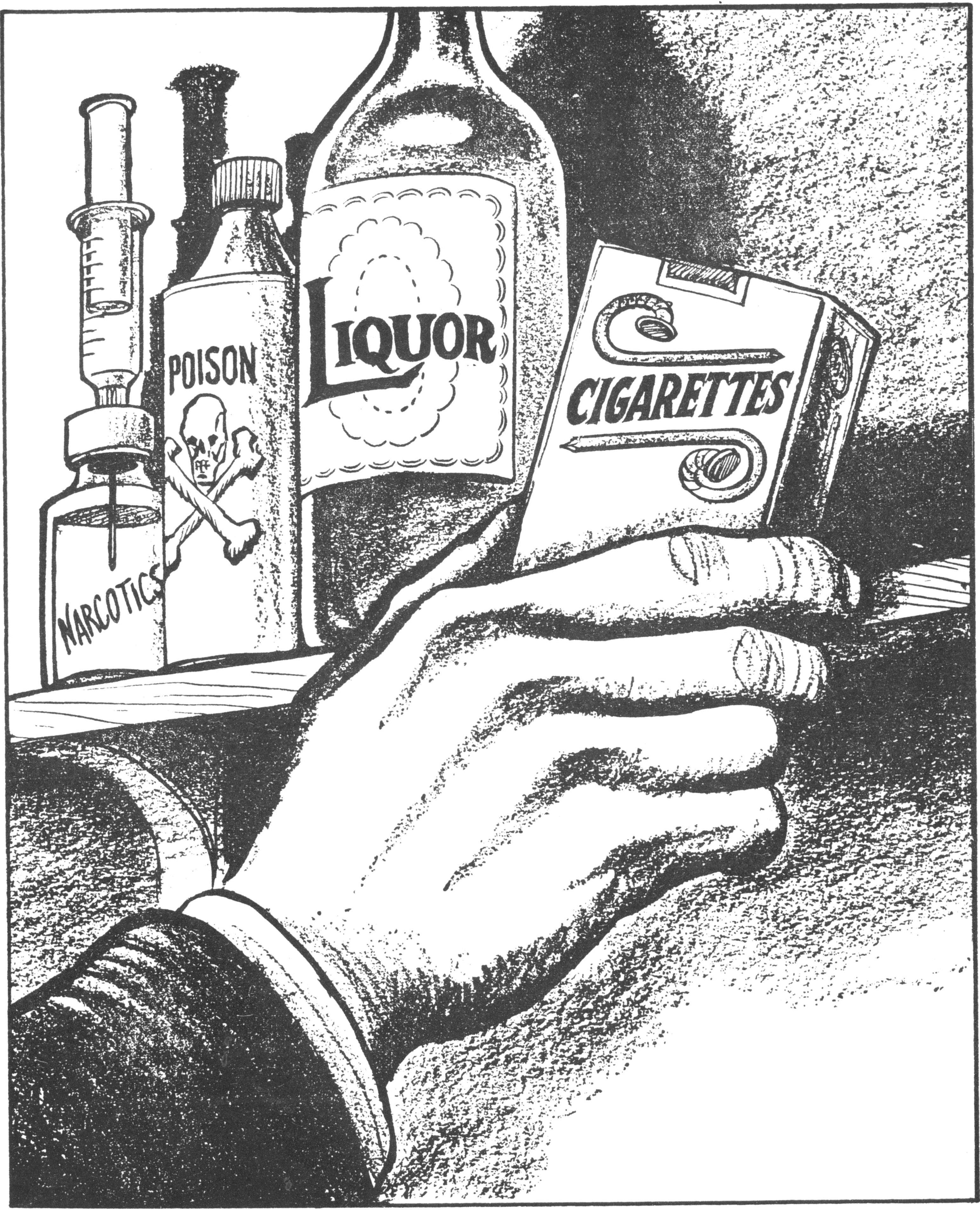
Is Smoking Sinful?


Today, I read through a 40-year old debate book with the proposition, “The Scriptures Teach that a Christian May Smoke.”

The topic is one that I’ve written on before (see here), but it never hurts to restudy positions, so long as you come to the topic willing to accept whatever the Bible has to say on the matter.

Rolf Miller, a gospel preacher who smoked, took the affirmative in this debate, saying that smoking is not sinful in and of itself, but that in some instances it could become sinful.

Eugene Britnell, a gospel preacher who had quit smoking several years earlier, took the negative position, stating that smoking did harm to the body, and therefore it was sinful.

At some point in the future, I might post a review, giving my thoughts on the debate, and areas which didn’t get emphasized as they should have, but for now, I thought it’d be worthwhile to make it available for you as the latest addition to the Jimmie Beller Memorial eLibrary!

This short debate (44 pages) features five presentations from each writer, as well as a summary from both.

We hope that you find this debate to be interesting and a useful resource for your studies.

It can be read online or downloaded to your computer/tablet/phone/whatever by clicking the following link:

Britnell-Miller Debate on Smoking

A Brief Biography of Jesus’ Brother (Part One)

[As we promised, we are presenting you with a gift.  As we continue to write sections for our upcoming book, “Who Were The Apostles?” we will be posting them here, so you can read them before the book is released!]

James the Non-Believer

James was the son of Joseph and Mary.*[1]  Jesus was her firstborn, but James was the next-oldest among the brothers.*[2]  It’s not difficult to imagine that James might have been jealous of Jesus while they were growing up together.  Jesus would have been the perfect child, always obedient, never getting in trouble.  That’s a difficult act for His brothers to follow.

James first appears in the gospel records as someone who was outside, waiting to talk with his brother, Jesus (Matthew 12:46).  At that point in the narrative, we don’t know his name yet (or the names of his other brothers), but we do see something that might give us some insight on later events.  James and his brothers (and their mother) were waiting outside to talk to Jesus—to talk to their own brother—and Jesus’ response was to say that His true family was His disciples (Matthew 12:47-50).  Depending on what kind of people James and his brothers were, they could have taken this as an incredible insult.

The tension between James and Jesus shows up shortly before the Feast of Tabernacles.  James and his brothers mocked Jesus, telling Him that He needed to go to Jerusalem and do mighty works (even though the Jews there wanted to kill Him).  They basically accused Him of being a liar, saying that if He really was able to do these mighty works, He wouldn’t be in hiding.  But the reason they said these things is because they didn’t believe in Him—they didn’t believe He was really the Messiah.*[3]  Is it any surprise, then, that Jesus said, “A prophet is not without honor, except in his own country, and in his own house”?*[4]

James the Believer

If not for a single mention of it by Paul, we would never know for certain how James went from being a scoffing non-believer to one of the foremost disciples of Jesus Christ.  Jesus had been taken away by a mob of soldiers and given mock trial after mock trial, and was finally sentenced to die by Pontius Pilate.  After being beaten, He was raised up on a cross, and hung there in agony until He finally died.  Mary, the mother of Jesus, was there at the cross, watching her Son.  But there is nothing said about whether James was there or not.

But some time within the next forty days, Jesus—now resurrected—found James and spoke with him.*[5]  James must have been in shock, seeing his dead brother standing right in front of him very much alive.  He would have seen the nail-prints and the whole in his side where the spear had pierced it.  And he would have felt a mixture of amazement, joy, and sorrow.  Amazement at seeing someone raised from the dead; joy at knowing his brother was alive again; and sorrow for ever doubting Him in the first place.

There is an ancient work called “the Gospel of the Hebrews”*[6] which records an interesting tradition about James:

And when the Lord had given the linen cloth to the servant of the priest, he went to James and appeared to him.  For James had sworn that he would not eat bread from that hour in which he had drunk the cup of the Lord until he should see Him risen from among them that sleep.  And shortly thereafter the Lord said “Bring a table and bread!”  He took the bread, blessed it, and brake it, and gave it to James the Just and said to him, “My brother, eat thy bread, for the Son of man is risen from among them that sleep.”*[7]

We’re not given the details of what happened next, but it certainly included a meeting between James and his younger brothers, telling them “We were wrong: Jesus is the Messiah.  He has returned.”  Then the brothers all went to Jerusalem and met with the disciples prior to the Day of Pentecost.*[8]

Somewhere between three to ten years later,*[9] the now-converted James got to meet someone else who had been an unbeliever, a mocker of Jesus Christ, but who had since been converted by a post-resurrection appearance of the Lord: Saul of Tarsus.  What an interesting conversation that must have been!  James, Peter, and Paul (and probably Barnabas as well) met together in Jerusalem, and no doubt the three men shared their stories of opposition to Christ (James through mocking and unbelief, Peter through his denial, and Saul through his persecution of Christianity), and of their full conversion by means of seeing the resurrected Christ.  It was almost certainly during this 15-day visit of Saul in Jerusalem that James told him about seeing his brother and his Lord raised from the dead.

[1] *The Catholic Church goes out of their way to try to deny this.  They hold to a false belief in the “perpetual virginity” of Mary, which is proven false by Matthew 1:25.  They attempt to say that James, Joses, Judas, an Simon, as well as their sisters, were all children of Joseph from a prior marriage—yet there is nothing in Scripture that would point to the existence of such a marriage.  Matthew 13:55-56 calls these four men his “brothers,” and the same thing is said of them elsewhere.

[2] *Matthew 13:55-56 lists James first among his brethren, indicating that he was the oldest of the four.  It should also be noted that Jesus didn’t appear to all four of his brothers after His resurrection, but only to James (1 Corinthians 15:7), who in turn went and told his other brothers.  This also points to James being the oldest after Jesus.

[3] *This is all told in John 7:1-5.

[4] *Matthew 13:57.

[5] *This specific meeting is not given in detail, but it is one of the events appealed to by the apostle Paul in 1 Corinthians 15:4-7.  Apparently, this event was well-known among the early Christians, for Paul simply states it as evidence, as if his readers had already heard of it at some point.

[6] *The date of this writing is usually placed at the beginning of the second century, though some believe it should be dated around AD 50-60.

[7] *Quoted by Jerome in De viris Inlustribus 2.

[8] *The brothers of Jesus were mentioned in Acts 1:14.

[9] *Galatians 1:18-19 states that Paul’s visit to Jerusalem, where he saw James and Peter (but no other apostles), took place “after three years.”  The general consensus is that this means three years after Paul’s conversion to Christ.  However, there is no real consensus on exactly when that event took place.  Some place Saul’s conversion within a year of Christ’s resurrection, while others place it seven years later.  So, depending on which view one takes, this meeting between James and Saul of Tarsus was somewhere between three and ten years after the Day of Pentecost, or stated another way, between AD 33 and 40.

Bob Vs. The Chair

[Today’s post is one of those “just for fun” ones.  Enjoy]

Bob walked to his chair, sweating slightly.  He feared sitting down.  The chair beckoned him with its polyester filling and vinyl covering, saying “sit here and get this novel finished.”  But Bob knew that there was no use.  He was afraid of sitting.  The last time he had sat down and tried to work on his story, he fell asleep, and woke up in the floor with the chair on top of him.  He had shattered four fingers, popped his shoulder out of joint, and got a nasty rug burn on his face.  All because of that chair.  True, it hadn’t done anything to him before, but it obviously was just biding its time.

Why didn’t he get rid of the chair and find a new one?  Because he knew that chair had a life of its own.  It would roll slowly back from the garbage dump, the neighbor’s house, or even reconstitute itself from the fire-pit and come to track him down and knock him in the floor again.

Bob decided he was overreacting.  Maybe it wasn’t really the chair’s fault.  Bob decided to give the chair one final chance.  The book needed to be finished.  He sat down and began to type.  His fingers were a blur as he tried to get the book finished before the chair attacked again.  The nervousness caused Bob to perspire greatly and large beads of sweat rolled down his arms and fingers and into the keyboard.  With only a single chapter left to go, the keyboard shorted out.  In a bout of frustration, Bob pushed back from the desk and screamed—as the chair toppled over backwards.

“You’ve won again, chair.”

-Bradley Cobb

Mumbling Barry and His Horrible Death

Today’s post is something just for your enjoyment.  So, enjoy!

Barry knew his mumbling was going to get him killed someday.  But he thought that it would at least be something more dramatic, something more heroic, something more…well, more than this.  Sitting at the stop light in his 12-year old Buick Century, mumbling along with the songs playing from the CD player, Barry noticed something up in the sky.  It was a sight he recognized, but for some reason it held his attention and would not let go.  Even the honking of the horns behind him didn’t break his concentration and focus from that sight familiar to millions of Americans: the Golden Arches.

Snapping out of his stupor (mumbling still with the music), Barry slammed on the gas and cut in front of three lanes of traffic to turn into the McParking Lot.  He paid no mind to the 12-car pileup that his rapid exodus had caused.  Instead, he bolted from his baby-blue car and ran to open the door of the restaurant.

The smell of French fries attacked his nostrils…well, as soon as he stepped past the bathroom area that is.  Barry quietly mumbled something about wishing he’d used the other door.  Much to his delight, there was no one in line ahead of him.

“Can I take your order please?” said the dazed pimple-faced kid on the other side of the counter.

Barry mumbled his order, “Iwanabigmacwitextachese.”

“Huh?”

Barry repeated himself, this time a little louder, but still mumbling, “Iwanabigmacwitextachese.”

The kid behind the register looked like his brain was about to explode from trying to comprehend Barry’s mumbling request.  Suddenly, though, it all made sense.  “Ah, gotcha, yeah.  We can do that.  Would you like fries with that?”

Barry mumbled a response, but thought he’d give the kid some help by nodding at the same time.

“And a drink?”

Barry just nodded and the McEmployee handed him an empty cup.  After paying $8.43, Barry went to get his drink, mumbling to himself about the skyrocketing price of artery-clogging food.  Grabbing his tray of food on the way back, he found an empty table by the window—and away from the restrooms.  He ripped open the wrapper on his burger and proceeded to chomp for all he was worth, tossing fries in his mouth at random intervals while filling in the gaps with quick gulps of some Coke product.

Almost done with the burger, Barry felt a sharp pain in his chest and he fell forward to the table.  A heart attack!  As he was struggling with the pain, he knocked the receipt onto the floor, where it fluttered, print-side up.  Barry’s eyes grew wide as he saw what it said.  Barry knew his mumbling was going to get him killed someday—and that day was today.  The last thing that he read in this life was the words “Big Mac with extra grease.”

-Bradley Cobb

Biography of a Young Preacher (Part 7)

Describing Timothy

Timothy was a faithful Christian, though he may have been vexed with anxiety.  Paul spends a good deal of time encouraging Timothy to stay strong, to keep fighting, to remember why he is a minister of the gospel.  This would seem unnecessary unless Timothy struggled with that sometimes.  Paul wrote to the church in Corinth, telling them that if Timothy arrives, they are to take it easy on him, possibly because—unlike Paul—Timothy did not thrive on confrontation and debate.

If Timothy comes, see that he may be with you without fear: for he works the work of the Lord, as I also do.  Therefore, let no man despise [belittle] him, but conduct him in peace that he may come to me (1 Corinthians 16:10-11).

In Ephesus, Timothy seemed to struggle with problems with the elders.  This situation apparently was so stressful that he was having stomach ailments (many believe this is describing ulcers) and was frequently sick.

Against an elder do not receive an accusation, except before two or three witnesses.  [But] them that sin, rebuke before all, so that others may fear.  I charge you before God and the Lord Jesus Christ, and the elect angels, that you observe these things without preferring one before another, doing nothing by partiality.  Lay hands [or, ordain] suddenly on no man, neither be a partaker of other men’s sins: keep yourself pure.  Drink no longer water, but use a little wine for your stomach’s sake and your frequent sicknesses. Some men’s sins are open beforehand, going before unto judgment; and some men they follow after.  Likewise also the good works of some are manifest beforehand; and they that are otherwise cannot be hid (1 Timothy 5:19-25).

The popular verse about “drink a little wine for your stomach’s sake” is contained in a discussion of dealing with elders who sinned and those who aren’t qualified trying to become elders.  Timothy was making himself sick worrying about these problems.  It says a lot about Timothy that he was so concerned about the spiritual condition of the church and her leaders that he would be physically sick because of it.

Tradition

A work entitled the Acts of Timothy claims that Paul ordained Timothy as “Bishop” of Ephesus during the reign of Nero, and that Timothy remained there the rest of his life.  In this apocryphal writing, a pagan festival called the Katagogia (the “bringing down”) was taking place in Ephesus, where men with masks on took sticks and clubs “assaulting without restraint free men and respectable women, perpetrating murders of no common sort and shedding endless blood in the best parts of the city, as if they were performing a religious duty.”  Historians are divided on whether this was done in the name of Diana (the chief goddess of Ephesus) or Dionysius (the god of liquor and revelry).  Timothy, according to the story, stood in front of the mob, pleading with them to stop, preaching peace in the name of Jesus, but was clubbed to death in the street.  This was said to have happened in AD 97.

-Bradley Cobb

Biography of a Young Preacher (Part 6)

Timothy after Rome

Anyone who has tried to piece together the life and movements of the apostle Paul after Acts 28 will tell you that it is difficult, and relies a lot on hints and a few guesses, since there is no detailed account of what he did after the events recorded in Acts.  Trying to figure out Timothy’s movements carries with it the same problems.  However, there are some things we can know.

Prior to Paul’s release from prison, he was making plans to visit specific people and places.  One of those was Philippi.  To the Philippians, he said:

I trust in the Lord Jesus to send Timothy to you shortly, that I also may be of good comfort when I know your state.  For I have no man likeminded, who will naturally care for your state.  For all seek their own, not the things which are Jesus Christ’s.  But you know the proof of him, that as a son with the father, he has served with me in the gospel.  Therefore, I hope to send him presently, as soon as I shall see how it will go with me.  Bit I trust in the Lord that I also myself shall come shortly (Philippians 2:19-24).

Paul sent Epaphroditus back to Philippi with this letter, but planned on sending Timothy so that he could get a report on how the Christians in that city were doing.  But Paul was waiting until he knew how things were going to go in his upcoming trial before Caesar before sending Timothy, probably because he wanted to be able to send that information as well—they being the main conduits from which support came during his imprisonment.

The book of Hebrews appears to have been written from Rome,*[1] and the writer (Paul)*[2] anxiously awaits the arrival of Timothy so that he can leave and visit the Christians to whom he was writing.  It seems, then, as though Paul sent Timothy off on a mission (perhaps to Philippi in Macedonia), and was waiting on his return so they could go travel together again.

The two friends and fellow-soldiers of the cross went to Asia Minor, stopping at Ephesus, where they were able to reunite with the Christians they loved dearly and hadn’t seen for several years.  While they were there, Paul (and perhaps Timothy as well) probably traveled to Laodicea to visit Philemon,*[3] who he had told to “prepare me a lodging, for I trust that through your prayers I shall be released to you” (Philemon 22).  Returning to Ephesus, Paul saw work that needed to be done in the congregation, but he also felt a very pressing desire to get to Macedonia personally and reunite with the ones who supported him tirelessly and out of their poverty.  Thus, he told Timothy that they must separate.  Timothy remained behind in Ephesus while Paul went on to Macedonia,*[4] but he planned on returning at some point in the future.*[5]

Timothy’s time in Ephesus was not the most pleasant of events.  There were men who were completely unqualified who sought to join the eldership.*[6]  There were false teachers on the rise.*[7]  There were women who wanted to be teachers in the assembly.*[8]  Paul knew about these problems, but he was confident that Timothy would be able to handle them.

Paul most likely returned to see Timothy in Ephesus before leaving for more mission work, some believe westward to Spain.  After some time, Paul made it back to Troas, but was arrested and taken back to Rome.  Timothy has remained in Ephesus during this time, working with the congregation there, but then he receives a letter (2 Timothy) which causes him much concern.  The Roman Empire has declared Christianity to be their enemy, and an Empire-wide persecution has begun.  Paul, being perhaps the most well-known of the Christians, would have been one of their primary targets.  Timothy reads the letter, which urges him to remain strong, to prepare people to continue to propagate the message of the gospel, and to endure hardships like a good soldier.*[9]  Paul is telling Timothy that they may never see each other again on this side of death.*[10]  So Timothy hurriedly gathers what things he needs and travels north to Troas to gather Paul’s books, parchments, and cloak,*[11] and travels to Rome with John Mark (who had apparently come to Ephesus), probably by ship.

Whether he made it to Rome in time to see Paul prior to his execution, we have no way of knowing.

-Bradley Cobb

[1] *The writer, who has traditionally been identified as Paul, tells his readers “they of Italy salute you” (Hebrews 12:24).

[2] *It is the belief of this author that Paul is the writer of the book of Hebrews.  However, as this work is not focused on that book, nor is the point here being made one of major significance, the evidence for such a conclusion does not need to be presented here.

[3] *Most scholars place Philemon in Colossae, but this author believes the evidence points to the nearby city of Laodicea.  See the introduction and appendix of The Prodigal Slave: A Study of the Letter to Philemon by this author for more details.

[4] *1 Timothy 1:3.

[5] *1 Timothy 4:13.

[6] *1 Timothy 5:21-22, 24-25.

[7] *1 Timothy 4:1-5.

[8] *1 Timothy 2:9-15.

[9] *2 Timothy 2.

[10] *2 Timothy 4:6-8.

[11] *2 Timothy 4:9, 13

Biography of a Young Preacher (Part 5)

Timothy during Paul’s Imprisonment

Timothy accompanied Paul and the others into Jerusalem, where they met with James, the brother of Jesus, as well as the elders of Jerusalem.  They presented the funds, as well as gave a report of the great work God was doing among the Gentiles.  This brought up a touchy subject in Jerusalem.  There were thousands of Jewish Christians in the city, and they’d all heard reports that Paul was teaching Jews not to circumcise their children anymore, and that they should forsake all the customs passed down from Moses.*[1]  All Paul would have had to do is point to Timothy to disprove those rumors.  Timothy was a Jew who had not been circumcised, yet Paul made it a point to circumcise him.

Some Jews from Asia had seen Paul in the temple, and began to make these same accusations, but added that he brought a Gentile into the temple, because they falsely assumed that Trophimus had accompanied him there.  Paul was forcibly removed from the temple by a mob, and the doors were shut behind him.  The mob began to beat Paul, and would have succeeded in killing him, had not the Roman soldiers arrived on the scene.  It does not appear that Timothy was with Paul during this uproar, but no doubt he heard about it shortly thereafter.*[2]

Timothy was no doubt anxious the next day when the chief captain, Claudius Lysias, called together the high priest and the Sanhedrin to hear Paul’s testimony.  The proceedings quickly turned ugly, and Claudius removed Paul, “lest [he] should have been pulled in pieces by them.”*[3]  It is quite possible that Timothy visited Paul while he was being held as a prisoner in Jerusalem, and brought him much-needed comfort.*[4]  Timothy most likely joined Paul as he was taken to Caesarea and was probably present during his trial before Felix.*[5]  Timothy was given freedom by Felix to visit Paul as often as he wanted, and this he no doubt did as Paul was there for two years.  It is believed by some that Paul’s letters to the Philippians, Colossians, Ephesians, and to Philemon were all written during this two-year period.*[6]  If this is the case, then Timothy’s constant presence with Paul is confirmed, for he is mentioned as co-writer in three of those letters.*[7]

Paul, in order to guarantee that he wasn’t turned over to the Jews, whom he knew would try to kill him, appealed to Caesar.  This was the right of every Roman citizen, and required going to Rome and awaiting a convenient time for the emperor to hear his case.  Luke does not record who, other than himself, joined Paul on this treacherous sea voyage,*[8] but it would be surprising if Timothy was not among his companions.*[9]  If this is indeed the case, then Timothy would have experienced the Euroclydon, the “tempestuous wind” that attacked their ship for fourteen days, and was so bad that the professional sailors tried to abandon the ship, leaving Paul, Timothy, Luke, and the other 200+ to die in the storm.  He would have come aboard the land at Malta, seen Paul get bitten by a viper, yet suffer no ill effects.  He would have seen Paul heal many of the inhabitants of the island, and helped the apostle in preaching to them for the three months they were there.*[10]

The prevailing view among Bible scholars, past and present, is that Paul wrote his “prison epistles” while in Rome under house arrest.*[11]  The greeting at the beginning of Philemon, Colossians, and Philippians all include Timothy, showing he was there with Paul during his imprisonment.

-Bradley Cobb

[1] *It is important to note that James calls them “customs,” and not “commands.”  By this point, the Law of Moses had no binding effect on anyone, having been superseded by the law of Christ.  The customs would have included observing the Sabbath, circumcision, feast days, fasting, vows, meat restrictions, etc.

[2] *Luke tells us that Paul went to the temple with the four men who had a vow on them.  This would appear to exclude anyone else from being with Paul at that point.

[3] *Acts 23:1-10.

[4] *Paul’s nephew was able to come see him (Acts 23:16-22), so it is not a stretch to think that others were permitted to as well.

[5] *At the conclusion of Paul’s trial before Felix, the ruler stated that Paul’s acquaintances and ministers (assistants) were to be permitted to come and go to meet with him.  This implies that Felix had knowledge of Paul’s traveling companions.

[6] *The majority of Bible scholars place the writing of these letters a few years later while Paul was imprisoned in Rome, as recorded in Acts 28.

[7] *The only exception being Ephesians.

[8] *Note the use of “we” throughout chapters 27-28.

[9] *This is especially true if we assume—as do the majority of Bible scholars—that Paul’s “prison epistles” were written from Rome, which include Timothy in their greetings.  Some might suggest that Timothy was sent on missionary journeys to some of the congregations that they had visited before, informing them of Paul’s current situation, and that is also a logical guess as well, considering that Paul would need financial support while under house arrest in Rome, awaiting trial.

[10] *These events are recorded in Acts 27-28.  The specific time on Malta is given in 28:11.

[11] *This living arrangement is shown by Luke in Acts 28:16, 30-31.

Biography of a Young Preacher (Part 4)

Journey to Jerusalem

Sometime thereafter, Paul joined them in Macedonia, and Timothy is listed as a co-author of the second letter to the church in Corinth.*[1]  After traveling with Paul throughout Macedonia, Timothy finally made it back to Corinth, where they stayed about three months,*[2] and during which time, he was mentioned to the church in Rome by Paul.*[3]  Timothy had planned to accompany Paul on a sea journey to Syria (probably returning to Antioch).*[4]  However, since there were Jews waiting to kill Paul, the apostle decided to travel by way of Macedonia instead, apparently sending Timothy and several others ahead to wait for him at Troas.*[5]

Timothy was present in Troas on the Lord’s Day when Eutychus fell asleep in an open window on the third story of the building where the church was meeting.  This young man slid down and fell out the window to his death, but Paul healed him.*[6]  Timothy then rode with Luke and some others in a boat to Assos, meeting up with Paul who had decided to go there on foot,*[7] and they continued their journey to Miletus.  It was in Miletus that Paul waited, calling the elders of Ephesus to come meet him there.*[8]  These are some of the same men that Timothy would have interacted with during his initial time in that city with Paul, as well as during his time preaching there full-time some years later.*[9]

The young preacher accompanied Paul and the others as they made his way back east, sailing past Cyprus (where Barnabas and John Mark had last been seen), and finally arriving in Syria at Tyre.  In this city, they stayed for a week, meeting with the disciples who lived there.  Timothy must have been impressed by the love and care of the Christians in Tyre.  The entire congregation—men, women, and children—walked Paul, Timothy, Luke, Sopater, Aristarchus, Secundus, Gaius, Tychicus, and Trophimus out of the city and to their boat.  Then they all knelt together on the shore and prayed to God.  These Christians did not head back home until Paul and his company had all boarded the ship.*[10]

Timothy’s next stop was in Caesarea, where he got to meet Philip, the man who taught the gospel to the eunuch of Ethiopia.*[11]  Philip welcomed the traveling missionaries into his house for “many days,” being overjoyed no doubt at the aid which the churches of Macedonia and Achaia had sent for the poor saints in Jerusalem.  It was while staying in Caesarea that Timothy saw a prophet named Agabus grab Paul’s belt and tie himself up with it, prophesying that Paul would be arrested in Jerusalem and turned over to the Romans as a prisoner.*[12]  Timothy began to beg and plead with Paul not to go,*[13] but the apostle stood firm, telling him and the others who also pleaded, “What are you doing, weeping and breaking my heart?  For I am ready, not only to be bound, but also to die at Jerusalem for the name of the Lord Jesus.”*[14]  Finally, Timothy and the rest of Paul’s company ceased their pleading, instead saying “The will of the Lord be done,” and they traveled to Jerusalem in the company of one of the early disciples, Mnason,*[15] with whom they would stay in Jerusalem.*[16]

-Bradley Cobb

[1] *2 Corinthians 1:1

[2] *Acts 20:2-3.  Corinth is the primary city of Greece, and Paul had promised the Corinthians that he would come to see them in person after traveling through Macedonia (1 Corinthians 16:5, 2 Corinthians 9:4).

[3] *Romans 16:21.  Paul wrote that he was staying at the house of Gaius (Romans 16:23), who was one of the few people in Corinth that Paul himself baptized (1 Corinthians 1:14).  Paul also mentions “Erastus, the chamberlain of the city” (Romans 16:23), and a first-century inscription in Corinth exists which says “Erastus, the commissioner of public works, laid this pavement at his own expense.” (see introduction to Romans in “The Open Bible: Expanded Edition,” 1985, Thomas Nelson Publishers).

[4] *Acts 20:3.

[5] *Acts 20:4-5.

[6] *Acts 20:6-12.

[7] *Acts 20:13-14.

[8] *Acts 20:17.

[9] *See 1 Timothy 1:3.

[10] *Acts 21:3-6.

[11] *Acts 21:8.  As a side note, it is quite possible that Luke was able to talk to Philip at this time, gathering the information that he would later include when writing the book of Acts.

[12] *Acts 21:10-11.

[13] *Acts 21:12.

[14] *Acts 21:13.

[15] *Mnason may well have been one of the converts on the day of Pentecost.

[16] *Acts 21:14-16