Category Archives: Articles

Jesus’ Inner Circle: James (Part 1)

We now come the point in our study where we begin to focus our attention on the men who writers call Jesus’ “inner circle”1 of the apostles: Peter, James, and John.  These men enjoyed a close relationship with Jesus, and as such, the Bible gives us more information about them than any of the other original apostles.

James and His Relations

James is unique among the “inner circle” in that every time he is mentioned in the Bible, he is always mentioned in connection with at least one of his relatives.

He is known as one of the “sons of Zebedee.”  In part, this is to distinguish him from another apostle, “James, the son of Alphaeus”; but there is also something noteworthy about Zebedee himself.  Zebedee was almost certainly a very devout child of God.  He raised two sons who later became apostles, and who left their business at a moment’s notice to follow Jesus.  His own wife was a firm (though misguided) believer in the coming kingdom,2 most likely a personal financier of Jesus’ ministry,3 and was present at the crucifixion of Jesus.4  These facts point to the likelihood of Zebedee being a very faithful child of God who worked hard to instill a love of the Lord in the hearts and minds of his family.

There is not a single passage in Scripture that mentions James without also mentioning his brother John.  And with only one exception, James is always mentioned first.5  This shows that these two brothers worked well together.  They were fishermen together,6 they were sent out as a pair to preach the gospel together,7 they were told together about the suffering they would endure for Jesus,8 and were in Jerusalem together until James was put to death.9

James was most likely Jesus’ cousin.  Matthew 27:56 lists three women who were at the cross:

  • Mary Magdalene
  • Mary the mother of James and Joses [also known as Mary, the mother of Jesus],10 and
  • The mother of Zebedee’s children.

John 19:25 mentions four women:

  • Mary, the mother of Jesus,
  • Mary’s sister [Salome],11
  • Mary, the wife of Cleophas, and
  • Mary Magdalene.

The mother of Zebedee’s children (his wife) could not be the same as the wife of Cleophas.12  Thus, the only other possibility is that James’ mother was Salome, the sister of Mary.13  Therefore, James and John were cousins of Jesus and His brothers.

James the Apostle

James was one of the first disciples to be called to be a permanent follower of the Lord.14 The fullest account of his calling is given by Luke:

It came to pass, that as the people pressed on Him to head the word of God, He stood by the lake of Gennesaret [Sea of Galilee], and saw two ships standing by the lake.  But the fishermen were gone out of them, and were washing their nets.  And he entered into one of the ships, which was Simon’s, and asked him that he would thrust out a little from the land.  And He sat down, and taught the people out of the ship.

Now when He had finished speaking, He said to Simon, “Launch out into the deep, and let down your nets for a draught [a catch].”

And Simon, answering, said to Him, “Master, we’ve toiled all the night, and have taken nothing: nevertheless at your command, I will let down the net.”  And when they had done this, they caught a great number of fish, and their net broke.  And they beckoned to their partners which were in the other ship, that they should come and help them.  And they came and filled both the ships, so that they began to sink.

When Simon Peter saw it, he fell down at Jesus’ knees, saying, “Depart from me, for I am a sinful man, O Lord.”  For he was astonished, and all that were with him, at the draught of the fish that they had taken.  And so also were James and John, the sons of Zebedee, which were partners with Simon.

And Jesus said to Simon, “Fear not; from now on, you shall catch men.”  And when they had brought their ships to land, they forsook all, and followed Him.15

Matthew and Mark both record that James was “called” by Jesus at this time.16

James, along with his brother John, followed Jesus to Capernaum, entered with him into the synagogue, and listened to Him teach with authority.  James must have turned with surprise when a man in the synagogue screamed out, “Leave us alone!  What do we have to do with you, you Jesus of Nazareth? Have you come to destroy us?  I know you, who you are, the Holy One of God!”  And James watched with amazement as Jesus said, “Hold your peace and come out of him,” which was immediately followed by the man convulsing17 as a demon fought a hopeless battle to keep from being cast out of him.18

The same day, James accompanied Jesus as they went to Peter and Andrew’s house, where the Lord healed Peter’s mother-in-law.  That evening, James saw a crowd of people coming to Jesus from all over Capernaum, bringing all the sick, and all the demon-possessed people to Him—and Jesus healed them.  The next morning, James awoke from sleep and found that Jesus had left, so he accompanied Peter and looked until they found Him on a mountain where he had gone to pray.19

Some days later,20 James was called by Jesus to come to a mountain, and was selected to be part of a special group of twelve men, whom Jesus named “apostles.”21

-Bradley S. Cobb

1 The King James Commentary, on Luke 9:28, says, “Peter, James, and John made up the inner circle of disciples. At the outer perimeter was the group of five hundred who saw Christ after His resurrection (1 Cor. 15:6 ). A bit closer were the seventy disciples who were sent out two by two to preach and heal (Luke 10:1, 17 ). Still closer were the Twelve, of whom these three were specially selected to witness this event [the transfiguration], the raising of Jairus’ daughter, and Jesus’ agony in Gethsemane.”

2 Matthew 20:20-21.  More will be said on this passage later in this chapter.

3 Matthew 27:55-56 shows that Mrs. Zebedee (whose name was Salome) was among those who “followed Jesus from Galilee, ministering to Him.”  Luke 8:2-3 describes certain women, and “many others” who ministered to Jesus out of their own substance.  Most likely, then, Salome was one of the women who personally financed Jesus’ ministry.  See also the Dictionary of Christ in the Gospels, ed. James Hastings, “James” (second footnote).

4 Matthew 27:55-56.

5 That one exception is Luke 9:28, where Jesus takes “Peter and John and James” to the mount where He is transfigured.  Both Matthew and Mark, when describing the same event, say “James and John.”  There are also some Greek manuscripts which also have James listed after John in Luke 8:51 and Acts 1:13 (see ESV at those verses), but the manuscripts that God saw fit to providentially preserve throughout the past two millennia read “James and John.”

6 Matthew 4:18-22.

7 See Matthew 10:1-4, and Mark 6:7.

8 Matthew 20:20-23.

9 Acts 8:1, 14; 12:2, 12; 13:13; Galatians 2:1, 9.

10 Matthew 27:56 and Mark 15:40 do not describe Mary as “the mother of Jesus,” because Jesus had died, whereas John 19:25 mentions her prior to Jesus’ death, thus calls her “His [Jesus’] mother.”

11 See Mark 15:40.

12 John refers to himself as one of “the sons of Zebedee.”  It is beyond credulity to believe that he would then identify his mother as the wife of some other man when his father was in all likelihood still alive (see Mark 1:20).

13 As discussed in the chapter on “James, the Son of Alphaeus,” the Catholic Church wants to make Mary, the wife of Cleophas, the same as the sister of Mary (mother of Jesus).  This suggestion has been thoroughly disproven both in that chapter, as well as in writings from other individuals, and as such is not even mentioned as a possibility here.

14 See Matthew 4:18-22.  It is generally believed that, like Peter and Andrew, the two sons of Zebedee followed Jesus prior to their official calling.  Many think that John (the brother of James) refers to himself in John 1:35-37, and that after being told that Jesus was “the Lamb of God,” he would have run to tell his brother.  Behind this supposition is the fact that John never mentions himself or his brother by name in his gospel account, though it is obvious (based on the other gospel writings) that both were present.

15 Luke 5:1-11.

16 Matthew 4:18-22; Mark 1:16-20.

17 Mark 1:26, Modern Literal Version.

18 These events are recorded in Mark 1:21-28, as well as Luke 4:31-37.

19 These events are recorded in Mark 1:29-36, as well as Luke 4:38-44.

20 We are not told how much time elapsed between the events in Luke 4 and in Luke 6.  It could have been several months, considering that Jesus went around Galilee preaching in the synagogues prior to selecting the apostles (Mark 1:39, see also 2:1, 3:13-19).

21 Luke 6:12-16.

Fasting and Not Fasting

The Text: Mark 2:18-22 – The disciples of John and of the Pharisees were fasting: and they came and said to Him, “Why are the disciples of John and of the Pharisees fasting, but Your disciples are not fasting?”

And Jesus said to them, “Can the sons of the bridechamber fast while the bridegroom is with them?  As long as they have the bridegroom with them, they cannot fast.  But the days will come when the bridegroom shall be taken away from them, and then they shall fast in those days.

“Also, no one sews a piece of new cloth on an old garment: otherwise the new piece that filled it up takes away from the old, and the tear is made worse.

“And no one puts new wine into old wineskins: otherwise the new wine does burst the skins, and the wine is spilled, and the skins will be ruined: but new wine must be put into new skins.”

Introduction

One of the most neglected items of Christianity and religious devotion to God is fasting.  Think about it for a moment: Jesus fasted; Jesus taught about how to fast; the early church fasted; the apostle Paul fasted.  We have more examples of fasting in the New Testament than we do of meeting on the first day of the week, yet for many Christians, fasting is completely ignored.  Is this the way it should be?  Keep that question in your head as we look at this event in the life of Jesus.

The Text, part 1 – Question About Fasting (Mark 2:18)

Jesus is still sitting at Matthew’s house, eating with the tax collectors and sinners, when this incident takes place.

The disciples of John and of the Pharisees were fasting.

Fasting, according to the Bible, is giving up food for a certain period of time, and is always connected with one’s relationship to God.  Sometimes it was a portion of a day, other times it was a full day, sometimes it was a week or even more.  But the purpose of the fasting in the Bible wasn’t for weight-loss (though that isn’t a bad side-effect); it was for focusing your attention on God and showing your dedication to Him.  It’s connected with prayer, with worship, with mourning, with repentance, with rededication, and with “laying up treasures in heaven.”

The King James Version says “used to fast,” but literally, Mark says that the disciples of John and of the Pharisees were fasting.  That is, they were fasting at that moment.  The Pharisees fasted each Monday and Thursday, and bound that on their disciples, so this took place on one of those two days.  The disciples of John held fasting in high regard as well, especially since their teacher (John the Baptizer) had a diet (locusts and wild honey) that was almost continual fasting.

There were hypocritical fasters who twisted their faces up in pain, letting everyone know that they were fasting.  The Pharisees are probably the ones that Jesus was talking about when he said that during His Sermon on the Mount (Matthew 6:16).

In the Old Testament, there was only one day where fasting was commanded, and that was on the Day of Atonement, the day that Jews now call “Yom Kippur.”  God used the phrase “afflict your souls.”

And this shall be a statute forever to you: in the seventh month, on the tenth day of the month, you shall afflict your souls, and do no work at all
for on that day the priest shall make an atonement for you, to cleanse you, that you might be clean from all your sins before the Lord.  It shall be a Sabbath of rest to you, and you shall afflict your souls, by a statute forever. (Leviticus 16:29-31).

The same thing is mentioned in Leviticus 23 and Numbers 29.

The first time that fasting is mentioned in the Bible outside of the Day of Atonement was in connection with mourning and worshiping God, seeking His guidance (Judges 20:25-28).  The Israelites fasted for a day when they were mourning over their sin (1 Samuel 7:6), the valiant men fasted for seven days when mourning the death of King Saul (1 Samuel 31:12-13), David fasted for seven days while praying for his infant son to live (2 Samuel 12:15-20), Ahab fasted after hearing Elijah’s prophecy against him (1 Kings 21:20-29), all of Israel fasted when they prayed to God for protection from their enemies (2 Chronicles 20:3-15).  Ezra proclaimed a fast for the people to follow (Ezra 8:21-23).  Nehemiah records that the Israelites fasted and re-dedicated themselves to Jehovah (Nehemiah 9:1-3).  But Isaiah also records that even in the Old Testament, some were doing it for wrong reasons:

[They said:] We have fasted, and You don’t see it!  We have afflicted our soul, and You take no knowledge!

[God replies:] Behold, in the day of your fast, you find pleasure, and exact all your labors.  Behold, you fast for strife and debate, and to smite with the fist of wickedness.  You shall not fast as you do today to make your voice heard on high.  Is it this kind of fast that I have chosen?  A day for a man to afflict his soul?  Is it to bow down his head like a bulrush, and to spread sackcloth and ashes under him?  Will you call this a fast and an acceptable day to Jehovah? (Isaiah 58:3-5).

Thus, we can see that fasting was not inherently righteous nor inherently wicked—it all depended on the attitude of the ones fasting.  So keep that in mind when we see the question that the disciples of John and the Pharisees asked Jesus.

They came to Him and said, “Why do the disciples of John and of the Pharisees fast, but Your disciples don’t fast?”

The disciples of John were, if they paid attention to John’s teachings, honest souls who were seeking to please God and prepare themselves for the coming Kingdom of God.  Thus, we shouldn’t assume they had any ill intentions when asking this question.  They were probably asking an honest question.  The disciples of the Pharisees were quite possibly in the same situation, being taught that they’re supposed to fast twice a week, but confused as to why Jesus—a clear religious leader who could work miracles—wasn’t making His disciples fast.

We should stop here for a moment and note that when you do things differently, people tend to notice.  “You don’t use instruments; why not?” or “Why don’t you have big fancy buildings?”  Don’t be ashamed, but use it as an opportunity to teach people something about the church of the Bible.

The Text, part 2 – Jesus’ Answer (Mark 2:19-20)

Jesus didn’t have anything against fasting, if done for the right purposes.  After all, Matthew tells us that He fasted for 40 days after His baptism when He went into the wilderness to be tempted by Satan (Matthew 4:1-2).  Later on, Jesus gave instructions for how His disciples were supposed to fast: not making a show of it (Matthew 6:16-18).  And in His answer that He gives on this occasion, He foretells that His disciples will fast—just not while He was on earth.

Can the sons of the bridechamber fast while the bridegroom is with them?

In ancient wedding ceremonies, a group of men would accompany the groom to the bride’s house and when the bride came out, they escorted the two of them back to the groom’s house.  This was followed by a celebratory feast that usually lasted seven days.  It was a time of joy and celebration.  It would have been inappropriate and rude to fast during such an event.

In fact, the words Jesus chose in His response show that beyond being rude, it isn’t possible for them to fast during such a time.  The word “Can” is actually the Greek word dunamai, which means power or ability.  Literally, then, Jesus’ response is: “Do the sons of the bridechamber have the ability to fast while the bridegroom is with them?”

The use of the bridegroom illustration might seem strange, but remember that John the Immerser had already described Jesus to his disciples as the bridegroom (John 1:28-30).  John’s disciples, therefore, should have caught the reference.

As long as they have the bridegroom with them, they cannot fast.

Literally, Jesus says, “As long as they have the bridegroom with them, they do not have the ability to fast.”  They are to be celebrating, not fasting.  To fast would be an insult to the groom, the bride, and the family.

But the days will come, when the bridegroom shall be taken away from them.

Wedding celebrations do not last forever; there comes a time when they end.  Here, Jesus makes it clear that He’s not going to be on earth forever; there will come a time when He will not just be gone, but He will have been taken away.  This is a hint, a prophecy of His death, but also to His ascension, when He was taken away into the heavens (Acts 1).

Then they shall fast in those days.

The conclusion of Jesus’ initial answer to the disciples of John and of the Pharisees is that His disciples will fast, but that it would be inappropriate to fast while they’ve got Him with them.  The fasting of disciples of Jesus would take place after He ascended into heaven.

The Bible bears this out, showing that His disciples—Christians—did fast.

Now there were, at the church in Antioch, certain prophets and teachers; Barnabas, Simeon that was called Niger, Lucius of Cyrene, Manaen which had been brought up with Herod the Tetrarch, and Saul.  As they ministered to the Lord, and fasted, the Holy Spirit said, “Separate me Barnabas and Saul for the work whereunto I have called them.”  And when they had fasted and prayed, and laid their hands on them, they send them away (Acts 13:1-3).

And when they [Paul and Barnabas] had ordained them elders in every church, and had prayed with fasting, they commended them to the Lord on whom they believed (Acts 14:23).

Do not defraud one the other, except it be with consent for a time, that you may give yourselves to fasting and prayer
(1 Corinthians 7:5).


do not receive the grace of God in vain
giving no offense in anything, that the ministry be not blamed: but in all things approving ourselves as the ministers of God, in much patience, in afflictions, in necessities, in distresses, in stripes, in imprisonments, in tumults, in labors, in watchings, in fastings
 (2 Corinthians 6:1, 3-5).

Brethren, Jesus is still gone; we are still living in those days—the days in which Jesus said His followers would fast.  Jesus gave instructions on fasting:

Moreover, when you fast, do not be like the hypocrites, with a sad countenance: for they disfigure their faces, so that they might appear to men to fast.  Truly, I say to you, they have their reward.  But you, when you fast, anoint your head and wash your face; so that you do not appear to me to fast, but to your Father which is in secret: and your Father, who sees in secret, shall reward you openly.  Lay not up for yourselves treasures on earth, where moth and rust corrupt, and where thieves break through and steal: but lay up for yourselves treasures in heaven, where neither moth nor rust corrupts, and where thieves do not break in and steal: for where your treasure is, there will your heart be also (Matthew 6:16-21).

Fasting with a purpose to focus on God is laying up treasure in heaven!

The Text, part 3 – Two Parables (Mark 2:21-22)

After showing by his first illustration that it would be inappropriate for His disciples to fast while He was there, Jesus gave two parables which illustrate the point from a different angle.

No one sews a piece of new clothing on an old garment: otherwise the new piece that filled it up takes away from the old, and the tear is made worse.

Jesus is bringing the new Kingdom of God.  He’s not bringing a reform of Judaism, not trying to add something new to the Old Testament.  He’s coming to fulfill the Law, bringing it to its conclusion.  You wouldn’t take a brand-new piece of fabric and sew it over a hole in some old clothes, because when you wash it, the new fabric is going to start to shrink, and it will rip the hole even larger.  You can’t mix the old and new fabrics.  Similarly, you can’t mix fasting and celebrating—they don’t go together.

Without coming out and saying it, Jesus was announcing the end of the Old Testament system, the end of the Law of Moses, which would be replaced by the New Testament.  He did this by “nailing [the Old Testament] to the cross” (Colossians 2:14).

No one puts new win in old wineskins: otherwise the new wine bursts the skins and the wine is spilled and the wineskins will be ruined.  But new wine must be put into new wineskins.

No one with any knowledge of wine and the leather pouches they stored them in would consider putting new wine in an old, stretched skin, because it would waste the wine and destroy the skin in the process.  Instead, it was to be put in a new skin pouch so that it could stretch and expand as the wine fermented.  This was a common process that most people were at least familiar with.

Jesus is teaching about a coming kingdom, and the illustration here is basically saying that you can’t force His teachings into the rites and rituals of the Old Testament (and especially of the traditions of the Pharisees) regarding fasting.

Some have suggested that the disciples of John and the Pharisees are to be viewed as the “old wineskins” and the “old garment” that were unable to accept the new teaching of Jesus; and that perhaps Jesus is teaching them they have to destroy their old ways of thinking before they can accept the new truth that He is bringing them.  Obviously some of John’s disciples could accept the teaching, for some of them became apostles, but Luke’s account adds these words of Jesus: “Also, no man having drunk old wine immediately desires the new, for he says ‘The old is better’” (Luke 5:39).  If this is seen as more of a general statement instead of a hard and fast rule, then this interpretation is something worth considering.

But overall, remember that the question Jesus is answering is about why His disciples don’t fast.  His answers show that He was pointing toward something New, and that trying to mix the old and the new would only end up with disaster.  It’s reminiscent of what Paul says in Galatians 5:4 about New Testament saints who were trying to mix their religion with Old Testament commands—they have “fallen from grace.”

Application

How should Christians Fast Today?

Probably the biggest questions people have regarding fasting are (1) should Christians do it, and (2) if they should, how should they do it?  Since fasting is often coupled with prayer, think about it.  We aren’t given the specifics for every single time we are to pray, and how long to pray, exactly what words to use, but that doesn’t change the fact that we know we’re supposed to do it.

Jesus gave commands on how to fast, which we read earlier, and He didn’t give commands that were irrelevant to His people—therefore, Jesus expects us to fast.  But the details about how long and when aren’t given specifically to us, and are therefore up to our own judgment.  I used to tell people that I fasted four times a day, only taking breaks for meals.  Maybe choose a day where you’re going to skip just a meal in order to spend time studying God’s word or spending a long time in prayer.  One congregation I know of fasts from Tuesday evening until Wednesday evening when they all come together to share a meal before Bible study.

Whatever you decide to do, however you decide to do it, make it a time to grow closer to God and show your dedication to Him.

Don’t Mix the Covenants!

The Old Testament was nailed to the cross, but there are a lot of people who want to drag parts of it down.  Some groups demand keeping the Sabbath (which was only ever given to the Jews).  Others say that Sunday is the “Christian Sabbath,” but when you realize that Sunday is the “first day of the week” and “Sabbath” is the Hebrew word for “seventh,” you’ve got problems—seventh is not the first, and vice versa.  We’ve got friends who insist that we have to stand with Israel because they’re God’s people.  No, Christians are God’s people, the Jews were rejected because they rejected Jesus.  If you want to say we should stand with Israel because they are our friends and allies, then that’s a different discussion (a political one), but in no way, shape, or form are the Jews still God’s people today unless they have become Christians.

Invitation

They can become Christians the same way that you can become a Christian.  There is just one gospel, the power of God to save souls, both Jews and Gentiles (Romans 1:16).  That gospel is the good news about Jesus Christ and His sacrifice on the cross on our behalf.  You believe that good news, let that belief cause you to repent and confess Him, and then be buried with Him in baptism for the remission of sins (Acts 2:38, Romans 6:3-5).  After so doing, live faithfully to the best of your ability and you will have a home awaiting you with God and Jesus forever!

The Replacement Apostle (Part 2)

Matthias in Tradition

Almost all the early writers who deal with the topic say that Matthias was one of the seventy men chosen by Jesus in Luke 10 to proclaim the coming of the Kingdom of God, and heal sicknesses.1 These men were “sent”2 by Jesus Christ with a mission very similar to the apostles in their “limited commission.”3  Some believe that it is this group of people that Paul was referencing when he said that Jesus appeared to all the apostles (after already mentioning “the twelve”) in 1 Corinthians 15:7.4

It is said by some that the selection of Matthias was a mistake, a “blunder” made by the apostles, and that the real heir to Judas’ spot was Saul of Tarsus.5 In the face of the biblical evidence, however, it’s impossible to take such a view seriously.  (1) Peter properly applied biblical prophecy to say Judas needed to be replaced.  (2) They prayed for the Lord to make the selection, and there is no indication that the Lord ignored the prayer.  (3) God approved of the choice, for Peter stood up “with the eleven” (which would include Matthias) as ones who were speaking in tongues by the power of God.6 (4) Paul never once classed himself as one of the twelve—in fact, he showed that he was not one of them in 1 Corinthians 15:1-8.

After Matthias disappears from the biblical stage, there are traditions that say he spent time evangelizing Ethiopia with Rufus and Alexander, the sons of Simon of Cyrene, who bore the cross of Jesus in Mark 15:21.7  A work entitled “The Acts of Andrew and Matthew” is, in a significant number of manuscripts, titled “The Acts of Andrew and Matthias.”8  Because of the similarity in their names, the traditions tend to overlap, with no real certainty about which apostle is supposed to be under consideration.9  In one version of this work, Matthias, Rufus, and Alexander all go to Ethiopia to a city of cannibals, where Matthias is captured, blinded, and thrown into prison before he is healed by God and rescued by Andrew.  After they were both captured and thrown back into prison, they caused a flood to come on the inhabitants of the city, and then as they walked out of the prison, the waters divided in front of them like the Red Sea.  Though many died in the flood, the apostles prayed and all those who died were raised up.  Afterwards, many were baptized.10

The Preaching of Thomas in India claims that Matthias was taken by Peter to Persia.11

The Martyrdom of Matthias12 says that he preached in Damascus, where the people rose up against him, fastened him to a bedstead of iron, and tried to burn him alive on it for 24 days straight, but like Shadrach, Meshach, and Abednego, the flames didn’t harm him.  Thus, the people in Damascus began to follow Christ.  After some more time working among the people, he moved to Judea and there died.13

Though it is now lost to time, a heretical gospel account was written by someone who attached Matthias’ name to it.  Meanwhile, a second-century Gnostic sect falsely claimed that they got all of their doctrines from Matthias.  Some traditions say he worked in Jerusalem and died there,14 while others say he was martyred in Ethiopia,15 and still others believe he was martyred in Colchis.16

People have been tempted to identify Matthias as someone else in the biblical narrative.   At least one writer has suggested that Matthias is the same as Nathanael.17 Clement of Alexandria was of the opinion that Matthias was another name for Zacchaeus, the tax collector mentioned in Luke 19.18

-Bradley S. Cobb

1 Eusebius, Ecclesiastical History, Book 1, chapter 12.

2 The Greek word for “sent” in Luke 10:1 is the verb form of “apostle.”  Thus, Jesus “apostled” these men, and they were, in a very real sense, apostles of Jesus Christ—just not counted among “the twelve.”

3 Compare the words of Jesus in Luke 10:1-16 with Matthew 10:1-16.

4 See the commentaries of Adam Clarke; Jamieson, Fausset, and Brown; Henrich Meyer; and John Wesley.  If this is the case, then it fits together with the requirement that the nominees for Judas’ vacant spot was to be one who had seen the risen Lord.

5 See David Smith’s article in James Hasting’s Dictionary of the Bible, “Matthias.”

6 See Acts 2:1-14.

7 See Budge, Contendings of the Apostles, Vol. 2, page 163-164.

8 Unfortunately, there is confusion on whether it is Matthias or Matthew that is under consideration in some of ancient Apocryphal Acts.  In the stories about the cannibals, some manuscripts say Matthew, while others say Matthias.  As such, many of the traditions about Matthias are also said to be traditions about Matthew, simply because no one knows for certain which one is under consideration.  See the section “Matthew, According to Tradition” in the chapter on that apostle for more details.

9 The Ethiopian traditions, which were translated by Budge in Contendings of the Apostles say that it was Matthias who went to the city of cannibals, which is what is described in “The Acts of Andrew and Matthew/Matthias.”

10 This version of the story is contained in Budge’s Contendings of the Apostles, Vol. 2, pages 267-288.  Pages 370-403 give a fuller version of the story, called The Preaching of Matthias.

11 See Budge, Contendings of the Apostles, Vol. 2, page 320.  This work appears to be a slightly enlarged edition of the Acts of Thomas, at least of the opening sequence.

12 The title for this work is rather ironic, considering that it records Matthias dying a natural death.

13 Budge, Contendings of the Apostles, Vol. 2, pages 289-294.

14 See the International Standard Bible Encyclopedia, “Matthias.”

15 See Smith’s Bible Dictionary, “Matthias.”

16 See Richard Watson’s Biblical and Theological Dictionary.

17 See the International Standard Bible Encyclopedia, “Matthias.”

18 This according to John Gill, in his notes on Acts 1:23.

The Replacement Apostle (Part 1)

Though Matthias is only mentioned once in the biblical record, we actually know more about him that some people think.

Matthias the Early Disciple

In order for Matthias to be nominated as an apostle, he had to have been one who “went in and out” with the apostles and Jesus, dating back to the baptism of John.1  This means that Matthias was well-known among the apostles as being one who had proven faithful in following the Lord Jesus Christ during His earthly ministry.  Matthias would have seen Jesus perform miracles, and most likely was among those who traveled with Jesus to Jerusalem and saw Jesus overturn the tables of the money-changers.2  Since he had to have been one of the earliest disciples in order to be nominated to be an apostle, it also means he was probably one of the ones in Judea with Jesus, baptizing people.3

Matthias the Witness of the Resurrected Christ

We are not told exactly when and how Matthias saw Jesus after His resurrection, but we do know that it happened, because it was a requirement for someone to be nominated to become an apostle.  Certainly, it was one of the following occasions:

Christ died on behalf of our sins, according to the Scriptures, and that He was buried, and that He has been raised up on the third day, according to the Scriptures.  And that He appeared to Cephas, and then to the twelve; thereafter He appeared to over five hundred brethren at once, out of whom most remain until now, but some have also fallen asleep; thereafter He appeared to James, thereafter to all the apostles.4

Matthias the Chosen

Prior to Pentecost, there were around 120 disciples meeting together in Jerusalem, and Matthias was one of them.  He watched as Peter stood up and announced that the Scriptures foretold that Judas Iscariot was to be replaced:

Peter stood up in the midst of the disciples, and said, “Men and brethren, it was necessary for this Scripture to be fulfilled, which the Holy Spirit, by the mouth of David, spoke before concerning Judas, who was the guide for the ones who took Jesus.  For he was numbered with us, and had obtained a part of this ministry. 
 For it is written in the book of Psalms, ‘Let his habitation be desolate, and let no man dwell therein,’ and ‘His overseership let another man take.’  Therefore, from these men who have accompanied us all the time in which the Lord Jesus went in and out among us, beginning from the baptism of John, until that same day that He was taken up from us, must one have been to be a witness with us of His resurrection.5

We don’t know what Matthias was thinking at this point, but it probably included the idea, I’ve been with them during that time. 

Among the 120 disciples that were there, only two men were put forward—Joseph Barsabbas, who was surnamed Justus, and Matthias himself.6  The apostles did not choose between the two of them, but instead, they went to God in prayer, asking Him to show which one had been chosen.

They prayed, and said, “You, Lord, who knows the hearts of all, show which one of these two you have chosen to take part of this ministry and apostleship, from which Judas by transgression fell, to go to his own place.”7

After the prayer, they8 cast their lots, and the lot fell on Matthias.9  As a result, he was chosen to become the new twelfth apostle.  This selection shows that he was a faithful disciple, and that the Lord trusted him.

The results of this selection were that Matthias was baptized with the Holy Spirit not long afterwards, along with the rest of the apostles.  He stood up and preached the wonderful works of God in another language, along with the rest of the apostles.  He performed miracles and wonders, like the rest of the apostles.  He helped oversee the distribution of funds for the needy saints in Jerusalem, along with the rest of the apostles.  In short, even though he was the newest apostle, he was still an apostle, with every bit as much authority as the other eleven had.  It wasn’t as though he was some newcomer to the scene, for he was one of the earliest disciples of the Lord, and had been in the apostles’ company for years.

Matthias died in faith, and when this life is over, we can hope to meet him as well.

-Bradley S. Cobb

1 This has caused some unnecessary confusion, because none of the apostles followed Jesus until at least 40 days after His baptism.  The reference, then, is to someone who was a disciple of Jesus dating back to the time when John was still alive and baptizing people—obviously, the earlier the better.

2 John chapter 2.

3 As recorded in John 3:22, 4:1-2.

4 1 Corinthians 15:3-7, Modern Literal Version.  Some believe the phrase “all the apostles” is a reference to the seventy men that Jesus “apostled” (sent) in Luke 10.

5 Acts 1:15-17, 22.  Verses 18-19 are an insertion by Luke, explaining what happened to Judas after the betrayal, something that the author didn’t include in his gospel account.

6 Since Peter laid out the requirements for the replacement, it appears as though these two men were the only ones who were qualified.  It’s not that the others among the 120 weren’t faithful disciples of the Lord, but that they weren’t able to be a witness of the entire ministry of Jesus Christ on earth, as Matthias and Joseph were.  This is strong evidence that the man called “Nathanael” by John (see chapter on Bartholomew) was already one of the apostles, for he fit these qualifications.

7 Acts 1:24-25.  The KJV needlessly confuses some of this passage.  The word “whether” is used, when the Greek is literally “which one.”  It uses the phrase “that he may take,” when the Greek is literally “to take,” and makes perfect sense just like that (as rendered in the translation we have chosen to use above).

8 The text isn’t clear as to the identity of the “they” under consideration.  It may be that Joseph and Matthias both cast their lots, and it landed on Matthias.  It could be the apostles themselves who did this.  The second seems more likely, as Joseph and Matthias were not the “they” who were praying in the verses previous to this (see how they are referenced as “these two” and not “us two”).

9 The casting of lots is not, as some would have us believe, a form of gambling.  Gambling involves risk, whether it is placing a coin in a slot or wagering large amounts of money on a football game—there is always the risk that you will lose something.  In casting lots, there was no such risk of loss.  It is equivalent to flipping a coin or drawing straws to determine who is chosen for a specific job.  In fact, the book of Proverbs (16:33) says that “the lot is cast into the lap, but the whole disposing thereof [that is, the determining of who is chosen] is of God.”

Consorting with a Tax Collector

The Text: Mark 2:13-17 – He went forth again by the seaside; and all the multitudes came to Him, and He taught them.  And as He passed by, He saw Levi, the son of Alphaeus, sitting at the tax office, and said to him, “Follow me.”  And he arose and followed Him.

And it came to pass, that, as Jesus reclined [at the table] in his house, many tax collectors and sinners also sat together with Jesus and His disciples: for there were many, and they followed Him.

When the scribes and Pharisees saw him eat with tax collectors and sinners, they said to His disciples, “How is it that He eats and drinks with tax collectors and sinners?”

When Jesus heard it, He says to them, “They that are healthy have no need of the physician, but those who are sick [do]: I came not to call the righteous, but sinners to repentance.”

Introduction

The Pharisees taught that if you ate with a sinner, it was the same as eating with a Gentile—you were unclean.  They completely rejected an entire segment of society as those who had thrown away their chance to be right with God, and we’re worth rescuing.

In contrast, Jesus, the King, the Son of God, actively sought those kinds of people, inviting them to come back to God in repentance.  It should probably go without saying, but which of the two examples should we be following today: Jesus’ or the Pharisees?

The Text, part 1 – Teaching the Multitude (Mark 2:13)

After healing the paralyzed man in Capernaum, Jesus left the house and went to the Sea of Galillee, where the crowds followed Him.

He went forth by the seaside and the multitude came to Him

In my head, I always imagined a large lake, peaceful and uninhabited.  But Capernaum was a fishing village.  There would have been several boats on the lake, some on the shore, with people buying and selling, little booths set up here and there.  But there was still more room here than in the house, or even in the city itself, for the crowds that wanted to see Jesus.

And He taught them

It seems like Mark is trying to make a point to his readers by this statement.  Jesus had just healed a paralyzed man, and He had the crowd’s complete attention.  Now, He teaches them.  He’s not doing any more miracles right now, He’s telling them about God’s Empire, the Kingdom of Heaven.  He’s telling them to repent.  In short, He’s calling them to join His side—emphasizing the message is more important than the miracles.

The Text, part 2 – Calling Levi (Mark 2:14)

As He passed by

The way this is worded, it seems as though Jesus was teaching the people as He walked along the Sea of Galilee.  If this is the case, it would fit in well with Mark’s portrayal of Jesus as a Man of action, constantly moving and working.

He saw Levi, the son of Alphaeus, sitting at the tax office

Both here and in Luke’s account, this man is called “Levi.”  However, we know him by a different name: the apostle Matthew.  In Matthew 9:9, the Bible says:

And as Jesus passed forth from there, he saw a man, named Matthew, sitting at the tax office: and He says to him, “Follow me.”  And he arose and followed Him.

He’s also called the “son of Alphaeus,” which is significant, because in chapter three, we’re introduced to another man who is also called “the son of Alphaeus”—James, one of the twelve apostles.

Levi (we’ll call him Matthew from here on out) was sitting at the tax office, or “toll booth,” near the sea where the ships landed from the other side.  It is said that Herod taxed the things coming in and going out from that port.  It was a place of taxes for merchants who were bringing their things in from Damascus towards Jerusalem or to the port of Caesarea, where it could be taken almost anywhere.  It was a busy place, and a lot of money was brought in.

He
said to him, “follow me.”  And he arose and followed Him.

Here, Jesus uses a different word than the authoritative command “Come now” as He did with Simon, Andrew, James, and John (Mark 1:17).  To Matthew, a government employee, the King didn’t need to issue a command like that.  He showed His acceptance of Matthew by simply saying, “Follow me.”

Certainly, working at the edge of Capernaum, Matthew was a resident of the city.  As such, there is no doubt that he had heard about Jesus’ miracles, and perhaps even seen some of them himself.  It’s possible that he had family or friends that were healed.  So it is not as though some total stranger was asking him to leave his job and follow after him.  There was a basis, a reason for Matthew to get up and follow the King.

The Text, part 3 – Eating with Sinners (Mark 2:15-17)

After getting up and leaving the tax office, Matthew invited Jesus to his house for a feast (Luke 5:29).  That’s when the antagonism against Him reared its ugly head again.

It came to pass, as Jesus reclined in [Matthew’s] house, that many tax collectors and sinners sat also together with Jesus and His disciples.

Matthew must have had a decent-sized house for “many” tax collectors and sinners to sit at this great feast along with Jesus and His disciples (however many that was at this point).  But take special notice that Jesus was willing to spend time with sinners—and also note that these were children of God, people in a covenant relationship with God, who had gone astray.  But Jesus still spent time with them, and ate with them.  He didn’t endorse their actions, nor was He somehow guilty by association.  He spent time with them because
well, we’ll get to that in a moment.

There were many, and they followed Him

There were many tax collectors who followed Jesus, and many sinners that followed Jesus.  It’s possible that when Matthew left the tax office, others did as well, recognizing Jesus as the miracle-working teacher from God.  And also take notice that Jesus was now recognized as a religious figure—one who was willing to accept them.  They had, for so long, been shunned, neglected, and rejected by the Pharisees and scribes, made to feel like they could never have God’s love of forgiveness.  And now, here comes someone who has proven He was a man of God by miracles, and He’s preaching a message of “God loves you and wants you back; He wants you to repent.”  It’s no wonder they flocked to Him!

And when the Scribes and Pharisees saw Him eating with tax collectors and sinners


These two groups were to be a constant thorn in Jesus’ side the rest of His time on earth.  The scribes, you’ll remember, were the ones mentally accusing Jesus of being a blasphemer in Mark 2:6-7.  Mark accurately portrays them as the bad guys.  And while he didn’t mention the Pharisees specifically in that incident (though Luke tells us they were involved), he does bring them up here.

If the scribes and Pharisees saw Jesus eating with the tax collectors and sinners, they were either (1) also at the feast with the tax collectors and sinners, or (2) they were outside and saw Jesus entering the house.  If you look at the Greek words, it’s hard to conclude that they were outside.  Jesus was in the house, and they saw (literally “saw with the eyes”) Jesus eating.  So when these two groups of people start complaining and questioning about why Jesus would eat with tax collectors and sinners, they’re being hypocrites, for they are at the feast as well.

They said to His disciples, “How is it that He eats and drinks with tax collectors and sinners?”

Mark is really driving this point home, repeating the phrase “tax collectors and sinners” thrice in two verses.  By this time, the readers would have caught on that Jesus’ Kingdom is different, and one that is greatly concerned with spiritual preparedness and moral goodness.  So when they see Jesus talk to a tax collector (no one likes tax collectors—unless you’re working for the government), and go to his house to spend time with more tax collectors and sinners, they might have been wondering what was going on as well.  If you’re trying to gather citizens for your Kingdom, Jesus, why would you choose tax collectors—the people no one likes?  And why, if your Kingdom is a moral, spiritual one, would you be spending time with those who aren’t moral or living in a spiritually pure way?

But remember what we saw last time, that the readers would have pictured the scribes as the bad guys because of their mental accusations against Jesus.  So they knew the scribes probably didn’t have honest motives in asking this question.

The scribes and Pharisees asked this question because these groups were outcasts, rejects from the religious Jews.  Some have said that tax collectors were rarely welcomed in the synagogue, being viewed as traitors because ultimately they worked for the Roman government, taking money from the Jews to give to Rome.  They viewed these sinners as people who had abandoned their right to be called children of God ever again because of their sin.  It’s because of this exact attitude that Jesus gave the three parables in Luke 15 (see especially verses 1-2), including the parable of the Prodigal Son.

These two groups thought of themselves as the real religious Jews, the only ones who were acceptable to God.  And if they wouldn’t eat with those groups, then Jesus couldn’t really be from God, otherwise He wouldn’t eat with them either.  It’s the idea of You don’t do things like us, therefore you must be wrong.  Their traditions had become more important to them that the word of God and love for their brethren.

So, as a result, they said to Jesus’ disciples—the ones who were inside Matthew’s house at the feast—Explain why He eats with tax collectors and sinners!

When Jesus heard it, He says to them, “They who are well do not need a physician, but those who are sick [do].”

In these words is wisdom, compassion, and condemnation.  The wisdom is seen in how Jesus answered them.  He didn’t say anything about the traditions that the scribes and Pharisees had elevated over God’s word.  He didn’t justify the sins of the sinners, nor did He deny that they were sinners; in fact, quite the opposite.  He admitted clearly that these people were indeed spiritually sick.  So, the way He answered showed wisdom by answering in a way that the scribes and Pharisees couldn’t speak against.

The compassion is seen in how Jesus describes Himself in relation to the tax collectors and sinners.  He is the doctor, the one who cares for sick people, and tries to heal them.  He recognizes the failings of these people with whom He is eating, their distance from God, their need for help, and His answer basically says, “I’m trying to help these people get well.”  Who could possibly have a problem with that?

The condemnation is seen in that the attitude of the scribes and Pharisees was one of “they aren’t worth saving.”  They, the religious leaders of the Jews, should have been the doctors, seeking to heal these sick sinners, bringing them back to spiritual health.  Instead, they viewed these spiritually sick people as spiritually dead and therefore ignored them.  But Jesus’ answer condemns their attitude.  Just like with the parable of the Prodigal Son, where the older brother (representing the Pharisees) knew what the younger brother (the tax collectors and sinners) had done, but did nothing to help; these scribes and Pharisees had done nothing to help these people recover from their sins.

It’s worth noting that the scribes and Pharisees thought they were well, spiritually, but they were among the sickest of all!  Jesus Himself said it in Matthew 23:13-33:

Woe to you, scribes and Pharisees, hypocrites!  For you shut up the Kingdom of Heaven against men: for you shall neither go in yourselves, nor do you permit those who are entering to go in.

Woe to you, scribes and Pharisees, hypocrites!  For you devour widows’ houses, and for a pretense make long prayer: therefore you shall receive the greater condemnation.

Woe to you, scribes and Pharisees, hypocrites!  For you traverse sea and land to make one proselyte, and when he is made one, you make him twofold more the child of hell than yourselves.

Woe to you, you blind guides, which say “Whoever shall swear by the temple, it is nothing; but whoever shall swear by the gold of the temple, he is a debtor!”  And “Whoever shall swear by the altar, it is nothing; but whoever swears by the gold of the altar, he is guilty!”  You fools and blind!  For which is greater: the gift, or the altar that sanctifies the gift?  Whoever therefore shall swear by the altar swears by it and by all things therein.  And whoever shall swear by the temple, swears by it and by Him who dwells in it.  And he that shall swear by heaven, swears by the throne of God and by Him who sits on it.

Woe to you, scribes and Pharisees, hypocrites!  For you pay tithe of mint and anise and cumin, but have omitted the weightier matters of the Law: judgment, mercy, and faith: these you ought to have done, not leaving the others undone.  You blind guides, who strain at a gnat and swallow a camel!

Woe to you, scribes and Pharisees, hypocrites!  For you make clean the outside of the cup and the platter, but inside they are full of extortion and excess.  You blind Pharisee! Cleanse first that which is inside the cup and platter, that the outside of them might be clean as well.

Woe to you, scribes and Pharisees, hypocrites!  For you are like whited sepulchres, which indeed appear beautiful outwardly, but inside are full of dead men’s bones, and of all uncleanness.  Even so, you outwardly appear righteous to men, but inside you are full of hypocrisy and iniquity.

Woe to you, scribes and Pharisees, hypocrites!  Because you build the tombs of the prophets, and garnish the sepulchres of the righteous, and say “If we would have been [living] in the days of our fathers, we wouldn’t have been partakers with them in the blood of the prophets.”  Therefore you are witnesses to yourselves that you are the children of those who killed the prophets.  Then fill up the measure of your fathers.  You serpents, you generation of vipers!  How can you escape the damnation of hell?

The tax collectors and sinners were better off than the scribes and Pharisees.  They realized they were sick and needed a physician; the scribes and Pharisees were sick and had convinced themselves they weren’t.  Jesus ate with them, because they knew they needed help, and He knew He could help them.  There’s a world of difference in the people who are in willful rebellion to God and those who are trying to live right and struggling mightily.  Can you imagine a Christian acting like those Pharisees; a Christian who looks at a brother who has fallen away and says, “They ought to know better,” and does nothing to try to bring them back?

I came not to call the righteous, but sinners to repentance.

The tax collectors and sinners would have been paying attention to what Jesus was saying here, as He was like a guest of honor.  And in the answer that Jesus gives, He shows great diplomacy by not coming out and bluntly condemning the religious leaders.

Those who were truly righteous were already on God’s side, and thus on Jesus’ side.  The scribes and Pharisees may have thought Jesus was referring to them as the righteous, but their actions exposed them as anything but.  They accused Him of blasphemy; they questioned Him (with bad motives) about eating with tax collectors and sinners; they accused Him of endorsing Law-breaking; they actively looked for things to accuse Him of; they joined together with their own political enemies to try to destroy Him; and accused Him of being a minion of Satan himself!  And all of that takes place in Mark chapters 2 and 3!

But here’s the important part of the message: Jesus calls sinners to repentance.  He loves sinners, and ultimately He died for them, but He doesn’t want them to stay sinners.  He calls them to repent!  He still calls people to repent today.

Application

Who Are You Avoiding?

Jesus ate with the outcasts of society, spent time with God’s children who had fallen away and who were struggling.  I’ve seen it far too often that some Christians refuse to spend time with certain people because of their race, or their politics, or because they’re poor, or they’ve fallen away and “ought to know better.”  Are they any less important to God?  Folks, those are the kinds of people Jesus went to!  It’s the sinners that need us to bring them to Christ.  How can we stand before our Lord and say, “I’ve done everything I could for you,” when we avoid certain classes of people and stoutly refuse to take the soul-saving gospel to them?

Where’s Your Spirituality?

As we saw, the Pharisees had an outward show of spirituality, doing the right things outwardly, but inside they were horridly wicked.  Just because we follow the New Testament pattern in worship and insist on baptism being immersion in water does not mean that we are truly spiritual.  Our spirituality needs to be inward first, a heart yearning to obey God, a heart which aches over sins, a heart that desperately wants to be right with the Lord.  When we have this mind, it exhibits itself in the outward acts of obedience and worship.  Many people warm a pew and go through the outward motions, but inside they are repulsive to God.  Are you one of the ones Paul talked about when he said, “There is now no condemnation to them who are in Christ Jesus, who walk not after the flesh, but after the spirit”?

Invitation

Examine yourselves, whether ye be in the faith (2 Corinthians 13:5).  Today, take an honest look at your soul’s condition.  You know far better than I do what you’ve done, what your attitude has been.  Jesus came to call sinners to repentance.  Those who truly believe in Jesus will do just that—repent.  When you repent, you will acknowledge Him as the Christ, the Son of God, and submit to His command to be immersed for the forgiveness of your sins.

But just like some of the people from our lesson today, you might find yourself fallen away, gone back into sin.  I want you to know—Jesus Himself wants you to know—that God loves you, and He wants you to come back home to Him.  Simply go to Him in prayer, confess your sins, and ask for forgiveness.

He is calling you now.  Won’t you come to Him?

A Tri-Topic Debate

As a bonus for you, our readers, we are presenting to you another FREE book, being added to the Jimmie Beller Memorial eLibrary.  As you probably already know, we post new books to the library each Tuesday, but this week, we’re doubling down and giving you a new book today as well!

Hart-Mansfield Debate

Lee P. Mansfield affirmed that (1) having separate Bible classes for different age groups, (2) using material prepared by others, and (3) having women teachers in the classes composed of children were all Scripturally authorized.

J.M. Hunt, on the other hand, affirmed that God provided every acceptable method of teaching in the Scriptures, and therefore (1) separate classes, (2) material provided by uninspired men, and (3) using women to teach any class were all sinful.

As with almost every debate, there are parts that could have been done better (and this is true on both sides of the debate), as well as some issues/arguments which weren’t addressed.  But this book provides some insight on some of the arguments used by some of those on each side of the disagreement.

We have made an enormous amount of corrections to this debate, including fixing spelling errors, typographical errors, incorrect Scripture references, some grammar, and some incorrect names (one of the writers appealed to what “Paul” said at Pentecost, and we’ve corrected that to “Peter,” so that the writer’s mistake doesn’t take away from the point he was trying to make).

We hope that you will find this debate to be interesting and will help you if you ever happen to find yourself in a discussion of one of these three topics.

Hart-Mansfield Debate on Classes

-Bradley S. Cobb

The Life and Death of Judas Iscariot (Part 4)

Judas’ Death

Matthew tells us that Judas “hanged himself,”1 while Luke records that he “falling headlong, he burst asunder in the middle, and all of his bowels gushed out.”2  How can these two descriptions be reconciled?

First, remember that Luke is writing some thirty years later, and describes what happened to Judas’ body.  Even if, as some believe, this is a quotation from Peter just 40-50 days after the event, it would still be a description of what happened, looking back at the event.  So, it is quite possible that Judas went out and hanged himself from a tree, and over the next few days (or even weeks) the branch broke from the strain, and Judas’ bloated body exploded in the middle as it hit the ground.

Second, it is possible that by “hanging,” we shouldn’t imagine a noose.  Some have suggested that Judas took a long wooden post, sharpened on one end, and dove on it, impaling himself, causing his bowels to gush out as his body fell forward to the ground.3

Regardless of exactly how it took place, the death of Judas was a well-known event to the Jews in Jerusalem, for the place where it happened received the name “field of blood.”4

Why Did Judas Do It?

As stated earlier, some have taught that Judas was specially chosen to do a great work for the Lord in fulfilling prophecy, and that instead of being seen as a wicked traitor, he should be viewed as a hero.5

Others, trying to give Judas the best possible motives, argue that the traitor was actually only trying to force Jesus’ hand, to make Him show Himself as the Messiah so that the Kingdom of Heaven could be inaugurated.6

Others, not willing to give Judas any good will, say that he was only interested in the money.  The problem with that is that thirty pieces of silver wasn’t really all that much money, especially if Judas had already been skimming money out of Jesus’ treasury bag.  That doesn’t mean this isn’t the proper understanding, but it does present a difficulty to accepting it.

It seems that the best way of understanding what Judas did is that he came to Jesus with Jewish expectations of the Messiah.  He expected a powerful earthly kingdom that was going to throw off the shackles of Rome and return Israel to its former glory.  He saw the miracles of Jesus as divine confirmation that he was right in his assumptions.  And when Judas himself was endowed with miraculous gifts during the “limited commission,” he must have felt excitement over the imminent arrival of that kingdom which he was preaching.  But Jesus started doing things that made Judas unsure.  He saw a group of Jews who were ready to crown Jesus as the king, but when Jesus saw what was happening, He left and went to a mountain alone.7  He wasn’t ready to abandon Jesus, but it was after that event that the Lord said to the twelve, “one of you is a devil.”8

Then, as Jesus’ ministry went on, He kept saying things about dying, and being murdered.  Judas, with his preconceived ideas about the Messiah, must certainly have been questioning whether or not Jesus was really the One.  No doubt he had heard the opposition that the Pharisees and chief priests had presented against Jesus, and perhaps it continued to encourage his doubts.  Then, leaning more and more towards the conclusion that Jesus wasn’t really the Messiah, Judas saw no problem with stealing money from Him.  And when Jesus said that He was being anointed for His burial, that cinched it for Judas, who went to the chief priests and elders and offered to betray Jesus to them.

Even in the middle of all that mental struggle and doubt, Judas apparently didn’t realize just how much the Jewish leaders hated Jesus.  When he realized that Jesus was going to be put to death, Judas freaked out and tried to hurriedly undo it all.  He did have a conscience after all.  Judas apparently thought that they would simply arrest Jesus and throw Him in prison.

Ultimately, Judas’ biggest problem was that he allowed his own preconceived notions to overrule the evidence.  Jesus did miracles—Judas did miracles—which should have confirmed for him that everything Jesus said and did was exactly what God wanted.  It’s easier sometimes to believe what you’ve always believed than it is to accept what the Bible actually says.

Judas’ name has gone down in history as the ultimate traitor.  His name is not on the foundation of the holy city.  He is known as “the son of perdition” who “by transgression, fell, so that he might go to his own place.”  Such a sad state of affairs when one who had so much potential falls to the lowest depths.

Perhaps the saddest part of the entire history of Judas is that, had he not killed himself, he might have been able to see the resurrection of Jesus Christ.  Had he waited, and heard about the empty tomb, he might have come back to Jesus, begging forgiveness.  And Jesus would have forgiven him, and welcomed him back.

-Bradley S. Cobb

1 Matthew 27:5.

2 Acts 1:18.

3 This possibility was presented to the author several years ago during a discussion of the topic.

4 Acts 1:19.

5 This is the view presented in the so-called Gospel of Judas, a Gnostic document from the second century.

6 Lockyer, in All the Apostles of the Bible, presents this possibility, attributing it to de Quincey.

7 John 6:14-15.

8 John 6:70-71.

The Life and Death of Judas Iscariot (Part 3)

Judas the Betrayer

Jesus had told the apostles on more than one occasion that He was going to be murdered, but “they understood none of these things; and the saying was hid from them, nor did they understand the things which were spoken [by Jesus].”1  After arriving in Jerusalem, Jesus boldly condemned the scribes and Pharisees, pronounced judgment on the Jewish nation, and foretold the destruction of the temple.2  As a result, the Jewish leaders gathered together and plotted how to secretly capture Jesus and kill Him.  Meanwhile, Jesus told His disciples that He would be betrayed in two days’ time.3

As a Jew, Judas had certain expectations of the Messiah—one of them being that He was going to reign as a King over Israel and overthrow the oppressive Roman oversight.  But while Jesus claimed to be the Christ, and was indeed a worker of miracles, He seemed to be rather willing to die—something that would make it hard (at least in the eyes of Judas) for Him to reign as a king.  Matthew’s account seems to give the final straw in 26:6-16:

Now when Jesus was in Bethany, in the house of Simon the leper, a woman came to Him there, having an alabaster box of very precious ointment, and poured it on His head while He sat eating.  But when the disciples saw it, they had indignation, saying, “Why is this being wasted?  For this ointment might have been sold for a lot, and given to the poor.”

When Jesus heard, He said to them, “Why are you troubling the woman?  For she has done a good work on me.  For you always have the poor with you; but you don’t always have Me.  For in that she’s poured this ointment on my body, she did it for my burial.  Truly I say to you, wherever this gospel will be preached in the whole world, will also be this, which this woman has done, told as a memorial of her.”

Then one of the twelve, called Judas Iscariot, went to the chief priests, and said, “What will you give me, and I’ll deliver Him to you?”  And they weighed out thirty pieces of silver for him.  And from that time, he sought opportunity to betray Him.

John records a very similar event (possibly the same one)4 which singles out Judas as the main complainer about the “waste” of ointment that could have been used to aid the poor.  But he wasn’t concerned about the poor at all; he was interested in lining his own pockets.  It is possible that as talk about Jesus’ impending death increased, Judas started setting aside money for himself out of the bag, possibly with the rationalization, “Well, Jesus sure isn’t going to need it if He’s dead.”  Regardless, he was already falling into Satan’s temptations before he made the conscious decision to go to the Jewish leaders with an offer of betrayal.

Then one of His disciples, Judas Iscariot, Simon’s son, who would betray Him, said, “Why wasn’t this ointment sold for three hundred pence and given to the poor?”  This he said, not because he cared for the poor, but because he was a thief, and had the bag, and took what was put in it.5

In the Old Testament, thirty pieces of silver was the amount a man had to pay if his ox accidentally killed another man’s slave.6  This amount was prophesied by God through His prophet in Zechariah 11:10-13.

I took my staff, even Beauty, and cut it asunder, that I might break my covenant which I had made with all the people.  And it was broken in that day: and so the poor of the flock that waited on me knew it was the word of Jehovah.  And I said to them, “If you think good, give me my price, and if not, forbear.”  So they weighed for my price thirty pieces of silver.  And Jehovah said to me, “Cast it to the potter: a goodly price that I was valued by them.  And I took the thirty pieces of silver and cast them to the potter in the house of Jehovah.

While Judas was fulfilling prophecy, he still had a choice in the matter.  No one was forcing him to betray Jesus.  So, while some wish to make excuses for him, as though he was fulfilling an important service for Jesus Christ,7 we must remember that the Bible calls what he did “transgression,” that is, sin.8

But even after Judas made this decision, he kept up the ruse of being a faithful disciple (though Jesus wasn’t fooled).9 He was with Jesus and the rest of the twelve in the upper room for the Passover10 when Jesus stood up and prepared a basin of water to wash their feet.  Judas sat like nothing was wrong as Jesus came to him and washed his feet.  Then Jesus stood up, put his outer garment back on, and sat down at the table and began to foretell that He wasn’t just going to die, but He was going to be betrayed by someone in that room.

Truly, truly I say to you, the servant is not greater than his lord, neither is the apostle greater than the one who sent him.  If you know these things, you are happy if you do them.  I do not speak of you all.  I know whom I have chosen: but that the Scripture might be fulfilled, “He that eats bread with me has lifted up his heel against me.”  Now, I tell you [this] before it comes, so that when it comes to pass, you might believe that I AM.  


When Jesus had said this, He was very troubled in spirit, and testified, and said, “Truly, truly I say to you, that one of you will betray me.”11

The act that Judas was putting on had convinced the other apostles, for they all said, “Is it me?”12 They didn’t say, “Is it Judas?”  Even after Jesus gave a specific answer to them, “It is he to whom I shall give a sop, when I have dipped it,” and then handed it to Judas, the disciples didn’t realize that Jesus was identifying him.  Even when Jesus said to Judas, “That which you are doing, do quickly,” and Judas got up and left, the apostles assumed that Jesus had sent him on a special mission to buy something for their feast or to give money to the poor.13

So Judas went out into the night, descended the stairs, and ran to meet up with the chief priests and Pharisees.

It has been argued by some that Judas wasn’t intending to betray his Lord, but that he was trying to force Jesus to act and reveal Himself as the Messiah.14  While this sounds plausible on the surface, it is very hard to accept, since Judas accepted money for his part, and since Judas was already a thief.  It is also difficult to accept when one considers that the biblical writers said that “Satan entered into him.”15  Did Satan really want Jesus to display His power and prove to the Jewish leaders that He was the mighty Messiah?  The entire Passion scene is a last-ditch, all-out attack on Jesus in an effort to get Him to sin, just once.16  So it wouldn’t make sense for Judas’ motivation to be a noble one, trying to get Jesus to reveal Himself as the Messiah.  The fact that Jesus refers to Judas as “the son of perdition”17 between the time he left the supper and the time he returned with soldiers shows that Judas had given himself completely over to willful sin.18

Still dark, Judas returned with a band (approximately 600 men)19 of soldiers and officers from the chief priests, carrying lanterns and torches and weapons.20  The soldiers, not knowing who Jesus was, had to rely on Judas to identify Him.  He walked up to Jesus, and we see no trace of fear, no trace of concern, no struggle within Judas over what he was doing.  As he drew near, the Lord said, “Judas, are you betraying the Son of man with a kiss?”21  But Judas just said said, “Hail [or Greetings!], Rabbi,” and kissed Him.22

Jesus’ reply was unexpected.  He said, “Friend, why have you come?”23 But Judas stepped back with the soldiers, showing his true loyalty did not lie with the Lord.24 Jesus addressed the soldiers, with whom Judas was standing, and said, “Who are you seeking?”  When the soldiers said “Jesus of Nazareth,” the Lord replied, “I am.”  Then they all (Judas included) fell backwards to the ground.25 Peter, realizing what was happening, drew his sword, and Judas almost certainly heard the disciples utter the words, “Lord, shall we attack with the sword?”26  He probably saw Peter swing the sword, removing the ear of Malchus, the servant of the high priest.27

As the day dawned, the Sanhedrin had condemned Jesus to death, and bound Him and sent Him to Pilate to begin the proceedings for crucifixion.  When Judas saw what was going to happen—that an innocent man was going to be put to death because of him—he felt remorse, and tried to undo what he had done.

He brought back the thirty pieces of silver to the chief priests and elders, saying, “I have sinned, in that I have betrayed innocent blood.”  They said to him, “What is that to us?  You will see to it.”28

And he threw down the pieces of silver in the temple, and left, and went and hanged himself.29

1 Luke 18:33-34.

2 See Matthew 23-24.

3 Matthew 26:1-5.

4 There is debate as to whether this is the same event or a different one.  Matthew and Mark seem to date this at two days before the Passover (see Matthew 26:2, 6-13; Mark 14:1-9), while the event recorded by John takes place “six days before the Passover” (John 12:1-8).  The similarities are incredible, and it is almost unthinkable that any of the disciples would make the same exact (word for word) condemnation of a woman in front of Jesus just four days apart, even down to the “this could have been sold for 300 pence and given to the poor” (compare Mark 14:5 with John 12:5).

5 John 12:4-6.

6 Exodus 21:32.  This was true whether it was a male or a female slave.

7 See The Gospel of Judas.

8 Acts 1:25.

9 Jesus had already foretold the betrayal in John 6:70-71.

10 Matthew 26:20-25.

11 John 13:16-19, 21.

12 Mark 14:19.

13 John 13:26-30.

14 Lockyer, All the Apostles of the Bible, page 104 mentions this argument and attributes it to Thomas de Quincey, but gives no specific reference.

15 John 12:27.

16 The beatings He endured, the betrayal, the abandonment, the miscarriages of justice, the rejection by the people, even down to His being offered alcohol, could all be viewed as attacks by Satan in an effort to get Him to sin.

17 John 17:12.

18 Hebrews 10:26-31.

19 The word “band” means “approximately 600 men” according to Thayer, though it can also be used for groups of 500 or 1,000.

20 John 18:3.

21 Luke 22:47-48.  There is some difficulty in where to place the statements of Jesus, since each one is recorded in a different gospel account.  Some might place this statement after Judas kissed Jesus.

22 Matthew 26:49.  Vincent’s Word Studies, quoting Meyer, says that the word translated “kissed” means “embraced and kissed,” and is emphatic, thus making this scene even more despicable.

23 Matthew 26:50.

24 John 18:5 shows that Judas was back with the soldiers.

25 John 18:4-6.

26 Luke 22:49.

27 John 18:10.

28 Basically, they are saying to Judas, “that’s your problem, you’ll have to deal with it, not us.”

29 Matthew 27:3-5.

Un-Paralyzing the Paralytic

The Text: Mark 2:1-12 – Again, He entered Capernaum after some days; and it was reported that He was in the house.  And immediately, many were gathered together, insomuch that there was no room to receive them, no not even at the door: and He preached the Word to them. 

And they came to Him, carrying a paralytic, who was lifted up by four men.  And when they could not come near to Him because of the multitude, they uncovered the roof where He was: and when they had broken it up, they let down the bed on which the paralytic was laying.

When Jesus saw their faith, He said to the paralytic, “Child, your sins are forgiven you.”

But there were certain of the scribes sitting there, reasoning in their hearts, ‘Why does this man thus speak blasphemies?  Who can forgive sins but God only?’

And immediately, when Jesus perceived in His spirit that they reasoned this way within themselves, He said to them, “Why do you reason these things in your hearts?  Which is easier to say to the paralyzed man: ‘Your sins are forgiven,’ or to say ‘Arise, take up your bed and walk’?  But so that you may know that the Son of man has power on earth to forgive sins,” (He says to the paralyzed man) “I say to you, ‘Arise, and take up your bed, and go your way into your house.’”

And immediately he arose, took up the bed, and went forth before them all; insomuch that they were all amazed, and glorified God, saying “We never saw such.”

Introduction

Jesus has already been revealed in Mark’s Gospel Account to be a King—a different kind of King.  He’s a King with great power, with great authority, and with compassion.  But He’s also a King whose Kingdom had not yet been established.  Remember that He was preaching to the people that “The Kingdom of God [or, God’s Empire] was at hand” (Mark 1:15).  His mission—and the mission of His herald, John the immerser—was to prepare people for the coming of His Kingdom.  But this Kingdom, Mark’s readers could tell, was not like other Kingdoms.

The Text, part 1 – The Crowd Rushes In (Mark 2:1-2)

It’s been some days since Jesus healed the leper who “blazed abroad” the news about Jesus’ amazing healing powers.  And people from all over Galilee, Judea, and Jerusalem (Luke 5:17) have come to find Him, to hear Him, and to witness His power for themselves.

Again, He enters into Capernaum after days.

Jesus’ first several miracles in Mark’s Gospel Account were done in Capernaum, beginning with the casting out of the demon in the synagogue, then the healing of Peter’s mother-in-law, and then healing “many that were sick of various diseases” and casting out “many demons” (Mark 1:21-34).  After making a preaching and healing tour in Galilee (1:39-45), Jesus is now coming back to Capernaum, to Simon and Andrew’s house, which served as a kind of headquarters for Him while He was in Galilee.

We’re not told how long this preaching tour lasted.  Mark literally says “He entered Capernaum after days.”  Most translations insert a qualifier, like “some days” (KJV), “a few days” (MLV, NIV), “many days” (Living Oracles), or “several days” (NASB), but Mark just says “after days.”

And it was reported that He was in the house

With Jesus preaching and healing all over Galilee, and the news that He had cleansed a man of leprosy, Jesus’ fame was growing even more (see 1:28).  So it is no surprise that when someone found out that Jesus was in Simon and Andrew’s house (the only house mentioned in the book thus far), word spread—and quickly.

Immediately, many were gathered together, insomuch that there was no room to receive them, no not even at the door.

Can you imagine the excitement that there must have been in order to pack the house that tight?  We don’t know how big Simon and Andrew’s house was, but even if it was the largest house in Capernaum, it still didn’t have room for everyone that wanted to come in and hear Jesus.

Mark says that there were so many people in the house, there was no room to receive them, not even at the door.  Elsewhere, this word is translated “contain” (John 21:25, 2:6).  In other words, the house was overflowing with people, people were outside the door, wanting to get in, but unable to.  Most likely, we’re talking hundreds of people inside and around the house—could your house stand up to this?

And He preached the Word to them.

Amidst the fame and hubbub, in a house overly crowded with people (which probably made things quite warm), Jesus didn’t lose sight of His mission, which was to “preach the Word” to them.  That is, Jesus preached the “kingdom of God is at hand” “repent, ye, and believe the gospel” (Mark 1:14-15).  You know that there had to be people in there who were thinking, I’m wantin’ to see some healin’, Jesus.  People who weren’t interested really in the message, but in the spectacle itself.  But it’s like Jesus said several verses earlier, “Let’s go into the next towns so that I may preach there also, for into this I came forth” (Mark 1:38).

The Text, part 2 – The Paralytic is Carried In (Mark 2:3-4)

The crowds were gathered around, and everyone wanted in to see Jesus.  But some were willing to go further than others to accomplish their goals.

They came to Him, carrying a paralytic, lifted up by four men.

What we’ve got here are five men—four of them working together, carrying the fifth one on his bed.

In the East [including Palestine] bedsteads were practically unknown.  An Oriental (that is, middle-eastern) bed is a thin mattress of pallet, just large enough for a man to lie upon; and those generally used by the poor today are made of sheepskin with the wool on it.  Such a bed could easily be carried by four men, if each took hold of a corner. (McGarvey, Fourfold Gospel).

The KJV and ASV both say that the man was “sick of the palsy.”  The word “palsy” is a shortened form of the word “paralysis.”  Every possibility, it seems, has been suggested for this man.  Some suggest that he was incapacitated on one side because of a massive stroke; others that he was gripped with mental anguish over something he had done in his past, which literally paralyzed him (Barclay); still others suggest that he was a quadriplegic.  What we know for certain is that he was bedridden, unable to move freely on his own.  Paralysis had no cure.

If Mark’s readers thought healing leprosy was impressive, they’re about to be even more impressed.  At least with leprosy, you can still talk and breathe with relative ease, and can walk around where you need to go.  With some forms of paralysis (possibly including that which the man was enduring), breathing is a chore and talking is next to impossible.

And when they couldn’t come near to Him because of the multitude


The KJV says “because of the press,” but the word is the same as is translated “multitude” throughout the New Testament.  The crowd of people was so thick that there was no way of going through the front door and into the house where Jesus was speaking.

They uncovered the roof where he was: and when they had broken it up, they let down the bed in which the paralyzed man lay.

Let’s backtrack a moment here.  In order for them to “uncover” the roof and break it up, they first had to get to the roof, which isn’t exactly a quick and easy task.  Many books say that these men probably used a set of stairs that were on the outside of the house, leading to the roof.  The problem with that, is that such staircases are “almost unknown” in Palestine.  Most houses had their front door, which led to a “porch” area, and it is there that the stairs to the roof could be located.  But, of course, there was no room to get in at the door.  That leaves really only two choices: (1) either these men found a way of climbing to the roof and jointly hoisted the man up, or (2) they went inside a neighbor’s front door, up the narrow stairs onto their roof (if you’ve ever tried to carry something heavy upstairs, you know that isn’t easy), and then climbed over the ledge between the two houses (houses built side by side are common in that area).  However they got up there, it wasn’t easy, but they thought it was worth it to bring their friend to Jesus.

Getting on the roof was part one.  Now, they had to get through the roof so they could get their friend to Jesus.  According to the historians, the roofs in that area were built with wooden beams a few feet apart, then brush was laid across it very tightly, then mud, then mortar, then it was covered with earth and grass.  Luke adds the detail that they broke through the “tiling” (5:19) which is the Greek word Keramos, where we get our word ceramic.  So these men broke through the ceramic/clay layer, the mortar, the mud, and the brush, making a hole in the roof large enough that they could let their friend down, bed and all, in the room next to Jesus.

The Text, part 3 – The Sins are Carried Away (Mark 2:5-11)

Mark first records the actions of the men, but now he changes to Jesus’ point of view.

Jesus saw their faith.

What wonderful words are contained here!  What glorious evidence that the doctrine of “faith only” (that is, belief only) saves is false!  Faith is not something that is felt.  Faith is not merely belief.  Faith is something you can see!  Thus, it isn’t really faith if there are no works to go along with it!  For “faith without works is dead, being alone” (James 2:20).

If we were to put this in the words of Hebrews 11, we might say “By faith, four men lifted up their paralyzed friend, letting him down to Jesus, trusting that the Lord could heal him.”

But let us not neglect to recognize that this paralyzed man also had faith, otherwise he could have refused to be carried and jostled around in his weakened condition.  The faith that Jesus saw, then, was the faith of the five—not just of the four.

Jesus
said to the paralyzed man, “Child, your sins are forgiven you.”

The compassionate King certainly realized what was happening, for breaking up the roof would not have been a noiseless task.  So slowly but surely, He sees the hole appear and get bigger, and then sees a bed—more like a thick rug—being lowered down beside Him.  Jesus was impressed by their faith.  Then He looks down at the man laying helpless on the ground, and says “Son [literally, Child], your sins are forgiven you.”

Why exactly did Jesus announce “Your sins are forgiven you,” instead of just healing the man like He did with everyone else?  Here’s some possibilities suggested by different writers:

  1. The man’s sins were the cause of his paralysis. Perhaps through a life of constant sin (perhaps drunkenness), he had somehow injured himself or caused himself nerve damage which led to his paralysis. This is pure conjecture, but it is mentioned frequently by writers as a possibility (some even say it is the “likely” answer).
  2. The man had bought into the idea that sickness and disease were caused by sin, and he therefore thought of himself as a wretched sinner, regardless of whether Jesus healed him or not. This, like the previous one, is also conjecture, though we do have several biblical passages which show that this idea was prevalent (throughout the book of Job, and also John 9:1-2). If this is the case, it would be as though Jesus was saying, “Don’t fear, child.  God forgives you,” thus easing the man’s troubled mind.
  3. The one that, personally, I think is most likely is that Jesus said this because there were religious leaders present (Luke 5), and He was now making a little bit more known about Himself and His mission. As will become obvious momentarily, Jesus’ claim to forgiving sins was the same as proclaiming that He was God. He had a point to make, and in doing so, Jesus was showing His authority—still following the idea of the King proving that He had power to overthrow the Kingdom of Darkness.

But there were certain of the scribes sitting there.

It’s most likely that the majority of the crowd was standing while the “privileged” religious leaders got to sit (probably in the front, closest to Jesus).  Luke adds that the Pharisees from Judea and Jerusalem were there as well.

Scribes
reasoning in their hearts, “Why does this man speak these blasphemies?  Who can forgive sins but God only?”

Something interesting here is that the scribes reasoned in their heart that sins could only be forgiven (literally, “sent away”) by the God.  The word “the” appears in the original, just like in 1:1.  In other words, there is only one God that can take away sin.  Mark is reminding his readers that their pagan worship system is false.  After all, most of the religious ceremonies to the Greek and Roman gods dealt with appeasing the various so-called deities, hoping to keep them happy so as to avoid their wrath.  They never really dealt with the idea of cleansing from sin.

But the scribes (and Pharisees), after hearing Jesus pronounce this man’s sins forgiven (literally, “sent away”) weren’t thinking about Roman gods at all.  They began to murmur and think to themselves that Jesus was blaspheming God, by pretending to be able to forgive sins, when only the God—Jehovah—had that capability.  In short, their thoughts were that Jesus was blaspheming by claiming He possessed God’s power.  What they didn’t realize is that since Jesus is God, He therefore has the power to forgive sins.

The word “can” is actually the word translated “power” in many instances.  Their question, literally translated, is: “Who has power to send away sins except only the God?”

Now, for a moment, place yourself in the shoes (sandals) or Mark’s readers.  You’ve read about Jesus, seen His authority, His healings, His compassion, and perhaps you’re withholding judgment.  But now these scribes show up and start mentally bad-mouthing Him.  Probably without even realizing it, you start to defend Jesus.  That’s wrong, scribes, Jesus has that power because He’s Son of the God.  After all, that’s the very first thing you read in this book.  And the main character in the narrative has done nothing but good, but now He is being mischaracterized and accused of evil.  Almost every unbiased reader, whether reading it as a story or reading it looking for the truth, now pictures the scribes as some of the bad guys, and sympathizes with Jesus.

Immediately, when Jesus perceived in His spirit that they so reasoned within themselves, He said to them, “Why do you reason these things in your hearts?”

Jesus could read their minds.  It wasn’t that He looked at their faces and could read their expressions, deducing from them what they were thinking.  Mark says that they thought this, and then immediately Jesus perceived what they were thinking.  This mind-reading is often overlooked when people read this passage, because it is overshadowed by the healing of a paralytic and the proof that Jesus truly forgave the man’s sins—but it is still there!  Only God can know the thoughts of men; and since Jesus knows the thoughts of men, He is God!  This point almost certainly was not missed by Mark’s readers.  He has power over sickness, demons, injuries, and can read minds too?

He said
“Which is easier to say to the paralyzed man: “Your sins are forgiven you;” or to say “Arise, and take up your bed and walk”?

This was a pointed question, and one that gave great evidence as to the nature of Jesus.  The obvious answer, though the scribes considered it blasphemy, was that it was easier to say “Your sins are forgiven you.”  This is because there was no tangible, visible way of proving it one way or the other.  You can’t see sins being carried away from your soul.

The harder statement, of course, is to tell the man to “Arise, and take up your bed and walk.” Because without miraculous power, given by God Himself, those words would do no good.  You would be exposed as a fraud and a charlatan.  Words alone cannot heal a paralyzed man.

He said
 “But so that you may know that the Son of man has power on earth to forgive sins,” (He now says to the paralyzed man) “I say to you, ‘Arise, and take up your bed and go your way into your house.”

Jesus forms His argument in this way:

  1. It’s easier to say “Your sins are forgiven you,” because you can’t see it take place.
  2. It’s harder to say “Arise, take up your bed and walk,” because that would require the power of God.
  3. I am saying both—and if the man gets up and walks, it shows that I possess the power of God, and thus have proven that I have the power to forgive sins.

The sub-point to this is, “and you are actually the ones blaspheming, not me.”

The last verse of Mark’s Gospel Account explains the point here, “They went forth and preached everywhere, the Lord working with them, and confirming the word with signs [miracles] following” (Mark 16:20).  Miracles were given as confirmation of the message that was spoken.  If Jesus was truly blaspheming God, then He would have no miraculous abilities.  If He was, however, able to heal the paralyzed man, then that proved He was not a blasphemer at all.

One other thing that is interesting is that Jesus calls Himself “the Son of man” for the first time (at least in Mark and Luke’s accounts) here.  For Mark’s readers, this is their introduction to the dual nature of Jesus, as Deity in human flesh.  This is a vital element for them (and us) to understand, because without Jesus being the “Son of man,” He couldn’t have endured the temptation (James 1:13, Hebrews 2:16-18) or died on the cross if He had not come to this earth as a human.

The Text, part 4 – The Bed is Carried Out (Mark 2:12)

Immediately he [the paralytic] arose, took up the bed, and went out in front of them all.

There’s no telling how long this man was paralyzed; no telling how long he’d been bed-ridden.  In all likelihood, the man’s leg muscles had deteriorated greatly, and his joints had no strength at all when he was brought to the Lord.  This miracle was more than just a “you’ve now got the ability to move again,” it was a miraculous re-strengthening of the muscles and joints, this man didn’t have to go through physical therapy to learn how to walk again, either.  The healing was instantaneous and complete, just like the others Jesus had healed.

He was carried in by friends, his sins were carried away by Jesus, and now he—with new strength—carries his own bed out.  Luke adds that as he was walking out with his bed, he was “glorifying God” (Luke 5:25).  The joy this man must have felt was incredible.  We’re told what the reaction of the crowd in the house was (they were amazed), but for a moment, instead of looking at that man with his this mattress, instead of looking at the crowd, look up to the hole in the ceiling and imagine the smiles and tears of joy that almost certainly on the four faces that looked in from above.  Their faith had been rewarded, and they no doubt joined in with the others in glorifying God for this wonderful show of mercy.

Insomuch that they were all amazed

Capernaum wasn’t a huge city, so most of the people probably knew (or at the very least, knew of) the paralyzed man.  So there was no denying that this was a miracle.  Even those who weren’t from the area could probably tell just by looking at the man that he had serious medical problems.  They were all amazed, as were Mark’s readers, by what had just taken place.  Paralysis was supposed to be incurable.

They
glorified God

Even though the scribes and Pharisees might not have accepted the consequences of what they just saw (that Jesus is indeed Deity), they could not deny that a powerful miracle had been performed in their presence.  As such, they, along with everyone else there, glorified God.  You might think it strange, but try to remember that there had been no miracles performed for hundreds of years.  It had been over 400 years since the last inspired prophet of God had walked the earth.  It’s not like these people had seen miracles their whole life—this was something completely new to them, and they gave God the glory for having done it and allowing them to see it.

Saying, “We never saw such!”

These people were amazed, glorified God, saying “We’ve never seen anything like this!”  And yet it still wasn’t enough to cause them to repent (Matthew 11:23-24).  The rich man in torment tried to convince Abraham to send Lazarus back, because “if one went to them from the dead, [my brothers] would repent,” but the answer was “If they will not hear Moses and the prophets [that is, the inspired message of God], neither will they be persuaded, though one rose from the dead” (Luke 16:30-31).  For a while, the citizens of Capernaum were excited and entertained by the miracles; and so long as the miracles were being done, they were interested in following Jesus.  But it seems that they ended up wanting more entertainment and less doctrine—and they received the condemnation of Jesus for it.  There’s a lesson in that for us, no doubt.

Application

Don’t Lose Sight of Your Mission

Amidst the hustle and bustle of life’s busy ways, we often get distracted to the point that we forget what we’re here for.  We simply think about the here and now, the things we’ve got to do, what’s for dinner, where we’re going next week, etc.  And we let the cares and troubles of our lives distract us from our mission of teaching the gospel.  We don’t have near the stress that Jesus did—yet He kept His sights on the mission.  We’re told to “look unto Jesus, the author and finisher of our faith, who, for the prize that was set before Him endured the cross, despising the shame, and is set down at the right hand of the throne of God” (Hebrews 12:2).

Preach the Word

Jesus taught with authority, because He preached the Word.  He wasn’t teaching for doctrine the commandments of men, He preached the Word.  I spoke with an old preacher who retired from local work years ago about a congregation he’s familiar with.  He said that he’s never heard anything unsound out of the new preacher they’ve got there, but that those sermons could be preached—word for word—in pretty much any denominational building across the United States.  When Jesus preached the Word, it included preaching repentance (Mark 1:15).  When Jesus preached the Word, it included preaching obedience (Matthew 7:21—Not all the say to me “Lord, Lord,” shall enter the Kingdom of Heaven, but he who does the will of my Father which is in heaven. Luke 6:46 – Why do you call me “Lord, Lord,” and do not the things that I say?).  When Jesus preached the Word, it included preaching the Kingdom of God—the church to which saved people are added (Mark 1:14-15, Acts 2:47, Colossians 1:13).

What Lengths are You Willing to go to?

These four men carried a man on his bed however far it was from his place of residence to Simon and Andrew’s house.  When they realized there was no way of getting in the house normally, they didn’t turn back.  They looked for another way to get him to Jesus.  Whether they scaled the side of the house or climbed up stairs, they still worked hard to get this man there.  Then they tore up the roof and let him down in front of Jesus.  In short, they went through an awful lot of work in the hopes of getting their friend saved from his paralysis.  Jesus took note of their great show of faith.

How much faith do we show in trying to bring others to Jesus?  Do we give up at the first obstacle?  Do we try to find ways of bringing people to Jesus Christ?  How far are you willing to go—what lengths are you willing to go to in order to bring a soul to the saving blood of the Savior?  Let these men and their faith be an example to all of us!

Invitation

Do you really have faith?  Faith in Jesus comes from hearing the message about Him (Romans 10:17), and is an absolute requirement if you want to please God (Hebrews 11:6).  But faith must be alive and working, leading you to repentance while acknowledging Jesus as the Son of God, and causing you to submit to Jesus in faithful obedience through being immersed into His death (Romans 6:1-5).  Faith—true saving faith—will make you want to “walk in the light,” and “be faithful.”  Won’t you come?

-Bradley S. Cobb
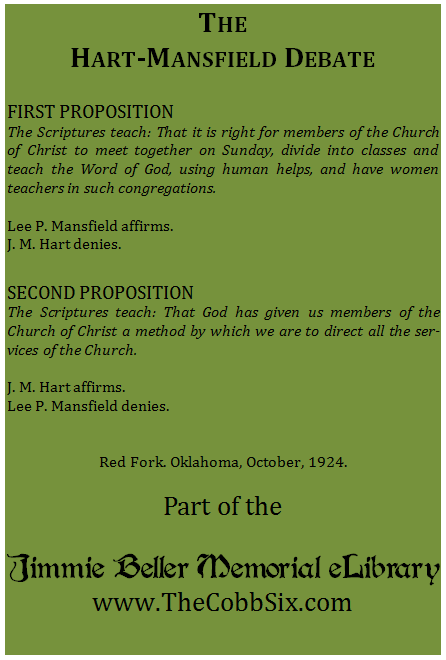
The Life and Death of Judas Iscariot (Part 2)

Judas the Faithful Apostle

Judas, some time after being selected to be an apostle, was called (with the rest of the twelve) by Jesus.  They were all probably surprised at what Jesus did: He gave them miraculous power like He had.  They had power over evil spirits (demons) and power to heal every kind of sickness and disease.  Then Judas listened as Jesus gave him instructions.

Don’t go into the road of the Gentiles; and don’t enter into a city of the Samaritans.  But instead, go to the lost sheep of the house of Israel.  And as you go, preach, saying “The kingdom of heaven is at hand.”  Heal the sick, cleanse the lepers, raise the dead, cast out demons.  You have received this freely, give it freely.  Don’t you get gold, or silver, or brass in your belt-bag; nor a bag for your journey, nor two coats, nor shoes, nor staffs; because the workman is worthy of his food.

And into whatever city or town you enter, ask who in it is worthy, and stay there until you leave.  And as you come into a house, greet it.  And if the house is worthy, let your peace come upon it; but if it isn’t worthy, let your peace return to you.  And whoever won’t receive you, nor hear your words, when you depart out of that house or city, shake off the dust of your feet.  Truly I say to you, it shall be more tolerable for the land of Sodom and Gomorrah in the day of judgment than for that city.

Behold, I am sending you out like sheep in the midst of wolves.  Therefore, you be wise as serpents, and harmless as doves.1

Judas was given miraculous power, and told to go use it.  He was told to proclaim that the hope of Israel—God’s new kingdom—was close to being realized.  He was told not to tell the Samaritans or the Gentiles—at that point, this was something for the Jews only.  He was told that whoever rejected him and his message would be eternally condemned before God.

If Judas was a nationalistically-minded Jew,2 then these words of Jesus would have excited him greatly, because he was being given a place of power in bringing in the new kingdom—which to most Jews meant the overthrow of the Roman oppressors and the establishment of a new physical Israelite kingdom that would never be overthrown again.  Judas must have been incredibly excited by this prospect.

Simon the Zealot, a Jewish patriot who despised the Romans, was Judas’ preaching partner in the “limited commission.”3  You can imagine the discussions these two men had.  They went into different Jewish cities, and Judas proclaimed the gospel.  Judas had sick people and diseased people brought to him, and he healed them.  Judas saw some people who were possessed by demons, and he rescued them from their torment, casting the demons out.4

When their mission was finished, Judas and Simon (along with the other apostles) returned to Galilee where Jesus was, and told Him all the things that they had done.5  Then they accompanied Him to an uninhabited place around Bethsaida.  But the crowd heard about it, and Judas was no longer in a small group with Jesus, but was now surrounded by thousands of people, all wanting to get in close to the Lord.  Judas heard Jesus welcome them, preach the kingdom to them, and saw Him heal the ones who needed it.6  But as the day stretched onward, Judas came to Jesus and tried to convince Him to send the crowds away to find lodging and food.7  Instead, Jesus told Judas and the other eleven to divide the crowd up in groups of fifty and tell them to sit down.  Then He miraculously made five loaves and two fishes turn into enough food to feed five thousand man.8

Sometime after this event, Jesus was alone with the twelve, and He asked the twelve “Who do people say that I am?”  They all answered with different answers: Elijah, John the Baptist, one of the old prophets risen from the dead.9 But when they were asked “Who do you say that I am?” only Peter spoke up, and said “You are the Christ, the Son of the living God.”10  Nathanael (Bartholomew) had already made this declaration to Jesus before being chosen as an apostle,11 but here it was said in front of the whole group of apostles.  Some of them certainly had wondered whether Jesus was the Christ, but when Jesus told them to keep it quiet, the suspicions were confirmed.12

If Judas is like most Jews, this news would have been absolutely exhilarating.  The Messiah, the one that the Jews had been waiting on for hundreds of years, was standing right in front of him.  And the kingdom, which all the Jews longed for, was almost there!  But a bit of confusion and doubt must have entered Judas’ mind when the next thing Jesus said was:

The Son of man must suffer many things, and be rejected by the elders and chief priests and scribes, and be murdered, and be raised the third day.  If any man desires to come after me, let him deny himself, and take up his cross daily, and follow me.  For whoever desires to save his life will lose it; but whoever desires to lose his life for my sake, the same will save it.  For what is a man benefitted, if he gains the entire world, and loses himself or is cast away?  For whoever will be ashamed of me and of my words, the Son of man will be ashamed of him, when He shall come in His own glory, and His Father’s and of holy angels.  But I tell you truly, there are some standing here, who will not taste of death until they see the kingdom of God.13

When Jesus said to the disciples14 that some standing there wouldn’t taste death, the implication is that at least one of them would die before the kingdom came.  Judas almost certainly didn’t think it could be him.

Getting closer to the time of Jesus’ resurrection, Judas was with Jesus when Peter told the Lord, “Behold, we’ve forsaken everything and followed you.  Therefore, wheat will we receive?”  The Lord’s response was incredible to the ears of the twelve:

Truly, I say to you, that you who have followed me, in the regeneration when the Son of man will sit in the throne of His glory, you also will sit on twelve thrones, judging the twelve tribes of Israel.  And every one that has forsaken houses, or brothers, or sisters, or father, or mother, or wife, or children, or lands for my name’s sake will receive a hundred-fold, and will inherit eternal life.15

Judas heard a promise of power and authority.  He was a man who struggled with covetousness and selfishness (as seen in the fact that he stole from the money bag), and so the promise of this place of prominence must have really appealed to him.  So, it’s no surprise when he got very upset with James and John when their mother requested the two best places in Jesus’ kingdom for them.16

But then came the final trip of Jesus from Galilee to Jerusalem


-Bradley S. Cobb

1 Matthew 10:5-16.

2 This author believes that this is part of Judas’ character.  Reasons for that will be given later in this chapter.

3 Compare Mark’s statement that the apostles were sent out “two by two” (Mark 6:7) with Matthew’s list of the apostles during this time, dividing them up into groups of two (Matthew 10:1-4).

4 This is proven by the powers that Jesus gave them (Matthew 10:1) and the command He gave them (10:8); along with the express statement “they cast out many demons, and anointed with oil many that were sick, and healed them” (Mark 6:13).

5 Luke 9:10.  It is perhaps significant that the apostles reported all the things they had done, as though it was about them.  Certainly they were excited, and wanted to share their new miraculous experiences with Jesus, but their focus, it seems, was more on their actions than on the response of the people to the message.

6 Luke 9:11.  If, as was conjectured in the previous footnote, Judas thought things would be more about him, this would have been a blow to his ego, as everyone wanted to see Jesus, not the twelve apostles.

7 Luke 9:12.  Judas wasn’t the only one, but he was one of the “twelve” who said it.

8 Luke 9:13-17.

9 Luke 9:18-19.  Compare also Matthew 16:13-14.

10 Matthew 16:15-16.

11 See chapter on Bartholomew for specific details surrounding this event.

12 See Luke 9:20-21.

13 Luke 9:22-27.

14 While Luke says that Jesus said this to “all” (Luke 9:23), it means all the disciples (see Matthew 16:24-28).

15 Matthew 19:27-29.

16 Matthew 20:20-24, but especially verse 24.