Category Archives: Books

A Sketch of the Life of James A. Garfield

JimmieLibraryLogo

Sorry I am a bit late in getting this post up today, but here you have it.  🙂

Today, we are offering you yet another freebie, added to the Jimmie Beller Memorial eLibrary.  This one is called, “A Sketch of the Life of James A. Garfield.”  President Garfield, as many of you may know, was a Christian, a preacher, a teacher at a “Christian school,” and helped to create The Christian Standard.

So, without further talking from me, here it is!

A Sketch of the Life of James A. Garfield

The Minister’s Monthly

Beginning in 1955, Gospel Advocate began producing a journal for preachers and elders, called “The Minister’s Monthly.”  It was quite popular during its heyday, but like so many other brotherhood periodicals, it has gone away.

However, we will be making several of these issues available for you in the Jimmie Beller Memorial eLibrary over the coming months (Lord willing).

Today, we’ll start you out with the issue from July, 1956.  It starts off with a biographical sketch of T.B. Larimore (whose picture is on the cover), gives a first-hand account of the power of Alexander Campbell’s preaching style, includes several sermon outlines, many illustrations, and articles as well.

We think you’ll enjoy it!  Like the other periodicals we’ve uploaded the past week, this one is a straight scan of the original, with no tweaking or reformatting.

Ministers Monthly (July 1956)

-Bradley S. Cobb

First Century Christian

First Century Christian

In the 1980s and 1990s, Roy J. Hearn and others put together a periodical called “First Century Christian.”  It was a very good paper, with lots of good articles and well-known writers adorning its pages.  It has long been out of print and unavailable to most people.

We have located a handful of issues (eleven, to be exact), and with permission, have scanned them and are making them available for FREE in the Jimmie Beller Memorial eLibrary.  But you can also download each of them straight from this post by clicking the links below.

Just a note: Unlike most of our other offerings, these files are the actual scans.  We’ve not done any editing, converting, proofreading, or anything like that.  So, what you see in these files are exactly what you would have seen if you had subscribed to First Century Christian years ago.

Without further elaboration, we bid you ENJOY!

First Century Christian (January 1993)

First Century Christian (October 1991)

First Century Christian (May 1991)

First Century Christian (November 1991)

First Century Christian (July 1991)

First Century Christian (December 1991)

First Century Christian (June 1992)

First Century Christian (July 1992)

First Century Christian (September 1992)

First Century Christian (March 1992)

First Century Christian (May 1992)

-Bradley S. Cobb

What does the Southern Baptist Convention have to do with slavery?

Last month, we made available a couple Baptist history books in the Jimmie Beller Memorial eLibrary (to read our explanation of why we did it, read here).  We received some encouraging comments from posting those books, and so we are going to give you another one, which we truly think you will find worthwhile.

If you’re wondering what all this has to do with the title of today’s post, keep reading.

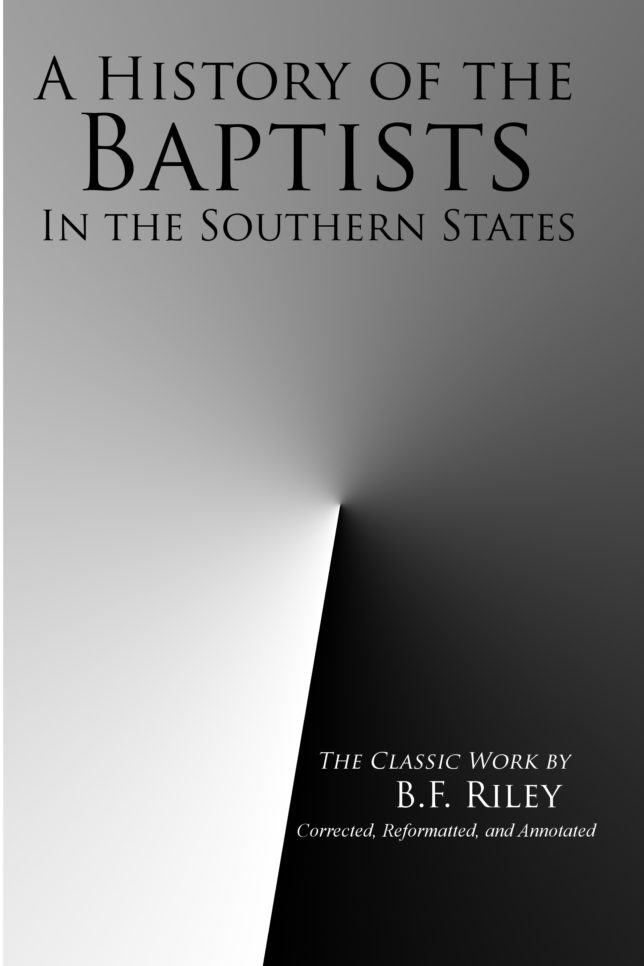
Today’s free book is called “A History of the Baptists in the Southern States.”  It was written by Benjamin Franklin (B.F.) Riley, a noted Baptist professor, back in 1898, and was published by the American Baptist Publication Society.  In other words, this is a purely Baptist book, not one written by someone with an agenda against them.

Southern States(0)

It is important that we note that, because some of the things he writes about are things which most modern-day Baptists don’t know–and many would probably staunchly deny.  For example, there is an entire chapter on how slavery, and the south’s defense of it, was the reason why the Southern Baptist Convention was created.  There is another entire chapter on the Baptist Church and the Negro, in which it is stated that if not for slavery, black people would be barbarians.  Add to that a section dealing with Alexander Campbell, and an explanation of several of the different Baptist branches (Freewill, Primitive, Two-seed-in-the-spirit Predestinarians, Seventh-Day Baptists, and more), and you have a book that is well worth reading.

As always, we have taken this book and completely reformatted it, adding footnotes where necessary, and given it a thorough proofreading.

This book is FREE in the Jimmie Beller Memorial eLibrary, or you can purchase a copy of this new edition in print from Amazon here.

To read it online, or to download for later reading, simply click the link below.

History of the Baptists in the Southern States (eBook)

-Bradley S. Cobb

So, we’ve missed a month… have a gift on us.

I’m sure you’ve noticed, but we haven’t posted anything new for about a month now.  I could rattle off a lot of different things that have happened which kept me from getting things done here, but the gist of it is that we’ve been swamped with life, work, and death here locally.  And with everything going on, pressing for my time and attention, something had to give for a while, and posting new material here was the victim.

But we’re back!

So, today we’ve got a new freebie for you, and tomorrow we’ve got a GREAT BIG ANNOUNCEMENT!

I’m really trying to hold my tongue (so to speak) on what we’ve got in the works (and it involves some material that has never before been available ANYWHERE–and some of it is going to be free!).  So, please check back in tomorrow for the big announcement!

Today’s freebie is pertinent, considering the political divide in our country.  One one side, you have people calling capitalism and free enterprise “evil,” and on the other side, you have people who point to Socialism as “evil.”

In 1951, Dr. James D. Bales presented a lecture at Harding College, entitled “Christ and the Problem of Private Ownership of Property in the Present-Day World.”  In this lecture, Bales addresses the biblical evidence regarding ownership of property, and shows how it applies to the economic systems of Free Enterprise and Socialism, and shows which system fits with biblical commands.

We have taken the time to proofread and reformat this lecture for you, just like always!  To read online, or to download for later perusal, simply click the link below!

The Right of Private Property (James D. Bales)

-Bradley S. Cobb

Freebies for the New Year

First, allow me to apologize.  The day after Christmas, I wrote that a book called “Origin of the Disciples of Christ” was available as a free download in the Jimmie Beller Memorial eLibrary.  Well, I meant for it to be there, but apparently I didn’t get it done.

It is there now (look under “Restoration Movement”).

But there are also a couple other free books added to the Library, that I want to tell you about.  And these might seem strange, so I’m telling you about them now, so you’ll understand why we are posting them.

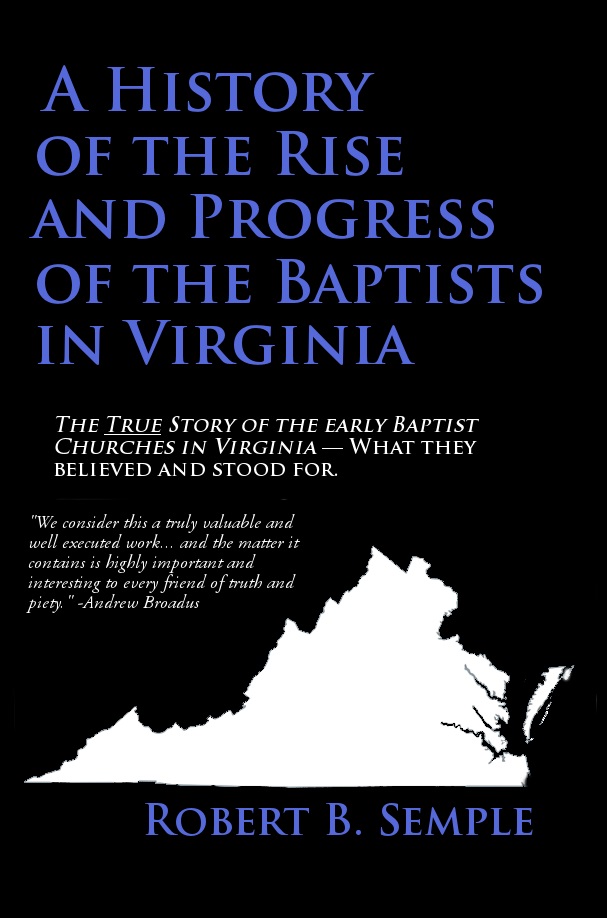
First, there is a book called “A History of the Rise and Progress of the Baptists in Virginia.”  It was originally written in 1809, and then updated in 1894 (or thereabouts).  It gives some of the history of a man named Jacob Creath Sr., who later left the Baptist Church to simply be a Christian.  His nephew, Jacob Creath Jr., is one of the best-known gospel preachers of the second half of the 1800s.

Virginia Baptists

In addition to Mr. Creath, there is random mentions of others who left the Baptist Church to join “the Reformers” or “the views of A. Campbell.”  That is, some of the men described in this book left the Baptist Church in order to simply follow the Bible, and become a Christian as those in the Bible did.

Also, and this is perhaps the most interesting feature of this book, it gives some tidbits about the doctrinal stances of many of the first Baptist Churches in Virginia.  And this may surprise you.  Most of them were decidedly not Calvinistic at all.  They rejected the idea of the direct operation of the Holy Spirit, and asked men to respond to the gospel of Jesus Christ.  Not only that, but several times in this book, allusion is made to baptism being required in order to be made right with God.  That is, it sure reads like they taught baptism was for the remission of sins, in order to be saved.

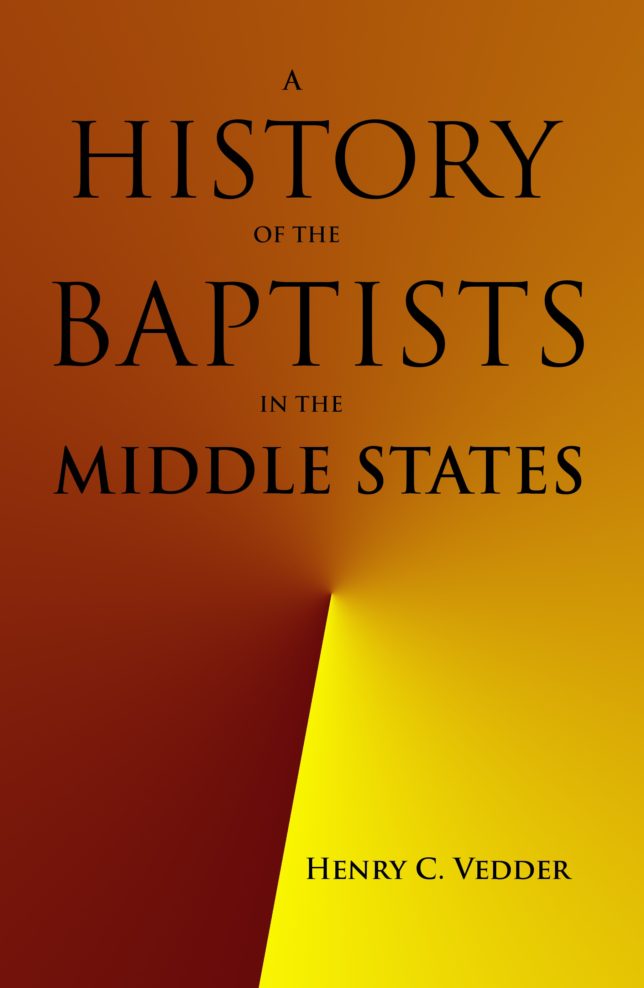
Secondly, there is a book titled “A History of the Baptists in the Middle States,” by Henry C. Vedder. You might start scratching your head here, too, but let me explain.

BaptistsMiddleStates

In this book, there is a chapter on controversies, and the first half is dedicated to the Restoration Movement’s effect on the Baptist Church in the 1820s and 30s.  For the most part, Mr. Vedder is fair with the discussion, even stating that his Baptist brethren were ignorant for taking issue with Alexander Campbell’s Sermon on the Law (which can be found in Historical Documents Advocating Christian Union, also free in the Jimmie Beller library).

In addition, he mentions very plainly that the first Baptist Churches in New York were very anti-Calvinistic as well.

It is very interesting that the Baptist churches of today in those areas are descended from men who they would call heretics.  But it may just be the other way around…

Both of these books can be found in the “Church History” section of the Jimmie Beller Memorial eLibrary.

-Bradley S. Cobb

The Quarterly has Arrived!

You probably remember a few months ago that we made the announcement of a new publication, called The Quarterly.  In fact, we even made the Preview Edition available as a free download.  Now, we want to share the news with you…

The first official issue of the Quarterly is now available!

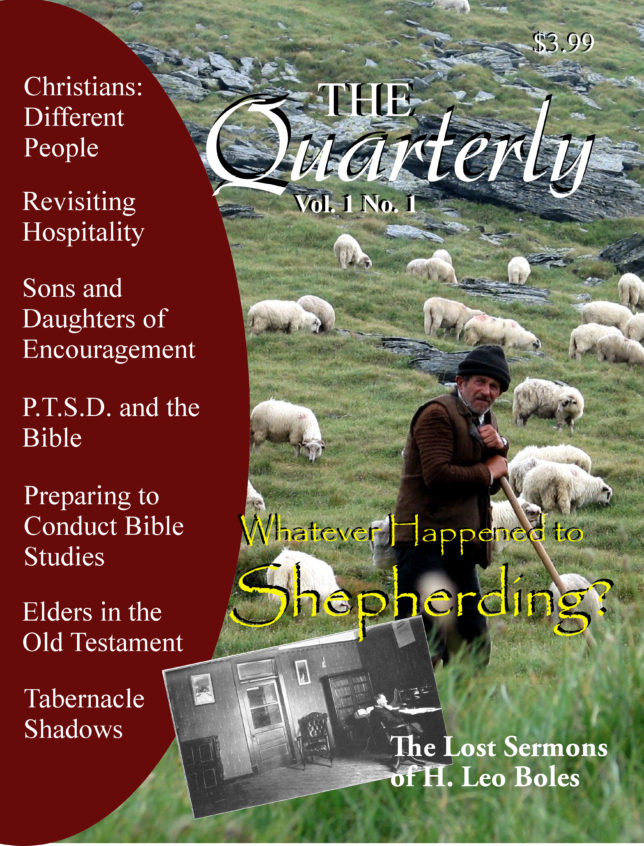
quarterly01_front

ARTICLES INCLUDE:

  • Editorial: An Important Note
  • Insights from Seasoned Ministers: Loren Gieger
  • Insights from Seasoned Ministers: Stafford North
  • Equipping (Jim Mitchell)
  • The Lost Sermons of H. Leo Boles (Kyle Frank)
  • Elders in the Old Testament (Richard Mansel)
  • I Can Do All Things Through Christ Which Strengtheneth Me (Roderick Ross)
  • Not Always Roaring… (Bill Howard)
  • Restoration Moments: The Conversion of Blue Dick (William Baxter)
  • Divine Peace (Jake Schotter)
  • The Parable of the Lighted Candle (Devin Self)
  • CHRISTIANS: Different Cultures, Different Races, Different Generations, Different People (Joseph T. McWhorter)
  • Biblical Biography: Barnabas (Bradley S. Cobb)
  • Quotes
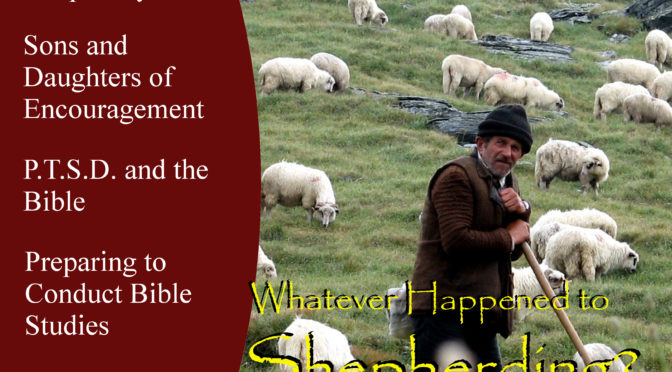
  • What Ever Happened to Shepherding? (Jamie Beller)
  • Paul Darst: A Novel (Daniel R. Lucas)
  • Funny and Not-So-Funny Events in the Life of Elijah Martindale (Elijah Martindale and Bradley S. Cobb)
  • Poetry Corner (Deserae Cobb)
  • Sons and Daughters of Encouragement (Gerald Cowan)
  • Tabernacle Shadows (Mark McWhorter)
  • Preparing Yourself to Conduct Bible Studies (James Sims Sr.)
  • Hospitality Revisited (Perry Hall)
  • The Practical Atheist (Gantt Carter)
  • Book Review: Bobby Gayton’s My Thorn in the Flesh: A Vietnam Veteran Speaks about PTSD and the Bible (William Howard)
  • Bible Q&A: What was Paul’s “Thorn in the Flesh”? (Bradley S. Cobb)
  • Children’s Puzzle Page: WHO AM I? (Questions from the Book of Esther)

If you already subscribe, then look for your copy to arrive this week.  If you don’t already subscribe, but want to, you can do that here.  If you want just a single issue, you can get it on Amazon by clicking here.

Thanks for all your support and for reading what we have to write!  There will be more real articles coming soon!

-Bradley S. Cobb

Post-Christmas Freebies

We’ve got some new free stuff for you!

front-cover

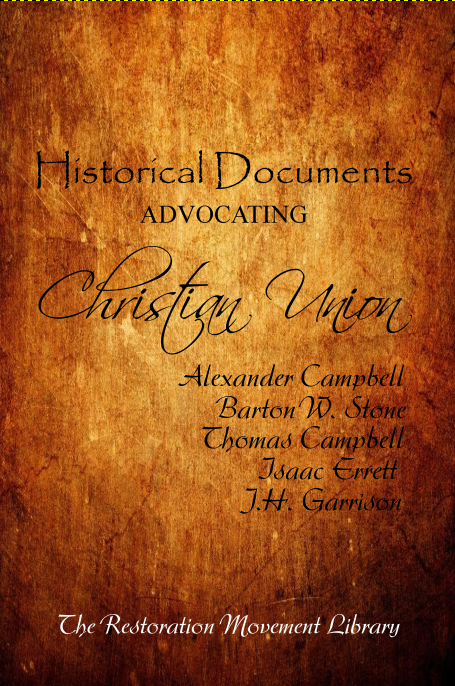
This book contains the most important documents of the early Restoration Movement writers, as well as a couple second and third generation writings.

*The Last Will and Testament of the Springfield Presbytery (Barton W. Stone)
*The Declaration and Address (Thomas Campbell)
*The Sermon on the Law (Alexander Campbell)
*Our Position (Isaac Errett)
*The World’s Need of Our Plea (J.H. Garrison)

Also included are introductions to each document/writer by Charles A. Young.

origindisciplescover1

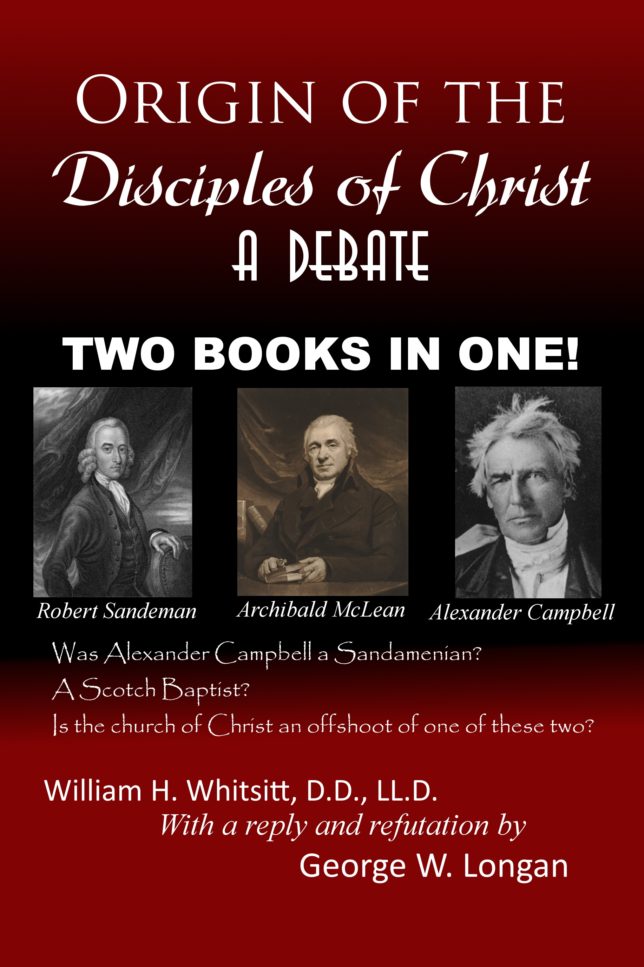
William Whitsitt was a Baptist professor whose stated purpose was to prove that the church of Christ (known popularly as “the Disciples of Christ”) was nothing more than the offspring of the Sandemanians, a group which Baptists and some others had labelled as heretics years earlier.  George W. Longan, a preacher of the gospel, wrote a book of in reply, exposing the ludicrous reasoning (if such it could be called) of Whitsitt, and made it abundantly clear by also including scathing reviews of Whitsitt’s book–reviews that were written by his own Baptist brethren!

Updated, with a whole bunch of brand-new footnotes by yours truly.

BOTH of these books are now available in the Jimmie Beller Memorial eLibrary (look under the “Restoration Movement” heading).

-Bradley S. Cobb

This… is why we’ve been so quiet here lately

We’ve been trying to keep our lips sealed as much as possible, but we’ve finally decided it is time to break the silence.

Over the past couple months (and it is still ongoing), we’ve been working on several projects, and we want to tell you about some of them today!

Bible Broadband

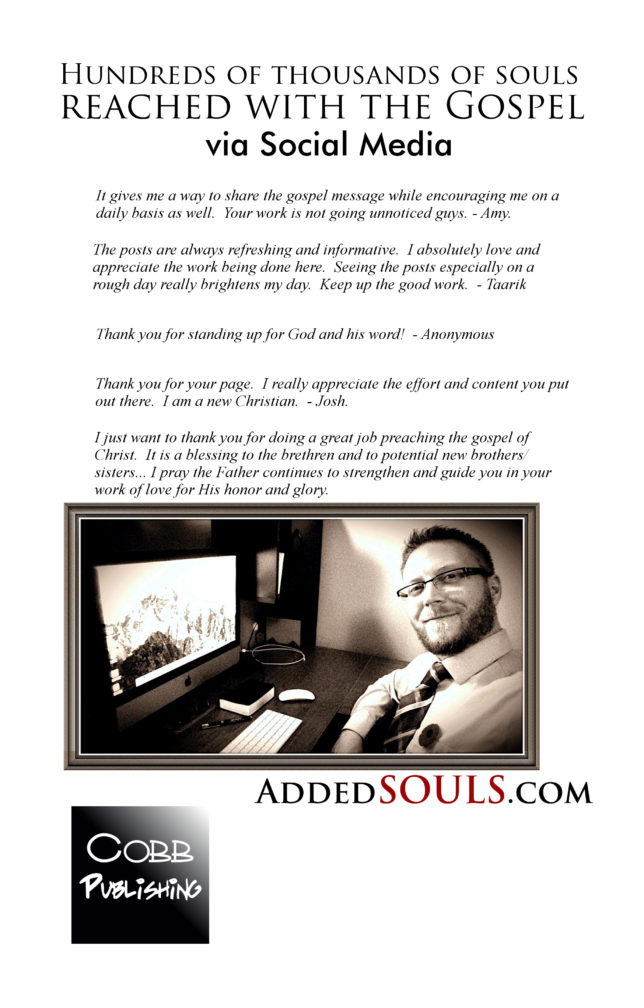
This book, written by our good friend, Stephane (“Stefan”) Maillet, creator of AddedSouls.com, and the “Added to the church of Christ (Acts 2:47)” Facebook page, is a brief collection of tips and tactics for effectively reaching people with the gospel via social media (Facebook, Twitter, Youtube, etc.).  Interspersed throughout the 52-page book are actual messages these endeavors have received from people he’s never met in person, showing the impact that one can have for Christ through this medium.

cover5 backcover

100% of the profits from the sale of this book go to help this worthy and dedicated Canadian preacher in his efforts for Jesus Christ.

Paperback, $6.99
digital, $2.99

Evenings with the Bible

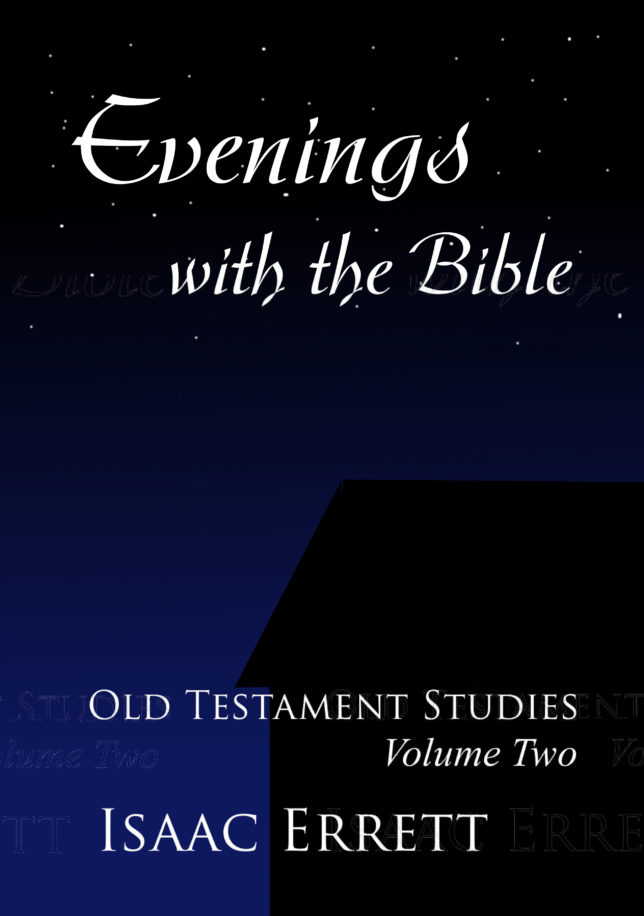
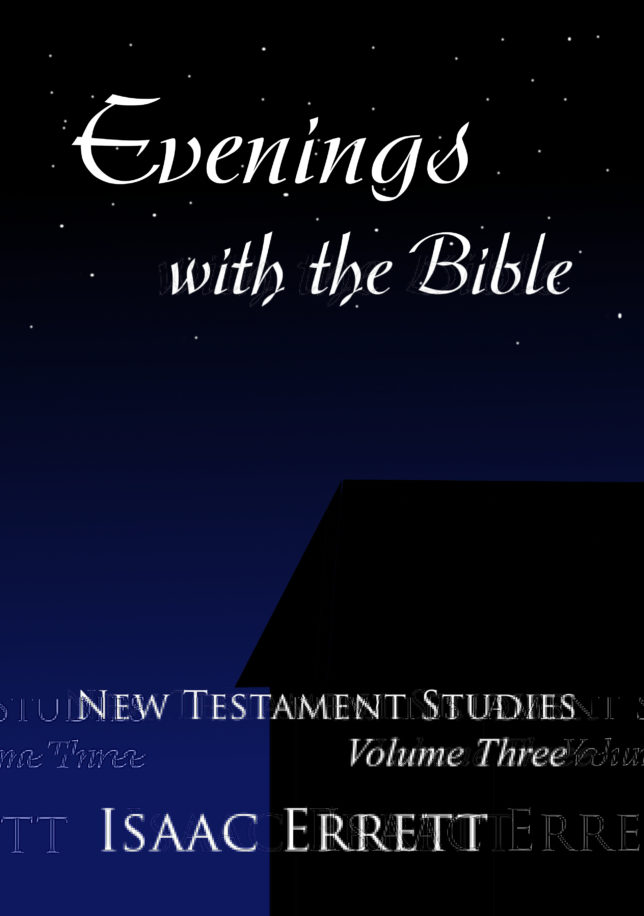
This three-volume collection of in-depth Bible studies, full of practical application and encouragement for a deeper faith in God, Christ, and the Bible, is now available in a brand-new, updated, corrected, and fully-reformatted edition, complete with new explanatory footnotes for any obscure or archaic words.evenings01front evenings02front evenings03front
Volume 1: Genesis through Solomon
Volume 2: Rehoboam through Esther
Volume 3: John the Baptist, the early life and ministry of Jesus, and the characteristics of Christianity.

Each book is approximately 280 pages, and will be officially released January 3rd, but we are taking pre-orders now.

3-Volume Set (paperback): $24.00 (Regularly $32.00)
Digital 3-Volume set: $7.00 (Regularly $12.99)

Recollections of Men of Faith

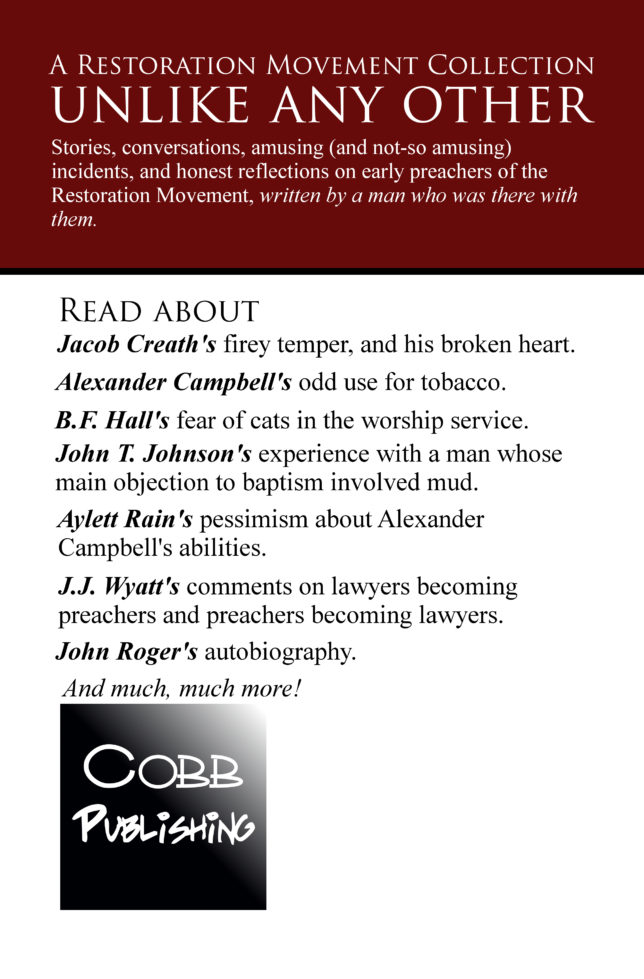
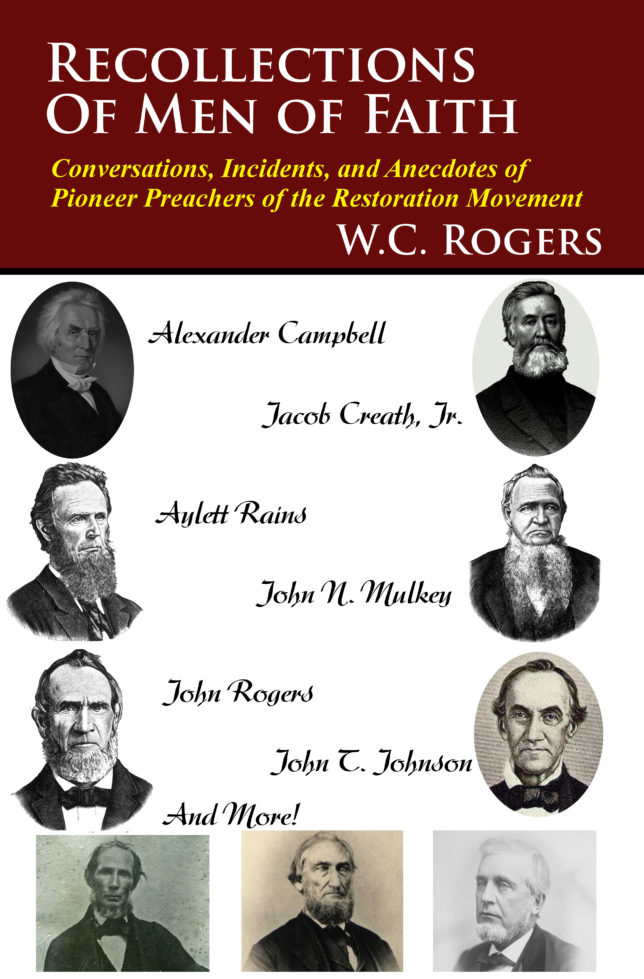
This is a Restoration Movement book unlike any other.  Stories, incidents, anecdotes (humorous and not-so-humorous), and reflections on pioneer preachers, written by someone who knew and traveled with them.  Why did Alexander Campbell request tobacco before speaking?  Why was B.F. Hall afraid of cats in the worship? Why did John T. Johnson tell a group of girls not to be interested in a young preacher who was traveling with him?  What caused Jacob Creath to break down in tears in the forest?  These and many other interesting tidbits are revealed in this book by W. C. Rogers.
recollectionsfront recollectionsrear

194 pages, completely updated, corrected, reformatted, and includes explanatory footnotes where necessary.

Officially available January 3rd, this book is now available for pre-order.

Paperback: $8.95 (Regularly $10.95)
Digital: $2.99 (Regularly $5.99)

Dawn of the Reformation in Missouri

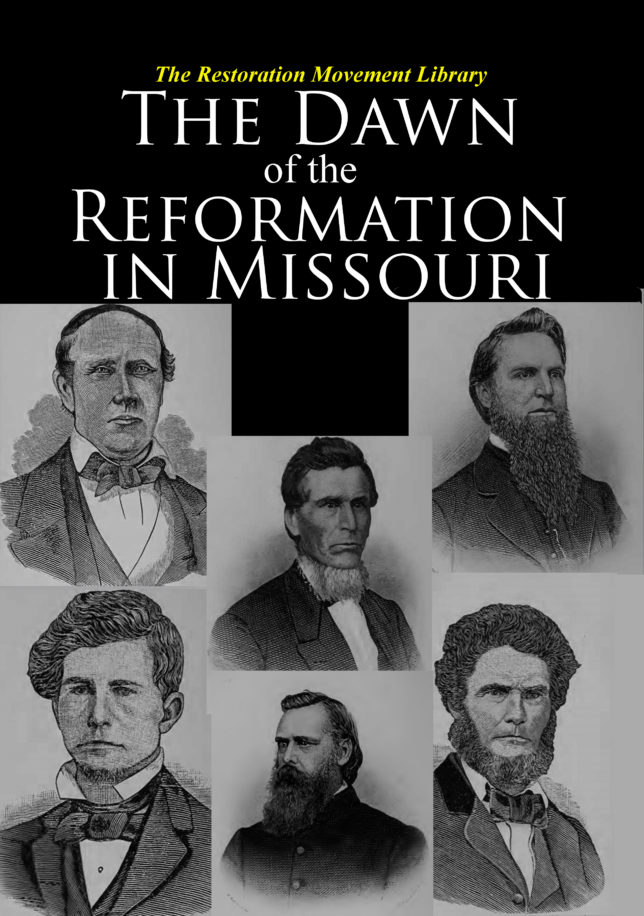
This book chronicles the rise of the Restoration Movement (which they then called “The Present Reformation”) in the state of Missouri, and gives biographical sketches of several well-known servants of the Lord, but also some others who are not as well-known.  In its 36 chapters (not counting the introductory section on the history of Missouri), well over 50 faithful gospel preachers are covered.  This book is quite encouraging in showing what men of God went through to bring souls to Jesus Christ, and gives great examples for faithfulness and devotion to God that we would do well to emulate.
dawnofreformation-front dawnofreformation-rear

Officially Available January 24th, this 339-page book is also available for pre-order at a discounted price!

Paperback: $9.95 (Regularly $13.99)
Digital: $3.99 (Regularly $5.99)

Other Projects

In addition to these projects above, work is still ongoing on our book, Who Were the Apostles? as well as on our book on Revelation, our Sermon Commentary on Mark, and the first issue of the Quarterly.

That, and about 19 more projects that we hope to have finished and available by the end of January.  Look for more announcements in the coming days and weeks.

Thanks for taking the time to read this, and please don’t hesitate to contact us with any questions.

Bradley S. Cobb

From Murderer to Missionary – The Life of the Apostle Paul (Part Nine)

ApostlesLogo

Returning to Antioch

Paul must have been quite the sight as he entered into Derbe.  But people listened to what he and Barnabas taught, and many obeyed the divine commands.  After an apparently persecution-free visit there,1 they returned to the scene of the stoning, Lystra, and met again with the souls who had obeyed the blessed gospel, encouraging them, grounding them in the truth, and warning them that they will have difficult times ahead of them—but that the eternal reward is worth the tribulation here on earth.  How powerful this message must have been when coming from the one who had been viciously attacked and left for dead by an angry mob!  He tells them that even though he was nearly killed, it was worth it for heaven!  Then, from among the gathered disciples, Paul and Barnabas selected and ordained men to serve as elders.2

Departing from Lystra, he returned to Iconium—the same city that he had to flee from in order to avoid being stoned earlier; the same city that was home to some of the very Jews who had chased him to Lystra and actually caused the stoning that left him looking dead.  This shows incredible boldness on the part of Jesus’ own chosen apostle.3  There, he and Barnabas did as they did in Lystra: encouraging the saints to persevere under pressure, and selecting and ordaining godly men to serve as elders.

Doing the same thing in Antioch of Pisidia, they then returned to Perga (where John Mark had left them) and preached the gospel there before going to Attalia and sailing back to Antioch of Syria, from which they had been called by the Holy Spirit in the first place.

Once they returned to Antioch, they gathered the church together and reported all the things that had happened to them.  You can imagine the smiles when Paul shared the joyful news of the obedient believers; the looks of surprise and horror when they described the priest of Zeus and the crowds in Lystra trying to worship mere men; the shock and compassion when Paul’s near-death experience was mentioned.  They were certainly pleased and encouraged by the response to the gospel by the Gentiles, and welcomed these two men back as beloved brothers in Christ.  Paul and Barnabas stayed in Antioch “a long time” after returning.4

-Bradley S. Cobb

1 It seems most likely that, after believing Paul to be dead, the Jewish persecutors thought the matter over, and went back home.  Paul probably didn’t make his entrance into the city a public event or spectacle, and his departure was probably the same way, giving the persecutors no reason to stay.  Thus, they wouldn’t have heard about Paul’s work in Derbe until much later.

2 Acts 14:21-23.  See 1 Timothy 3 and Titus 1 for the characteristics that the chosen men had.  There are those who claim that these are simply guidelines, suggestions for those who want to serve as elders; but the Scripture says that an elder must be those things, possess those character traits.  If a man doesn’t meet those qualifications, then he can call himself an elder all he wants—but according to God, he isn’t an elder.  Instead, he is a usurper of the divinely-given office, and will have to give an account to God for his usurpation of authority that doesn’t belong to him.

3 It is possible that the return visits to Lystra, Iconium, and Antioch of Pisidia did not involve public preaching, but were instead private, inconspicuous visits.  Paul would not have wanted to push his persecutors into repeating their murderous attempt at Lystra.

4 All of these events can be found described in Acts 14:21-28.