Category Archives: Books

The Eldership

One of the important parts of the early church, according to the Bible, was having trustworthy, godly men to serve as shepherds, overseers, bishops, elders.  All these names refer to the same office in the church.

The apostle Paul, along with Barnabas, made sure to ordain elders in each congregation that they had established and built up.  Timothy was given instructions on what to look for in a man who desired to be an elder.  Titus was left in Crete to ordain elders in each congregation.  Peter himself was even an elder in the church.

Suffice it to say, the eldership is an important biblical topic.

And that’s why today’s “THANK YOU” post contains another free book–this time on the subject of elders.

The Eldership, by M.M. Davis, was originally published in 1912, and was reprinted a few times after that.  Even though it is over a hundred years old, it is still full of plain Bible teaching on this subject.  And it’s not really all that long, either, so don’t think you’re going to have to trudge through some extended dissertation on this, that, or the other.

It has been completely reformatted and proofread (special thanks to Jerry Sturgill for his assistance in those areas), so it looks really pretty on your PC, tablet, iPad, or whatever other device you have.

Enjoy!  Just click on the link below to download it.

Davis. MM – The Eldership

Why We Believe the Bible

It is Wednesday, which means that saints will be gathering somewhere near you to study the Bible and sing praises to the Lord God.

But some people might wonder, “Why do you believe the Bible?”  George DeHoff wrote a book specifically to answer that question.  It serves as a great brief guide to the inspiration of the Bible.

Table of Contents

  1. Why We Want to Believe the Bible
  2. Why We Believe in God
  3. Genesis 1
  4. The Origin of Religion
  5. The Bible and Scientific Foreknowledge
  6. Archaeology and the Bible
  7. The Influence of the Bible
  8. Prophecy and Its Fulfillment
  9. The Messianic Prophecies
  10. Proof from Secular Writers
  11. The Other Sacred Books
  12. Internal Evidences of Inspiration
  13. The Indestructibility of the Bible

To download it FREE, just click the link below.

DeHoff, George – Why We Believe the Bible

A reminder–we really appreciate each and every one of you for taking the time to read our posts and for sharing them with others!

History of the church in Canada

Since we’re on our way to Canada, we thought we’d make this week’s first post Canada-related.

In 1942, a man named Reuben Butchart wrote a booklet entitled “A Primer of Disciple History in Canada.”  In it, he shows how the Restoration Movement moved into the North Country and spread.  In short, it’s a brief history of the church of Christ in Canada.

And it is FREE to you, our readers.  Just click the link below:

Primer of Disciple History in Canada

We appreciate each and every one of you for taking the time to read our posts and sharing them with others.


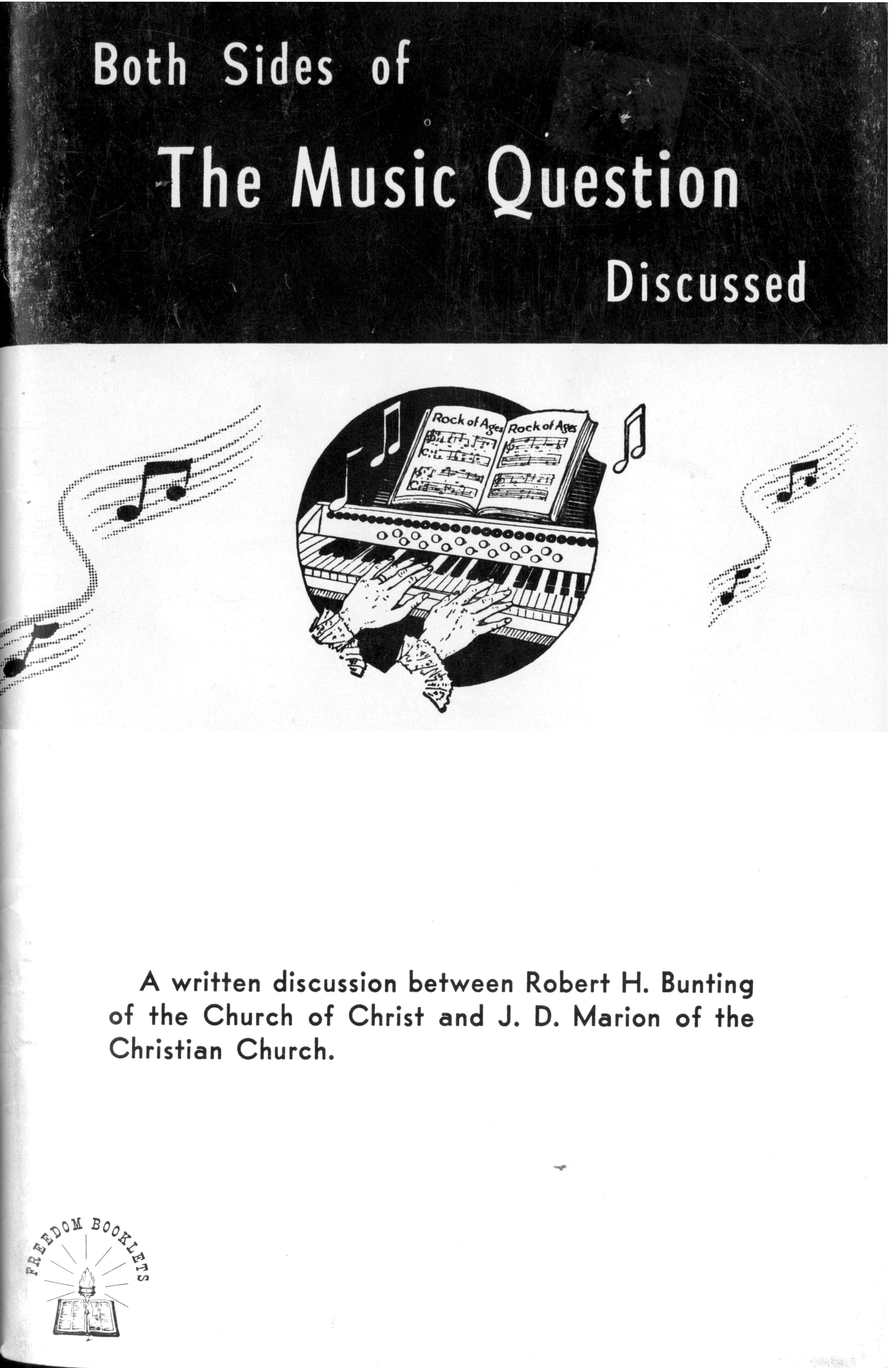
Both Sides of the Music Question Discussed

We’re going to be gone for close to three weeks, but we want you to know that we haven’t forgotten about you.  In fact, most of the posts while we’re away are going to show our appreciation to all of you for taking the time to read what we’ve written.

Today’s post starts it off by giving you a FREE download, not available anywhere else!

This book is called “Both Sides of the Music Question Discussed,” and is a written debate between Robert Bunting (church of Christ) and J.D. Marion (Christian Church) dealing with the issue of instrumental music in the church.

We hope you find it educational, interesting, and worthwhile in your studies.  Just click on the link below to read it (or right-click and “save target as” to download it).

Both Sides of the Music Question Discussed

Special thanks to Edwin Walker for taking the time to proofread this one for us.

When Shovels Break (by Michael Shank) – A Review

I’ve known Michael Shank for the better part of a decade, and we both “cut our teeth” doing fill-in preaching for the same little congregation in Southern Illinois.  So, it was with great pleasure that I wrote the first real review of his first book, Muscle and a Shovel (you can read the review/article at BrotherhoodNews.com).  A few years have passed, and God has used Muscle and a Shovel in ways far beyond what I–or anyone else–could have imagined.

Soon after it began to spread through the brotherhood, Mike began work on his second book, When Shovels Break.  It has taken a few years, but it’s finally ready.

And let me tell you this: It is powerful.

While Muscle and a Shovel was written for the non-Christian, to help show them the biblical path to life in Christ, When Shovels Break was written for the struggling Christian, the wayward Christian, the unfaithful brother or sister in Christ.  It is a stirring testimony that no matter what you have done, no matter how far you have fallen away from Him, God is always ready to take you back and forgive you.

But there’s more to When Shovels Break than that–a LOT more.
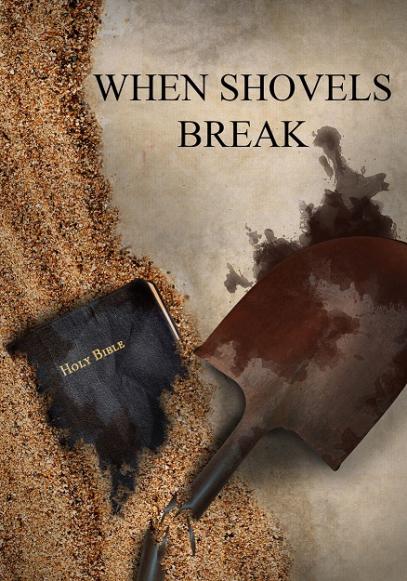
wsb_cover_small

A Sequel

When Shovels Break acts as a sequel to Muscle and a Shovel in many respects.  It follows the life of Michael Shank and his wife where the previous book left off.

But it also introduces us to one of Mike’s oldest friends, a man named John.  John and Mike had a lot in common: both came to Christ around the same time (both converted by “Randal”), worked  in the same industry, lived in the same neighborhood, even liked the same kinds of food.  In fact, John and Mike were as close as two friends could be.

The book begins [and this isn’t much of a spoiler, since Mike posted the first chapter on Facebook months ago] with John distraught over his sinful life, absolutely certain that he’s lost forever, not seeing any way of hope, and Mike trying to help him.  Then John lifts the gun to his head.

What could bring a man–a baptized believer in Jesus Christ–to such desperation that he thinks the only way out is to kill himself?  Could God ever take him back after all the sins he’s committed?  After he’s insulted his Savior by going back headlong into a life of sin?

A Message for the Church

Muscle and a Shovel was written for non-Christians, but it became a great tool to teach faithful members of the Lord’s church that evangelism doesn’t have to be hard!  It gave a clear and simple method to help show others God’s path to salvation.  It served to energize once-inactive Christians into active service for their Lord.  It helped remind experienced brethren of what they were fighting for, and the Lord’s church has become stronger as a result of God’s use of that book.

When Shovels Break is also a great tool for members of the Lord’s church.  Throughout the story of Mike and John’s life, you will see very clearly the importance of having brothers and sisters in Christ who care.  You will see the damage that can be done through a brother’s (or a congregation’s) indifference and the discouragement it can cause others.

This new book is also an example of God’s providence.  In the later part of the story, we get to see how God worked so many unexpected (and sometimes frustrating) things out in Mike’s life to bring him to the point of writing and publishing Muscle and a Shovel.  That bit of information is a nice little bonus to those who like to know “the rest of the story.”

You’ll also probably chuckle as Mike tries to show the Jule Miller Filmstrips to a bunch of drunks.

The Road Back Home

I surprised Mike when I told him that I thought the final dozen or so chapters were just as good–if not even better–than the story itself.  But I stand by it.

After concluding the story itself, Mike dedicates several chapters to a straight-forward conversation with Christians.  He devotes time to showing wayward members the way back home, but he also writes to encourage brethren whose strength may be faltering.  He describes some of these chapters as “God’s plan to keep you from ever falling away again–ever.”

And they are good.

The Survey

I’m not a prophet, but I believe the part of the book that will have the most impact within the church is where Mike gives the results of a survey he conducted, interviewing 400 people who have left the church.  It is an eye-opener–and it shows that the church itself must take at least part of the blame for their departure.

Final Thoughts

Even though I was already privy to part of the story (a side benefit of being friends with Mike since before Muscle and a Shovel), I got goosebumps reading through it.  Mike writes with a clarity and emotional power that makes you instantly identify with his struggles.  You hurt when he hurts.  You get frustrated when he is frustrated.  And you rejoice when he rejoices.

And you will never look at the Ego Board the same way again.

[note: I was not asked to write a review, but I thought it needed to be done]

To get your own copy of When Shovels Break, you can order direct from Mike Shank (or if you want it in Kindle format, it’s available here).
The Holy Spirit in Acts 17:11?

The following short segment comes from our upcoming book, The Holy Spirit in the Book of Acts.  Enjoy!

Acts 17:11

These [people of Berea] were more noble than those in Thessalonica, in that they received the word with all readiness of mind, and searched the Scriptures daily, whether these things were so.

Paul and Silas were both prophets, both spoke by inspiration of God, and Paul (perhaps Silas too) was able to perform miracles—all by the power of the Holy Spirit. Yet God takes a moment to praise the people of Berea because they weren’t content with a prophetic message; they weren’t content with an inspired message; they weren’t content with any miracles that Paul may have performed—they knew that the message had to match up with the Scriptures in order for it to be truly from God.

Prophets were temporary (Zechariah 13:2). Miracles (including inspiration) were temporary (I Corinthians 13:8-10). But God’s word remains forever (I Peter 1:23-25). The word of God is called “the sword [or the weapon] of the Spirit” (Ephesians 6:17). It is the word of God that is able to save the souls of men (James 1:21). Miracles can’t save souls—the word of God can.

The Holy Spirit, therefore, is active in every case of conversion from Pentecost through today—but His tool for converting the lost is the living and active word of God (Hebrews 4:12). The Holy Spirit is also active in guiding Christians ever since Pentecost in the very same way: through the Scripture which is able to make us perfect (II Timothy 3:16-17).

-Bradley Cobb

(NOTE: Today’s image is taken from the cover of a publication called Nobility, which is freely available from the Gravel Hill church of Christ website)

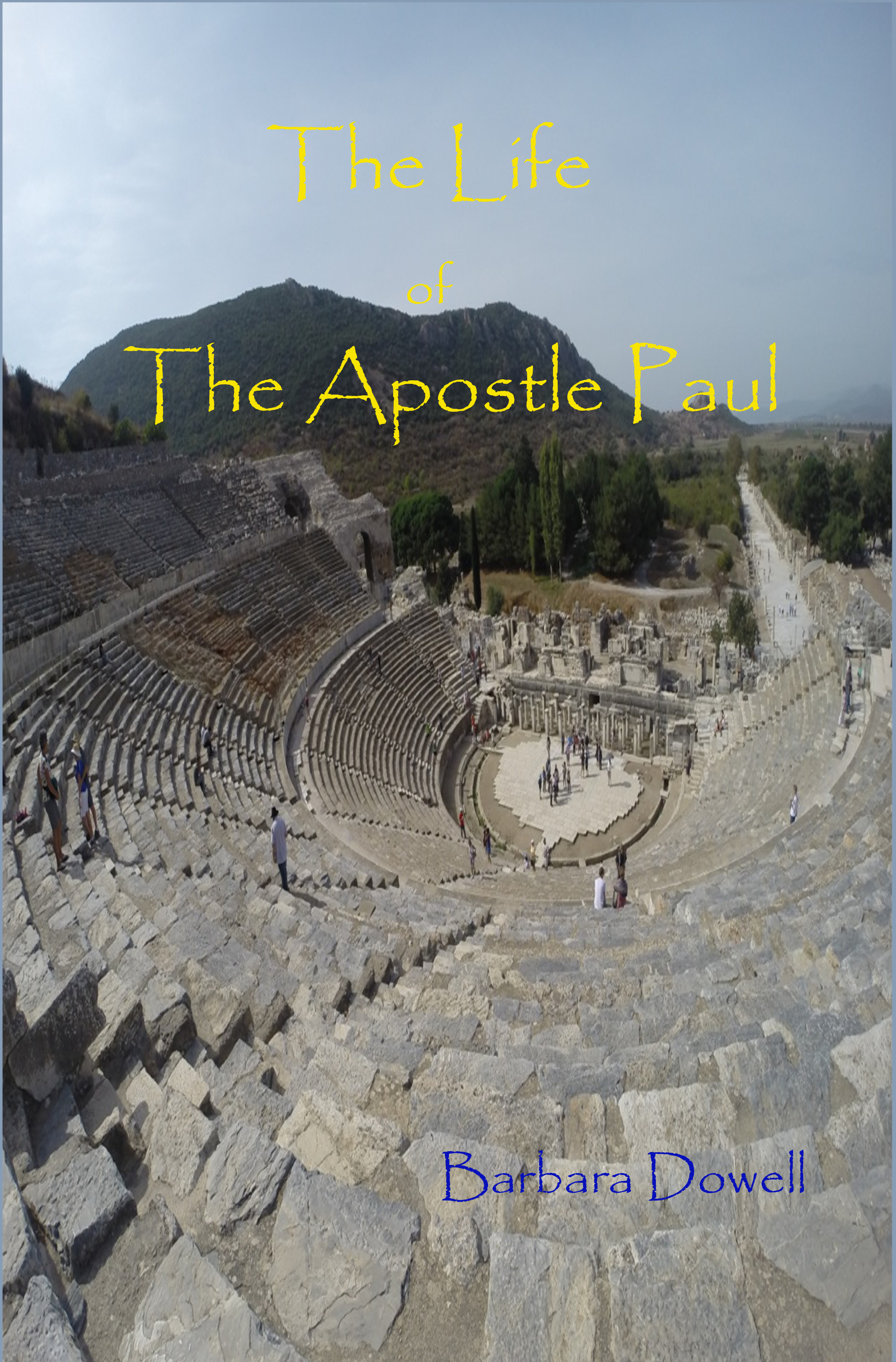
Book Review – The Life of the Apostle Paul (by Barbara Dowell)

Who was the apostle Paul?  What was there about his hometown that made him perfectly suited to be the great apostle to the Gentiles?  These questions and many more are answered throughout the brand-new book, The Life of the Apostle Paul.

DowellCover

Packed with background information on the people and places that Paul interacted with, this book helps you to see Paul’s life and travels with a much better focus.  From the background of cities like Tyre, Jerusalem, and Rome to understanding the character of men like Felix, Festus, and Agrippa, The Life of the Apostle Paul helps you to know them like the Christians of the first century would have known them.

The author, Barbara Dowell, has been a dedicated Christian, a diligent Bible student, and an enthusiastic Bible teacher for over five decades.  Her husband, Jerry, is an elder in the church of Christ that meets in McLoud, OK.

This book is the culmination of years of studying, and was used to teach a ladies’ Bible class, though the information is useful for personal study as well.

We highly recommend this 156-page book, which is available exclusively on Amazon.com for just $9.99 (or $2.99 on Kindle).  Click here to get your own copy!

Here is the first customer review on Amazon:

This book puts the life of Paul (as shown in the Bible) in chronological order, and fills in the details with historical backgrounds of the places he visited and the people he interacted with. Several historical details were included in this book that I was not aware of, and which makes it much easier to identify with the great apostle’s life. This book is an excellent addition to my library.

Friday Freebie

Last week’s Friday Freebie was so well-received that we’ve decided to do it again (and we might even make this a regular feature).

Today’s special freebie is…

The Sabbath or the Lord’s Day, Which?
By D.R. Dungan.

David Roberts Dungan was a preacher/teacher/writer in the late 1800s/early 1900s.  His book on Hermeneutics is still the standard on Biblical Interpretation in most preaching schools and Christian colleges.  His novel On the Rock was reprinted several times and was that generation’s Muscle and a Shovel.

Today’s free book was written to answer the question about whether the church is commanded to meet on the Sabbath or the first day of the week.  Dungan approaches the topic with a level head and an open Bible, and deals with every claim that the Sabbath-keepers produced.  When you finish this book, you will have no doubt as to the answer to the question: The Sabbath or the Lord’s Day?

Just like all of our other books, this one has undergone updating in spelling, correction of typos, and a complete reformatting to make it much easier on the eyes.  We hope you will find it useful.

Chapters


PART ONE:

  1. The Statement of the Question.
  2. Reasons for Keeping the Sabbath Examined Upon the Hypothesis of a Pre-Mosaic Requirement
  3. To Whom was the Law of the Sabbath Given?
  4. Was the Law of the Sabbath Perpetuated in Christ?
  5. Is the Decalogue Yet Binding?
  6. The Law, of Which the Sabbath was a Part, was Done Away in Christ.
  7. The Conclusion of Part First: The Law Containing the Sabbath Having Passed Away, The Sabbath Itself has no More Claim upon Christians than any other Feature of the Law Given to Israel at Mt. Sinai.

PART TWO:

  1. The Source of Knowledge.
  2. The View Entertained by Christians in General.
  3. Unfair Methods of Advancing the Cause of the Sabbath, and of Opposing the Lord’s Day.
  4. History Shows that the Lord’s Day, or First Day of the Week, has been Regarded as a Sacred Day in All Ages of the Church.
  5. The Teaching of the Scriptures Respecting the Day on Which Christians Should Meet for Worship.
  6. How the Apostles Understood the Subject of the Lord’s Day.

Download it by clicking here (or right-clicking here and choosing “save link as”): Dungan – Sabbath or Lords Day

Friday Freebie!

The past few weeks have been busy, and we’ve been on a somewhat erratic schedule with posting articles and such.  For that, we apologize.  We hope today’s post makes up for it.

Lord willing, we will be able to have several of these “Friday Freebie” posts this year.

Today’s Freebie is…

The Christian System by Alexander Campbell

This 447-page book is Campbell’s contribution to the world of systematic theology.  We’ve taken the time to correct and update spelling, adding bold font to set apart headings, changing ALL CAPS into bold font, setting apart quotations and several other small formatting changes to make this book more visually appealing.

The download link is at the bottom of this post, but before we get there, here’s the contents of this excellent book:

Part I: The Christian System.

  1. The Universe.
  2. The Bible.
  3. God.
  4. The Son of God.
  5. The Spirit of God.
  6. Man as He Was.
  7. Man as He Is.
  8. The Purposes of God Concerning Man.
  9. Religion for Man, Not Man for Religion.
  10. Sacrifice for Sin.
  11. The Attributes of a True Sin-Offering.
  12. Christ: the Light of the World.
  13. The Lordship of the Messiah.
  14. Faith in Christ.
  15. Repentance.
  16. Baptism.
    1. Of The Action of Baptism.
    2. The Subject of Baptism.
    3. The Meaning of Baptism.
  17. The Christian Confession of Faith.
  18. Conversion and Regeneration.
  19. Christians are Persons Pardoned, Justified, Sanctified, Adopted, and Saved.
  20. The Gift of the Holy Spirit.
  21. The Christian Hope.
  22. The Doom of the Wicked.
  23. Summary of the Christian System of Facts.
  24. The Body of Christ.
  25. The Christian Ministry.
  26. The Christian Discipline.
  27. Expediency.
  28. Heresy.

Part II: Foundation of Christian Union.

  1. Fact.
  2. Testimony.
  3. Faith.
  4. Confirmation of the Testimony.
  5. Fundamental Fact.
  6. Purity of Speech.

Part III: Kingdom of Heaven.

GENERAL ESSAYS. 171

  1. Patriarchal Age of the World.
    1. Abraham.
    2. Two Promises?
    3. Covenant of Circumcision.
    4. Sinaitic Covenant.
    5. Two Seeds.
    6. The Blessings of Abraham.
  2. The Jewish Institution.
  3. The Kingdom of Heaven.
    1. The Elements of a Kingdom.
    2. The Name.
    3. Constitution.
    4. The King.
    5. The Subjects of the Kingdom.
    6. The Laws of the Kingdom.
    7. The Territory of the Kingdom.
    8. Manner and Customs of the Kingdom.
    9. Induction into the Kingdom of Heaven.
  4. The Coming of the Kingdom.
    1. The Ascension of the Messiah.
    2. Coronation of the Messiah.
    3. Present Administration of the Kingdom of Heaven.

Part IV: Remission of Sins.

  1. Proposition 1. Converts were called Pardoned.
  2. Proposition 2. Converts were called Justified.
  3. Proposition 3. Converts were called Sanctified.
  4. Proposition 4. Converts were called Reconciled to God.
  5. Proposition 5. Converts were said to be Adopted into the Family of God.
  6. Proposition 6. Converts were to consider themselves Saved.
  7. Proposition 7. A change of views must come before a change in state–and they are not the same thing.
  8. Proposition 8. The Gospel has a command in it, and thus must be obeyed.
  9. Proposition 9. Only an action resulting from our faith can change our state.
  10. Proposition 10. Immersion and the Washing of Regeneration are the same thing.
  11. Proposition 11. The early Christian writers uniformly connect immersion to Regeneration and Remission of Sins.
    1. Barnabas.
    2. Clement and Hermas.
    3. Testimony of Dr. W. Wall, Author of the History of Infant Baptism.
    4. Justin Martyr.
    5. Tertullian.
    6. Origen.
    7. Cyprian.
  12. Proposition 12.  Even the denominational creeds agree to this, though they won’t carry it out in practice.
    1. Episcopalian.
    2. Presbyterian.
    3. Methodist.
    4. Baptist.
  13. Objections.
  14. Recapitulation.
  15. Conclusion.
  16. Effects of Modern Christianity.
  17. Immersion Not a Mere Bodily Act.
  18. Justification Ascribed to Seven Causes.
  19. Peter in Jerusalem, Paul in Philippi, Reconciled.

Part V: Regeneration.

  1. Regeneration.
    1. Repentance.
    2. Reformation.
    3. Regeneration.
  2. The Bath of Regeneration.
    1. New Birth.
    2. Renewing of the Holy Spirit.
  3. The New Life.
  4. Physical Regeneration.
  5. The Use of the Theory of Regeneration.
  6. The Regeneration of the Church.
  7. The Regeneration of the World.
    1. Regeneration of the Heavens and the Earth.
  8. A Word to the Moral Regenerators of Any Age.

Part VI: Breaking the Loaf.

  1. Proposition 1 – There is a house on earth, called the house of God.
  2. Proposition 2 – In the house of God there is always the table of the Lord.
  3. Proposition 3 – On the Lord’s table there is of necessity but one loaf.
  4. Proposition 4 – All Christians are members of the house or family of God, are called and constituted a holy and a royal priesthood, and may, therefore bless God for the Lord’s table, its loaf, and cup–approach it without fear and partake of it with joy as often as they please, in remembrance of the death of their Lord and Savior.
  5. Proposition 5 – The one loaf must be broken before the saints feast upon it, which has obtained for this institution the name of “breaking the loaf.”
  6. Proposition 6 – The breaking of the loaf and the drinking of the cup are commemorative of the Lord’s death.
  7. Proposition 7 – The breaking of the one loaf, and the joint participation of the cup of the Lord, in commemoration of the Lord’s death, usually called “the Lord’s Supper,” is an instituted part of the worship and edification of all Christian congregations in all their stated meetings.
  8. Objections Considered.

Part VII: Concluding Addresses.

  1. ADDRESS TO THE CITIZENS OF THE KINGDOM.
  2. A WORD TO FRIENDLY ALIENS.
  3. ADDRESS TO BELLIGERENT ALIENS.

We truly hope you find this book to be useful and worth the time to read!

Campbell, Alexander – The Christian System

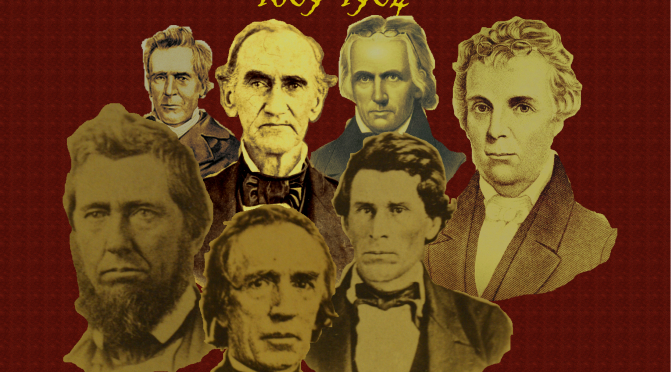
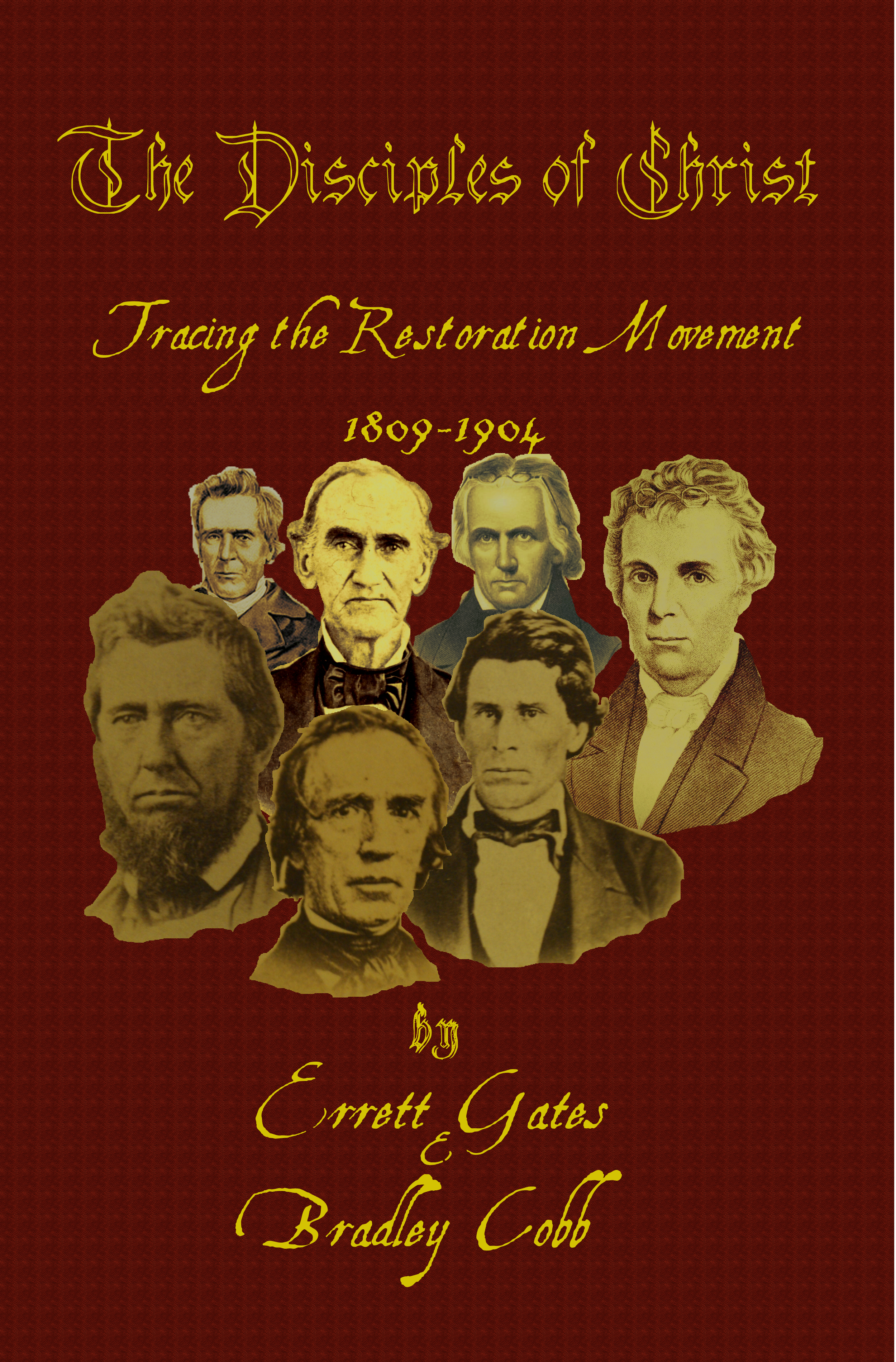
Tracing the Restoration Movement (1809-1904)

“Thus saith the Lord” was the cry of the men who preached the ancient gospel.  Their dream was the union of all the religious groups on the foundation of the Bible.  Leaving denominational names, creeds, and doctrines behind, these brave souls went back to the Scriptures and followed only what they could find in its pages.

But not everyone was happy with going back to the Bible.  The brave men of the Restoration Movement had to withstand attacks from denominationalists determined to hold on to their traditions.  Even worse, they had to withstand attacks from their own brethren who thought union was more important than obedience to God’s commands.

This book traces the rise of the “Reformers” of the 1800s, and strikingly illustrates the animosity, sadness, and division that arose when brethren refused to be bound by a “thus saith the Lord.”

DisciplesofChristFRONT COVER

This book was originally penned in 1905, but has undergone a massive overhaul to make it more accurate, more relevant, and more understandable.  Footnotes have been added when needed, and a brand-new final chapter has been added.

If you’re interested in the Restoration Movement, and you want a book that helps you understand the who, when, where, why, and how of it, this is the one.

You can purchase the book through Amazon in print ($9.49) or in Kindle format ($3.99) by clicking here.

Or you can purchase it through us in print ($8.99) or as an eBook (pdf) file ($3.99) by clicking here.

We know you will find it interesting!